
Why Office Storage Can Make Workstations Less Comfortable
Adding more storage seems like an easy way to keep an office organized. But putting too many cabinets and drawers under desks can leave employees with less room to sit, move their chairs and reach their belongings.
Sometimes, the problem isn't how much storage an office has. It's where that storage is placed.
When Storage Gets in the Way
Storage should make daily work easier, not get in the way. Poorly positioned cabinets can affect how employees use their workstations.
Limited Legroom
Large cabinets placed directly beneath desks can leave little room for employees to stretch their legs or change sitting positions.
This often happens when storage is added without checking the available space under the desktop. Cabinet depth, width and position all affect how much room employees have when seated.
Chairs Cannot Move Freely
Pedestals placed too close to seating areas can make it difficult to pull chairs back or move around.
This becomes more noticeable in shared workstations, where several employees need enough space to sit down, stand up and move comfortably.
Drawers Are Difficult to Access
Having several drawers doesn't help much when employees cannot open them properly.
Desk legs, chairs or nearby cabinets may block drawer access. Employees then have to move their chairs or other items just to reach files and personal belongings.
That's why storage needs to be considered during workstation design rather than added after the layout has been finalized.
Storage Should Work with the Desk
Not every storage unit needs to sit beneath a desk, and employees don't all need the same amount of storage.
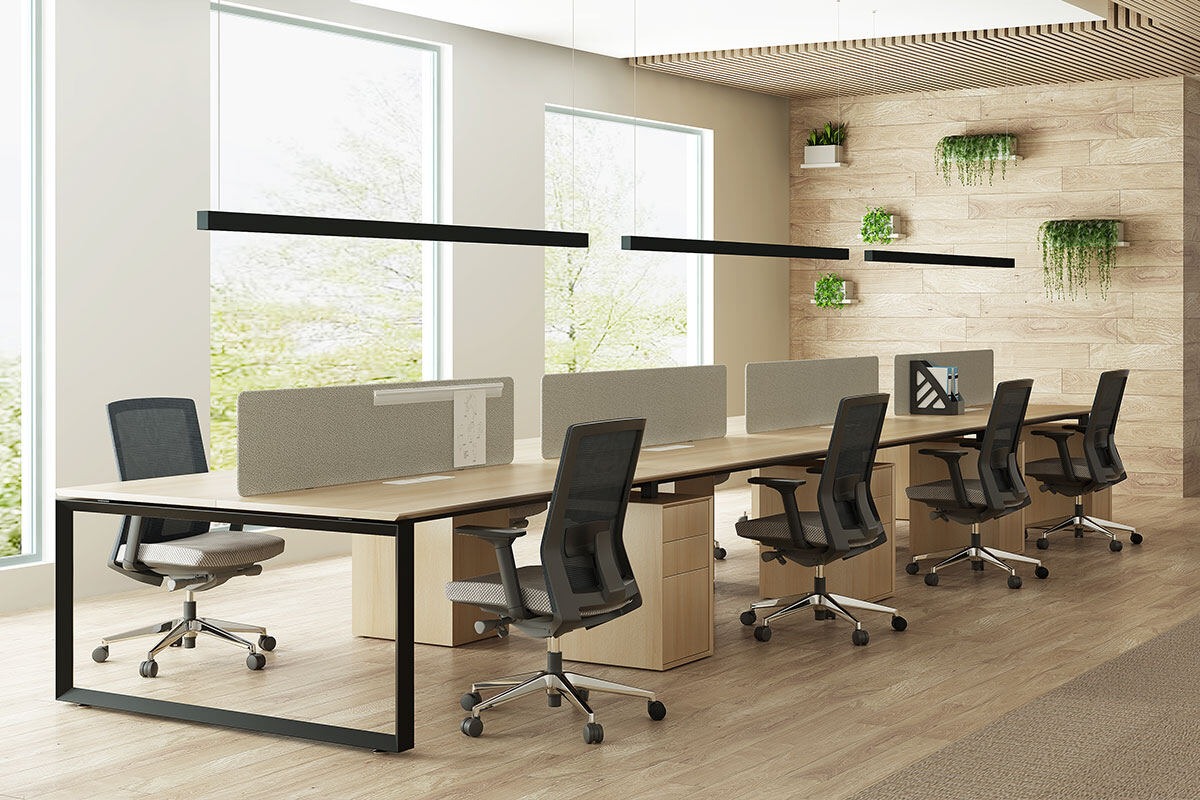
Some only need a small drawer for stationery and personal belongings. Others need more space for files and documents. Shared office supplies may be better kept in separate cabinets.
M&W's SL workstation with fixed pedestal offers an integrated storage option. Its configuration includes a lockable file cabinet and optional under-desk storage accessories. A single steel drawer is also available for smaller items.
This gives buyers different ways to organize workstations without relying on one large cabinet for everything.
What matters most is matching storage size and position with employees' seating needs.
Different Storage Options for Different Workspaces
Adding a large cabinet to every desk isn't always the best solution. It helps to consider what employees need to store and how often they need to access it.
|
Storage type |
Main purpose |
Suitable workspace |
|
Fixed pedestal |
Personal files and belongings |
Workstations with planned integrated storage |
|
Mobile pedestal |
Items that may need to move |
Offices with changing layouts |
|
Office cabinet |
Shared documents and supplies |
Team areas and common spaces |
|
Lateral file |
Frequently used documents |
Departments handling paperwork |
Fixed Pedestals Keep Personal Items Close
Fixed pedestals work well when employees need personal storage beside their desks.
Since these units are part of the workstation setup, their position can be planned alongside the desktop, frame and seating area. However, they need to be considered early because moving them later is not as easy as moving a mobile unit.
M&W's SL workstation with fixed pedestal is one example of this arrangement.
Mobile Pedestals Offer More Flexibility
Some offices need storage that can move when layouts change.
M&W's office mobile and fixed pedestals include metal and wooden options, with mobile models fitted with casters.
Employees can move these units when needed, but size and placement still matter. Leaving a mobile pedestal directly behind a chair can create just as much trouble as placing a fixed cabinet there.
Separate Cabinets Keep Shared Items Out of the Way
Not everything needs to be stored beneath individual desks.
Files used by an entire team, office supplies and shared documents can go into common storage areas. This keeps individual workstations less crowded and leaves more room beneath desks.
M&W's office storage solutions include steel cabinets, wooden cabinets, lateral files, credenzas and bookcases. These options give offices more ways to organize shared items without filling every workstation with storage.
How M&W Combined Storage and Workstations in Mongolia
M&W's Mongolia office project shows how storage can be built into workstation design instead of being added as a separate piece of furniture.
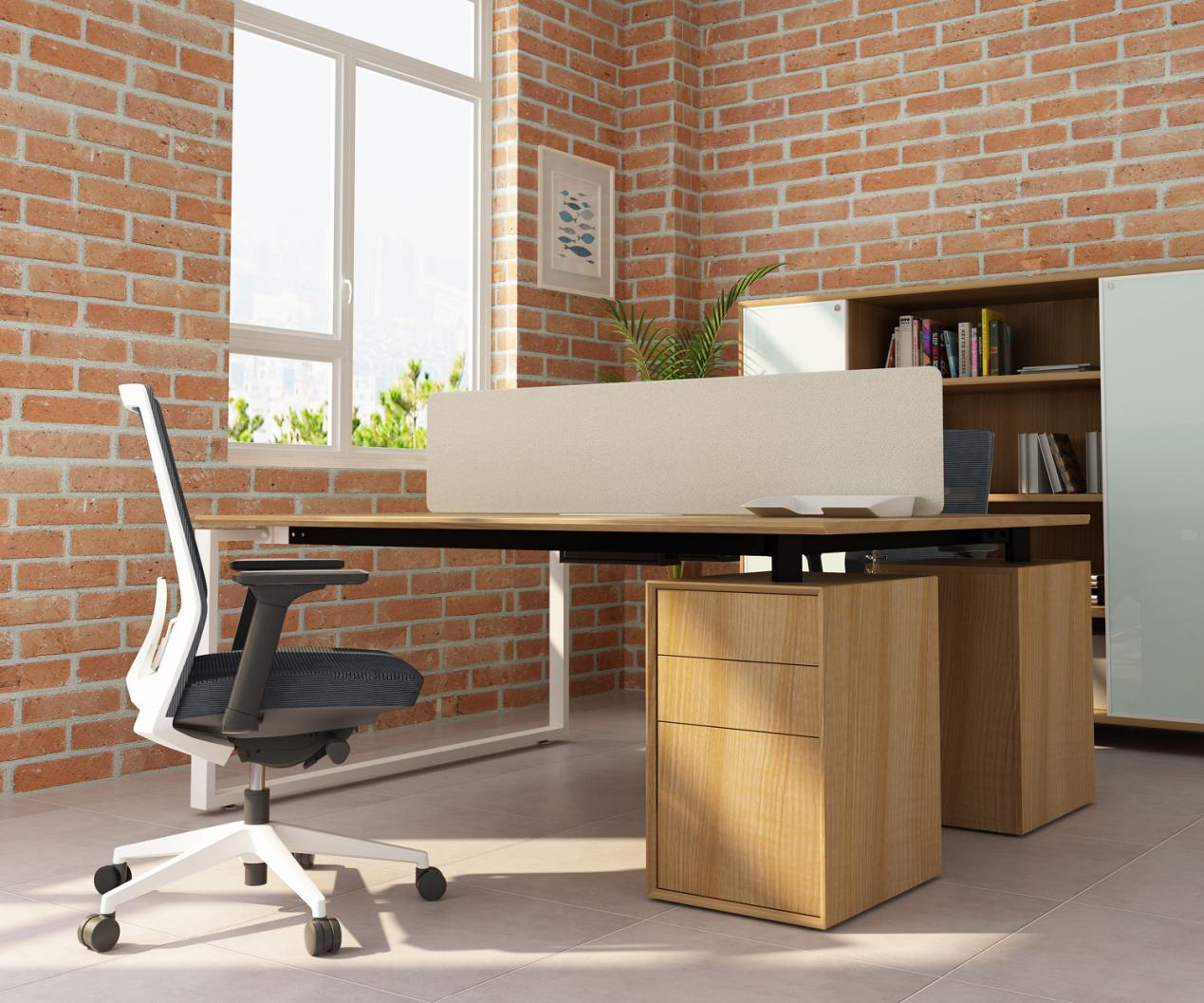
The project used SL fixed-height workstations with fixed wooden cabinets beneath desktops. These cabinets provided personal storage and also supported part of the desktop as part of the designed workstation assembly.
Cabinet positions were coordinated with desk frames and desktop connections. Seating space and drawer access were also considered when arranging each workstation group.
The office included two-, six- and eight-person workstation configurations, giving different teams setups that suited their available space.
Light woodgrain desktops and cabinets were paired with white frames and blue-green screens. Power outlets were also included at every workstation.
This arrangement brought several elements together:
- Personal storage directly beneath workstations.
- Cabinets designed to support part of the desktop structure.
- Screens that provided separation between working positions.
- Power outlets for everyday office equipment.
- Different workstation group sizes to suit the floor plan.
One detail is worth noting: cabinets in this project were designed as part of the SL workstation assembly. Regular office cabinets cannot automatically be used to support desktops. Their structure and connections must be checked before serving this purpose.
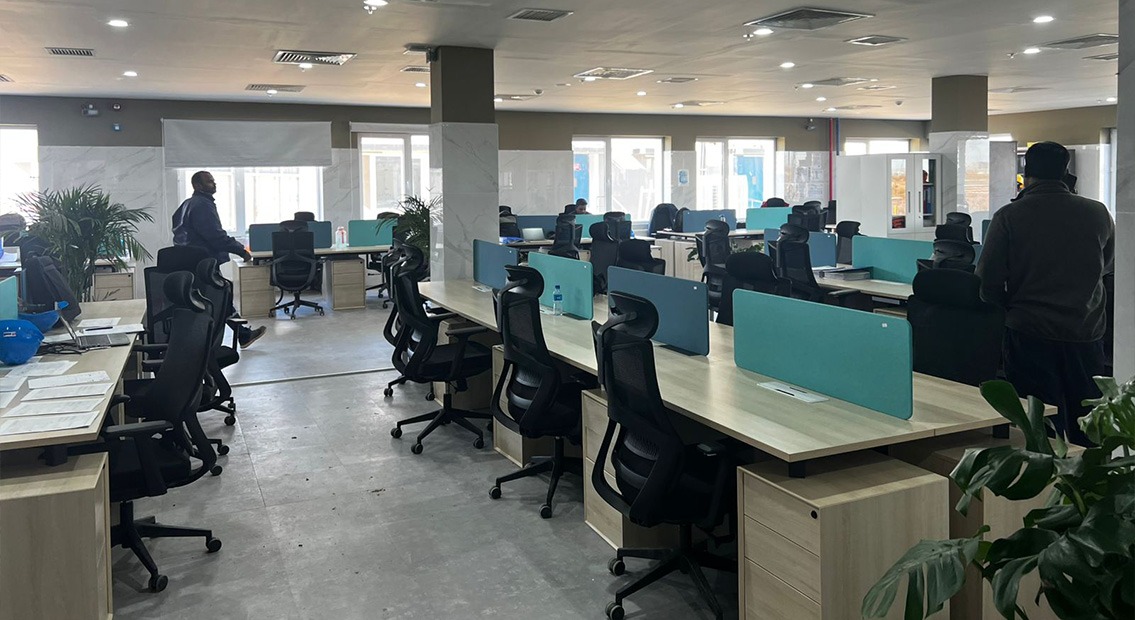
The SL office workstations with integrated storage in Mongolia show how storage, desk structure and workspace layout can come together in one commercial office project.
When Separate Storage Works Better
Integrated storage is useful when employees want personal items close at hand. But it isn't the right choice for every office.
Teams that share documents, for example, may get more value from common filing cabinets than from placing large pedestals beneath every desk.
Separate cabinets can also make more sense when office layouts change frequently or desks have limited space underneath.
A practical approach is to keep personal belongings close to employees while moving shared supplies and documents to places everyone can access.
M&W offers workstations, pedestals, cabinets, lateral files and other storage furniture that can be combined according to project requirements.
Check Storage Requirements Before Production
Storage may seem like a small part of an office furniture order, but it can affect the entire workstation layout.
Before production starts, consider these questions:
- How many workstations does the office need?
- How much space is available beneath each desk?
- What size chairs will employees use?
- Can drawers open fully without blocking chairs or walkways?
- Do employees need fixed or movable storage?
- Are cabinets designed to form part of the desk structure?
- Will the final layout leave enough room for installation and daily movement?
M&W can support office projects with layout planning, product selection, configuration drawings, production, supply and installation guidance.
Sharing floor plans, workstation quantities and storage requirements early makes it easier to coordinate desks, cabinets and other furniture before production begins.
Conclusion
More storage doesn't always make an office better. What matters is how cabinets, drawers and workstations fit together.
Planning storage alongside desk structure and seating space helps businesses keep offices organized without making workstations feel crowded. M&W brings different workstation and storage options together to support commercial office projects.
FAQs
1. How much space should be left under an office desk?
Enough space should be left for employees to sit comfortably, stretch their legs and move their chairs. When adding fixed pedestals or cabinets, check their depth and position against the desk dimensions and seating area.
2. Are built-in pedestals or separate office cabinets better?
Built-in pedestals keep personal items close to employees and create an integrated workstation setup. Separate cabinets work better for shared files, office supplies and spaces where layouts may change. Choosing between them depends on storage needs and available floor space.
3. Can storage cabinets be used to support office desktops?
Only cabinets designed for that purpose should support desktops. Their structure, load-bearing capacity and connection points must be checked as part of the workstation design. Standard office cabinets should not be used as desk supports without proper structural verification.
4. How can businesses reduce office furniture costs without sacrificing quality?
Start by matching furniture specifications with actual workplace needs. Avoid paying for unnecessary storage, oversized desks or features employees rarely use. Comparing materials, construction, hardware, warranties and supplier production capabilities can also help buyers assess long-term value rather than choosing based on price alone.
5. What should businesses check before ordering office furniture in bulk?
Check product dimensions, material specifications, color samples, configuration drawings and production details before confirming an order. Buyers should also clarify quality inspection procedures, packaging standards, delivery schedules and after-sales support. Reviewing a sample or approved prototype before mass production can help reduce costly mistakes.