
Office Pods: A Smart Privacy Solution for Modern Offices, Schools, and Public Spaces
Why Office Pods Are Becoming Essential in Modern Spaces
As workplaces, educational institutions and public environments continue to evolve, the demand for flexible, private and quiet spaces is growing. Open-plan offices can encourage collaboration, but they may also create distractions, background noise and limited privacy. Schools may need quiet areas for online learning and individual study, while airports, libraries, coworking spaces and commercial buildings may require compact spaces for phone calls and focused work.
Office pods, also called acoustic pods, privacy pods, or soundproof booths, provide a practical solution for these kinds of space. These individual spaces create private environments within larger shared areas without requiring permanent walls or extensive interior construction.
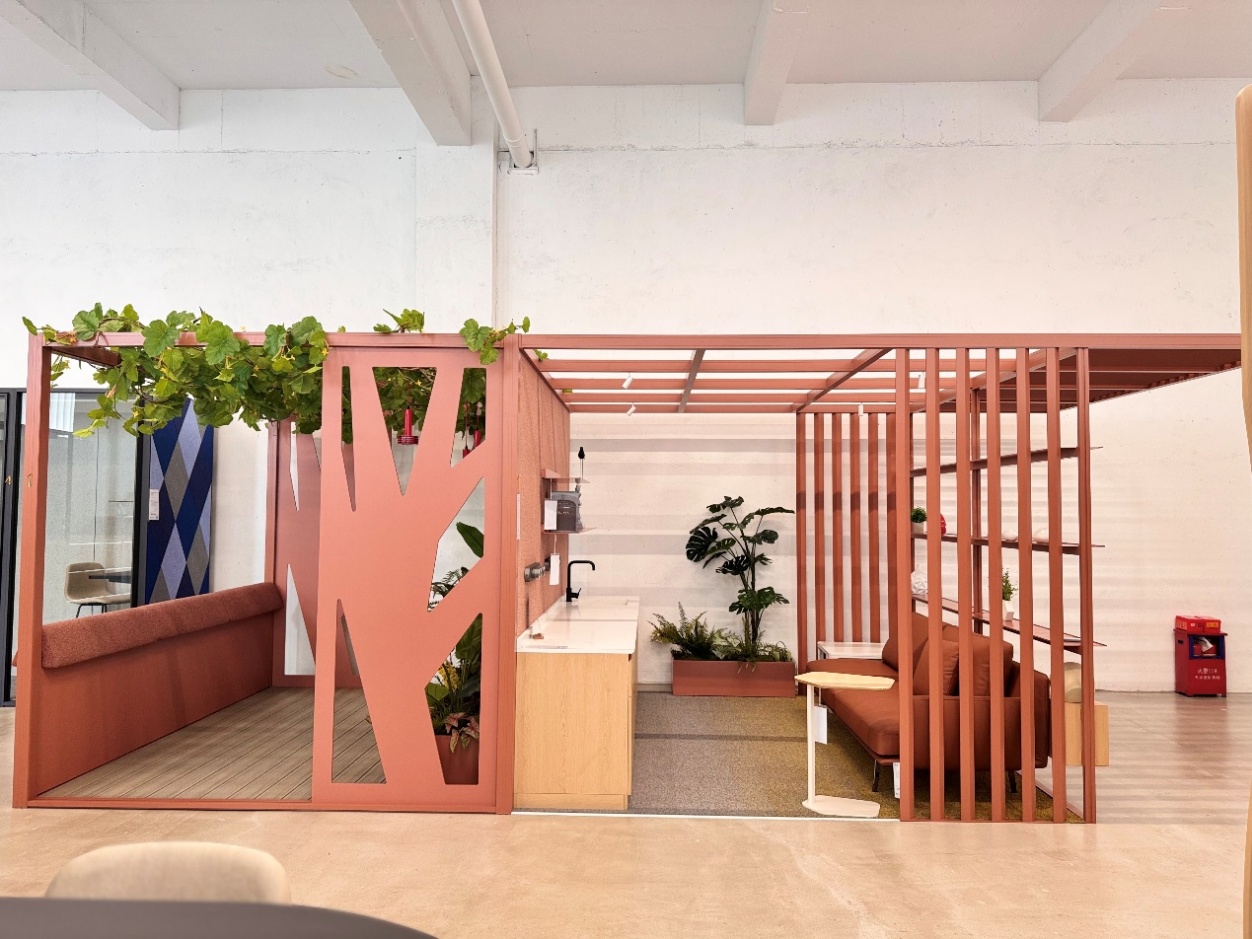
1. Materials and Construction: Combining Durability, Privacy, and Acoustic Comfort
Material selection is a significant step, directly affecting an office pod's appearance, durability, acoustic performance, and maintenance requirements. A well-designed acoustic pod combines structural stability with sound-absorbing materials and transparent elements.
Metal Frame and Exterior Panels
A metal frame, commonly using aluminum or steel, provides structural support. Powder-coated finishes can provide different colour options that complement executive offices, coworking spaces, libraries and commercial interiors.
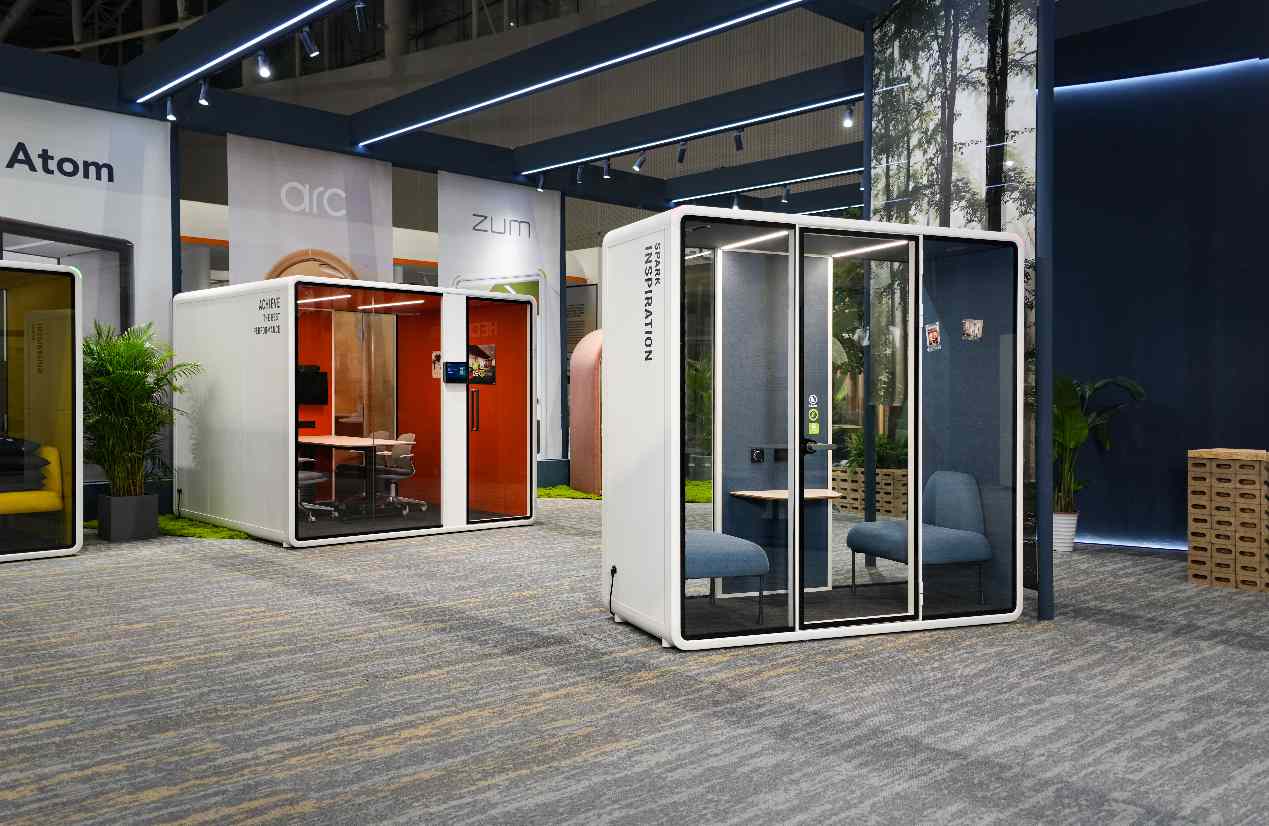
Acoustic Interior Panels
The interior walls and ceiling are important to the performance. Acoustic materials such as PET, polyester fiber panels, and other sound-absorbing composites can reduce internal reverberation and help create a more comfortable environment for conversations and concentration.
Glass Doors and Visual Openness
The glass door allows users to maintain a visual connection with the surrounding environment while enjoying a more private workspace. Depending on the selected design, an office pod may use tempered safety glass, laminated safety glass or acoustic glazing.
Transparent glass is particularly suitable for bright, contemporary offices where maintaining natural light and visual openness is important. Frosted or partially obscured glass may be preferable in environments that require additional visual privacy.
Integrated Work Surfaces and Hardware
Depending on the intended application, the interior can be configured with a fixed desk, a small shelf, a stool, or an ergonomic seat.
Door handles, hinges, locks, leveling feet, and other hardware should be selected for repeated commercial use. These seemingly small components influence the product's long-term reliability and ease of maintenance.
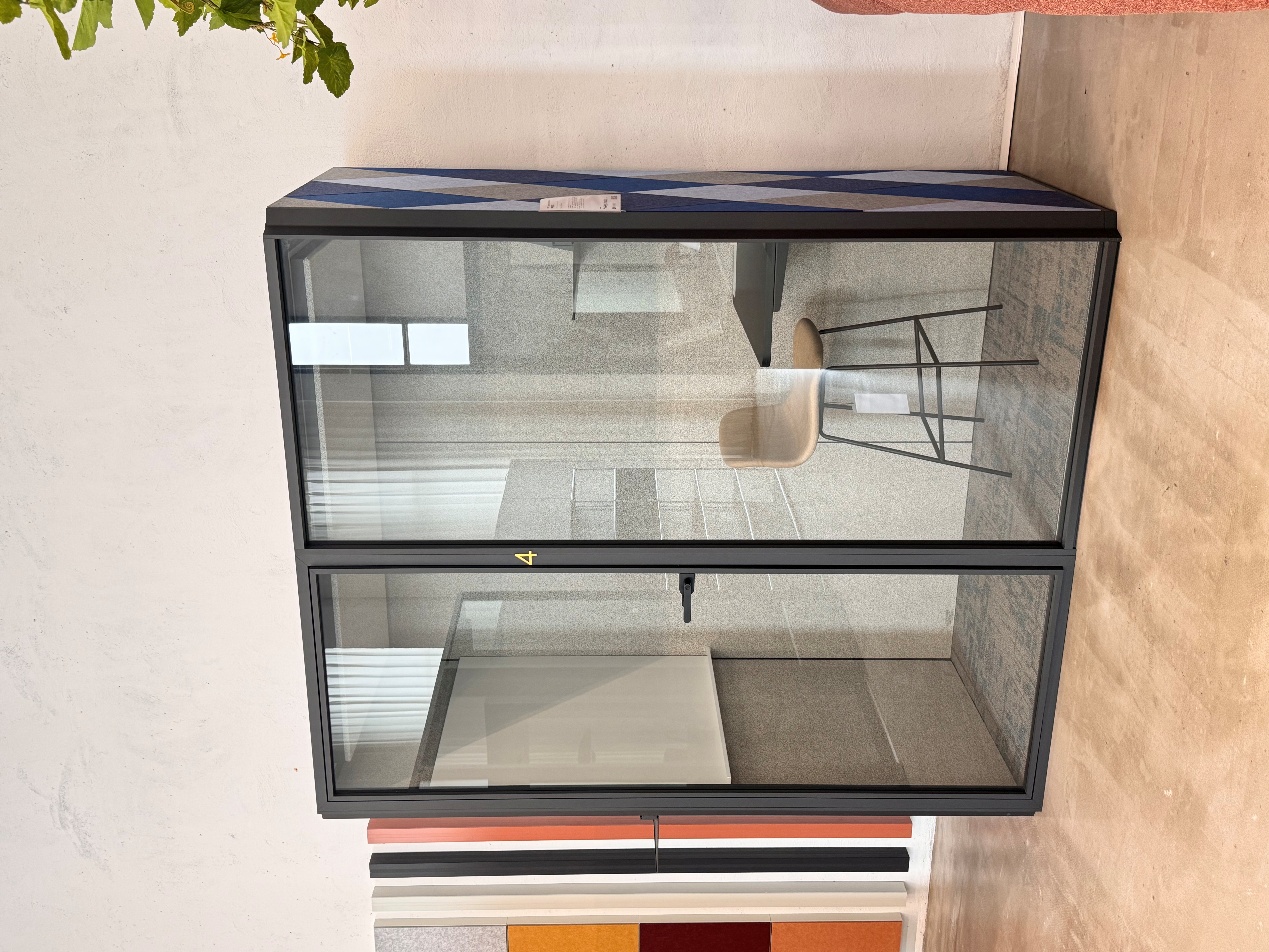
2. Dimensions and Space Planning: Choosing the Right Office Pod Size
Office pods are available in different sizes to support different activities. Depending on the number of users, intended duration of use and furniture configuration, options are available for one to ten people.
A compact, single-person pod can support telephone conversations, video meetings, online interviews, focused work, and short periods of uninterrupted concentration.
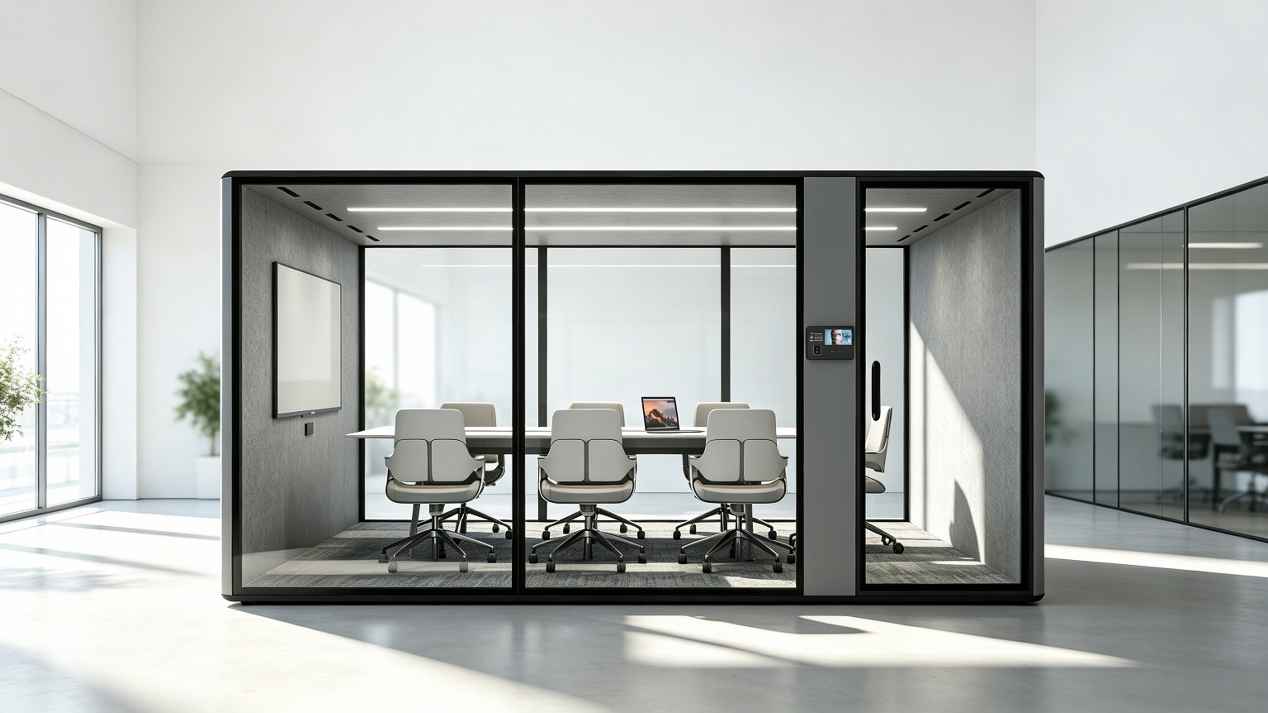
Larger office pods can accommodate two or more people for meeting purpose, like interviews, private discussions, collaborative work, and small meetings.
3. Key Functions: More Than a Traditional Phone Booth
Modern office pods are designed to provide a combination of privacy, acoustic comfort, connectivity, and convenience.
Acoustic Privacy and Focused Work
In open-plan offices, employees may find it difficult to concentrate when they are surrounded by conversations, phone calls and movement. An acoustic pod can provide a more protected setting for focused work.
Video Conferencing and Telephone Calls
Remote collaboration has become an integral part of modern business. Office pods are good space options for virtual meetings, client calls, online interviews, and internal discussions.
Integrated lighting helps improve visibility during video calls, while built-in power outlets and USB charging ports can support laptops, phones, and other devices.
Ventilation and User Comfort
Besides, air circulation is essential for a phone booth, to remain inside comfortable while using. Quiet mechanical ventilation can help manage heat and maintain fresh air while limiting the noise generated by the ventilation system itself.
Flexible Installation and Relocation
Different with wall conference room with walls or permanent partitions, many modular office pods are designed for relatively straightforward installation and potential relocation.
For all office pod models, all are designed to be modular block, which helps clients fast installation at site, even relocation while moving to new office buildings.
4. Applications Across Offices, Schools, and Public Spaces
Corporate Offices and Open-Plan Workplaces
Corporate offices are one of the most common space for acoustic pods. They provide private spaces without requiring every employee to have an individual office or cabin.
Inside a office pod, staffs can freely have video conferencing, telephone calls, online interviews, private one-to-one discussions, and focused individual work.
For companies adopting hybrid working arrangements, office pods can complement open workstations, collaborative areas, conference rooms, and traditional private offices.
Coworking Spaces and Shared Offices
Coworking operators need to accommodate users with different working habits. Some members collaborate in shared areas, while others require quiet spaces for business calls and remote meetings.
Schools, Universities, and Libraries
Besides office spaces, office pods are seen in many indoor learning spaces. Educational environments can use privacy pods to create quiet study areas, spaces for online learning, individual tutoring settings, and locations for virtual interviews or remote academic consultations.
Libraries may also incorporate acoustic pods to support individual research and digital learning while preserving the open character of the surrounding space.
For schools and universities, product selection should consider supervision requirements, visibility, accessibility, ventilation, cleaning, fire safety, and suitability for the intended age group.
Airports, Hotels, and Commercial Public Spaces
Outside public spaces, like airports, hotels, business centers, shopping complexes, and transport hubs, they can use compact pods to provide temporary privacy in busy environments.
5. Design and Customization: Integrating Pods into Modern Interiors
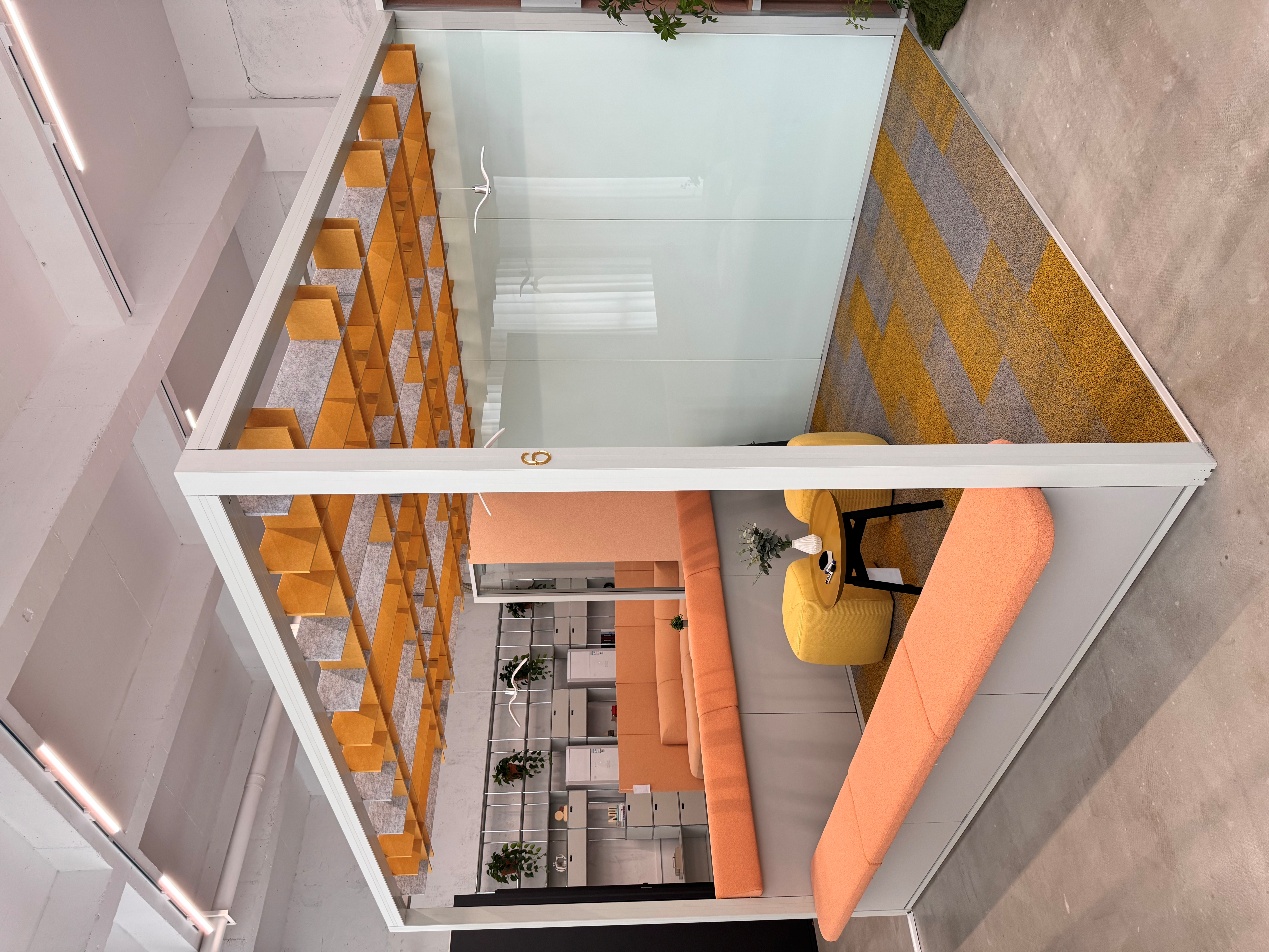
Phone booths should function as part of the overall interior design rather than appearing as isolated objects.
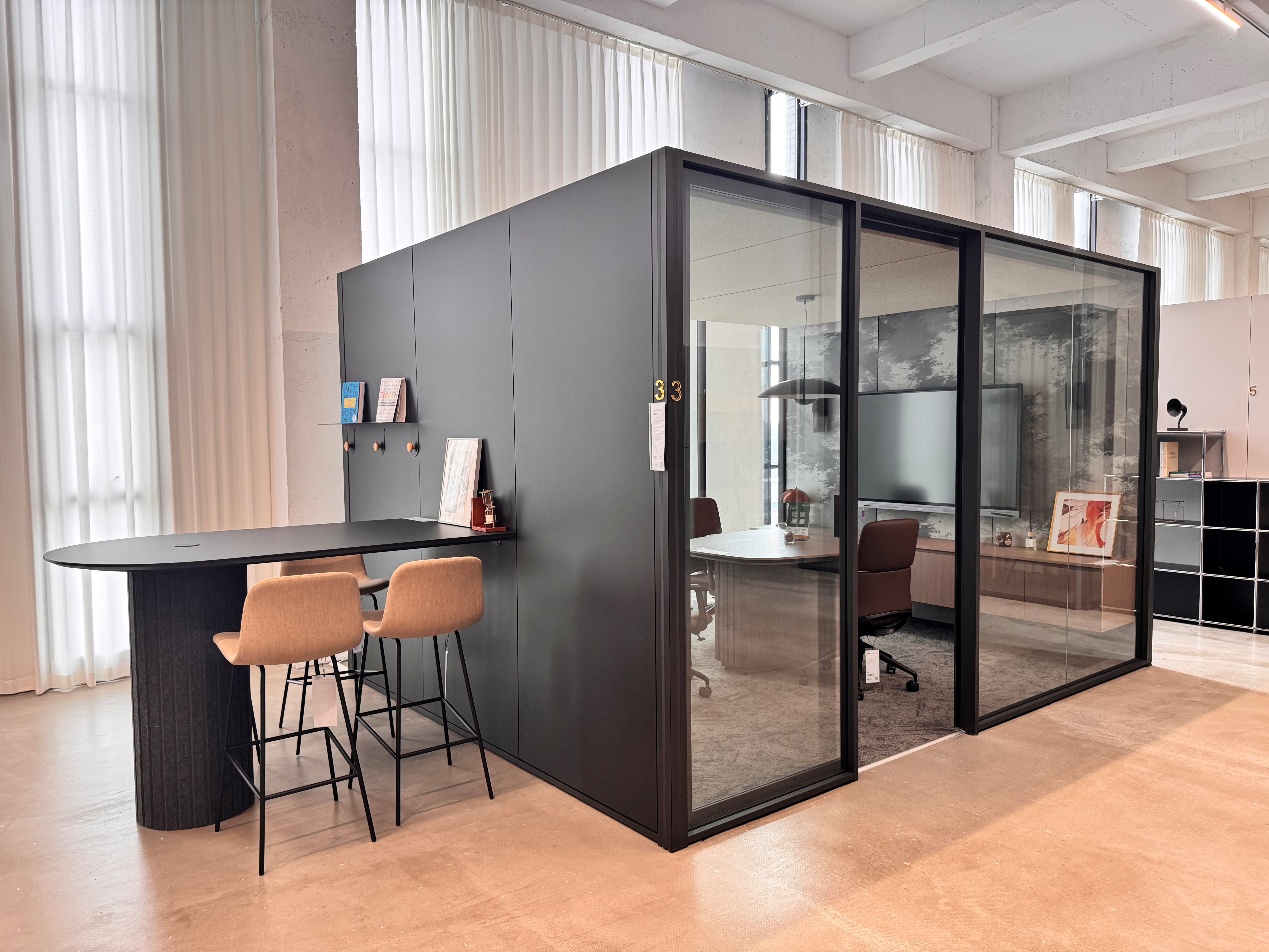
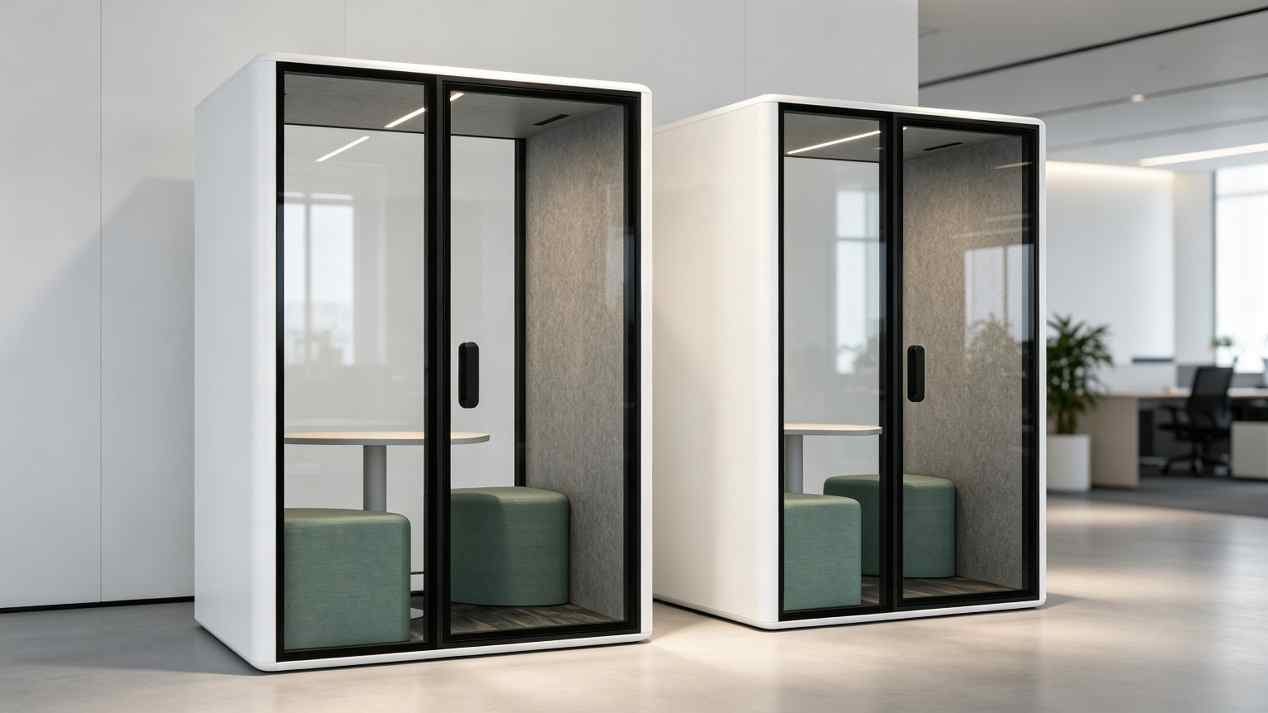
Dark gray and black finishes, such as those shown in this product, create a refined architectural appearance that works well with contemporary office furniture, glass partitions, metal shelving, and neutral color palettes.
Lighter exterior finishes can make a pod feel less visually dominant in smaller rooms, while wood-look panels may complement hospitality environments, libraries, and more residential workplace designs.
Interior finishes can also be coordinated with the surrounding furniture. Upholstery, desk surfaces, acoustic panels, and exterior colors can be selected to support a consistent design language.
For larger projects, a combination of single-person pods, meeting pods, open workstations and collaborative furniture can create a more balanced workplace by supporting both shared activity and individual privacy.
6. How to Choose the Right Office Pod for a Commercial Project
When evaluating an office pod, buyers should look beyond appearance and compare the product's practical performance.
Acoustic performance: This is the most important point. Ask for test reports and verify the stated speech-level reduction.
Ventilation: airflow, fan noise, and the ventilation system's operating logic.
Dimensions: Different sizes are available, from one-person pods to ten-person pods.
Materials: aluminum profile structure, glass panels, PET acoustic material, resulting panel durability, glazing, finishes, and ease of cleaning.
Electrical integration: available outlets for different standards, UL, UK, European Standard, etc, USB connections, cable routing.
Ergonomics: desk height fixed and height adjustable style, usable workspace, seating comfort, and suitability for the intended duration of use.
Maintenance: Consider access to fans, lighting, door hardware, and replaceable interior components.
Customization: Review available finishes, dimensions, furniture options, and branding opportunities.
Conclusion: A Flexible Building Block for Modern Commercial Spaces
Office pods are becoming an important part of flexible workplace planning because they offer a practical way to introduce private, task-specific environments into open and shared spaces.
From corporate offices and coworking facilities to schools, libraries, airports, and hospitality environments, acoustic pods can support concentration, digital communication, and short periods of privacy without relying entirely on permanent room construction.
For businesses planning new offices or upgrading existing interiors, the key is to select the right pod configuration based on user needs, available space, performance requirements, and long-term flexibility.
FAQ
Q: What is the difference between an office pod and a traditional meeting room?
A: An office pod is a self-contained unit placed in an existing space. It can add privacy for calls, focused work or small meetings without building permanent walls.
Q: How many people can use an office pod?
A: Office pods are available for one to ten people. The suitable size depends on the activity, number of users, interior furniture and available floor space.
Q: What should buyers check about office pod acoustic performance?
A: Ask for acoustic test information and confirm what it measures. Sound absorption, speech privacy and sound isolation are different factors.
Q: What should buyers check about office pod acoustic performance?
A: Ask for acoustic test information and confirm what it measures. Sound absorption, speech privacy and sound isolation are different factors.
Q: What electrical and ventilation features should an office pod have?
A: Check power outlets, USB charging, cable routing, airflow and fan noise. These features should suit the expected use time and local electrical requirements.
Q: Can office pods be customized to match an interior design?
A: M&W can provide office pod options for exterior colours, interior finishes, desk configurations and branding details, helping the pod fit the surrounding interior design.