
How Modular Office Furniture Supports Hybrid Workspaces
Hybrid work has changed the way companies use office space. Employees may not sit at the same desk every day, while teams expand, shrink or reorganize. Office furniture needs to keep up. Modular office furniture gives businesses the flexibility to adjust without redesigning the entire workplace every time something changes.
Why Hybrid Work Changes Office Furniture Planning
Traditional offices often follow a simple model: one employee, one desk, one permanent position. Hybrid work is far less predictable. Attendance fluctuates throughout the week. Some workstations are shared. Certain teams need more collaboration space, while others require quieter zones for focused work. Meeting rooms may sit empty one day and fill the next. The result is a workplace with shifting patterns of use rather than fixed daily routines.
Furniture that was designed for a stable headcount and fixed seating plan struggles under these conditions. When desks cannot be easily regrouped, privacy levels cannot be adjusted, or storage cannot be reallocated, companies end up either under-utilizing space or constantly commissioning small renovations. Modular systems address this by treating the office as a set of adaptable components rather than a collection of permanent fixtures.
What Makes Office Furniture Modular?
A modular workstation is built from compatible components that are designed to work together. These typically include desk surfaces, partitions, storage units, cable-management channels, accessories and electrical connections. The real advantage is not simply that the pieces can be moved. Because the components share the same connection methods, finishes and structural logic, designers can create multiple configurations while keeping the overall furniture language consistent.
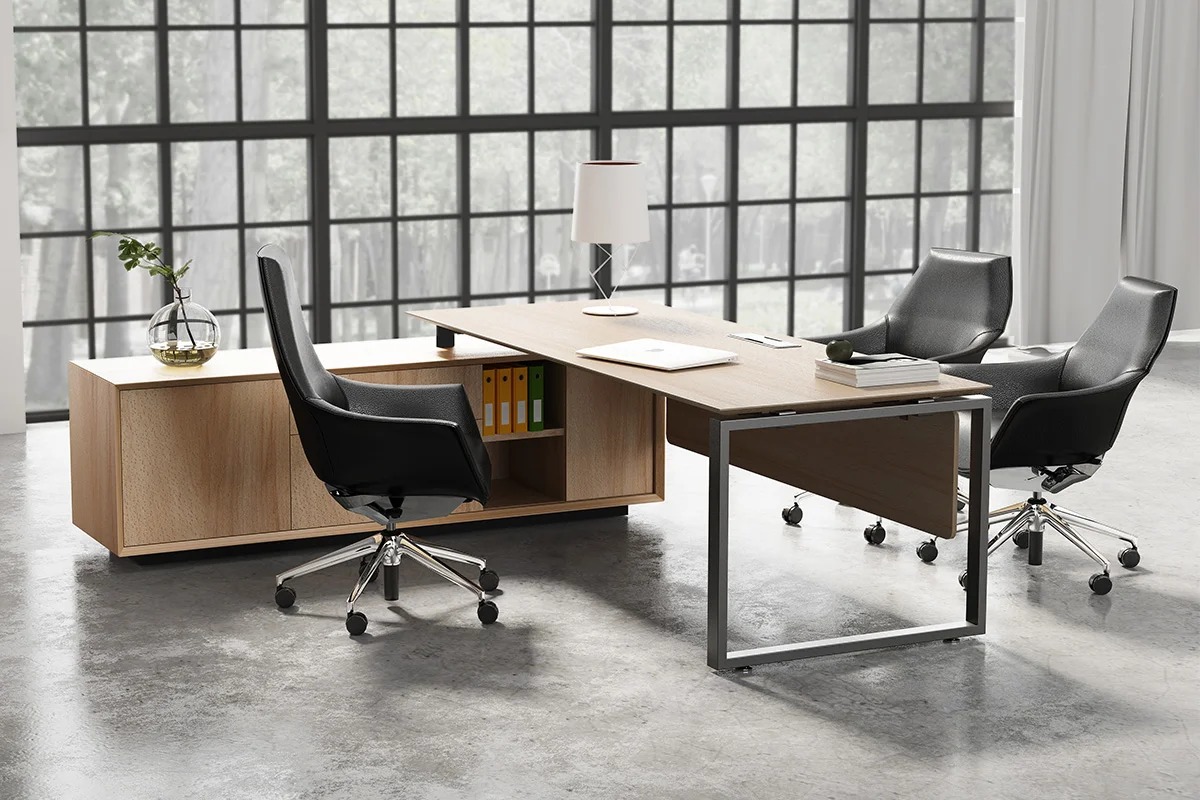
This consistency matters. When different departments adopt different layouts, the office still looks intentional rather than patchwork. A modular approach also reduces the risk of orphaned parts that cannot be reused when the layout changes again.
Compatible Components That Work Together
The strength of a modular system lies in the relationship between its parts. Desk surfaces, screens, storage and cable channels are engineered to connect cleanly, so a change in one area does not force a redesign of the entire floor. This is the foundation that allows hybrid offices to evolve without constant disruption.
Modular Workstations for Different Work styles
A hybrid office usually contains several types of work happening side by side. Some employees spend most of the day working independently and need a stable personal zone. Others move constantly between meetings, collaborative projects and individual tasks. A single workstation style rarely serves all of these needs equally well.
Modular systems allow the project to adjust partition height, desk configuration, storage, workstation grouping and accessories according to the actual work pattern. Designers can create denser clusters for high-interaction teams, more open arrangements for collaborative groups, and higher-screen zones for roles that require concentration. The same underlying system supports these variations without forcing a complete change of furniture series.
Matching Layout to Daily Work Patterns
When the furniture can be adapted to the way people actually work, the office becomes more efficient. Teams that collaborate frequently benefit from open clusters, while roles that need concentration gain from higher partitions and clearer personal boundaries. The modular approach makes both possible within one coherent system.
A Modular Office Does Not Mean Every Desk Looks the Same
This is where modular planning becomes especially useful. A sales team may work effectively in an open workstation cluster that encourages quick conversations. Finance may require stronger visual privacy and more secure storage. A customer-service team may need a high-density arrangement that maximizes seats while still controlling noise. Management may prefer a more private configuration with additional surface area and locking cabinets.
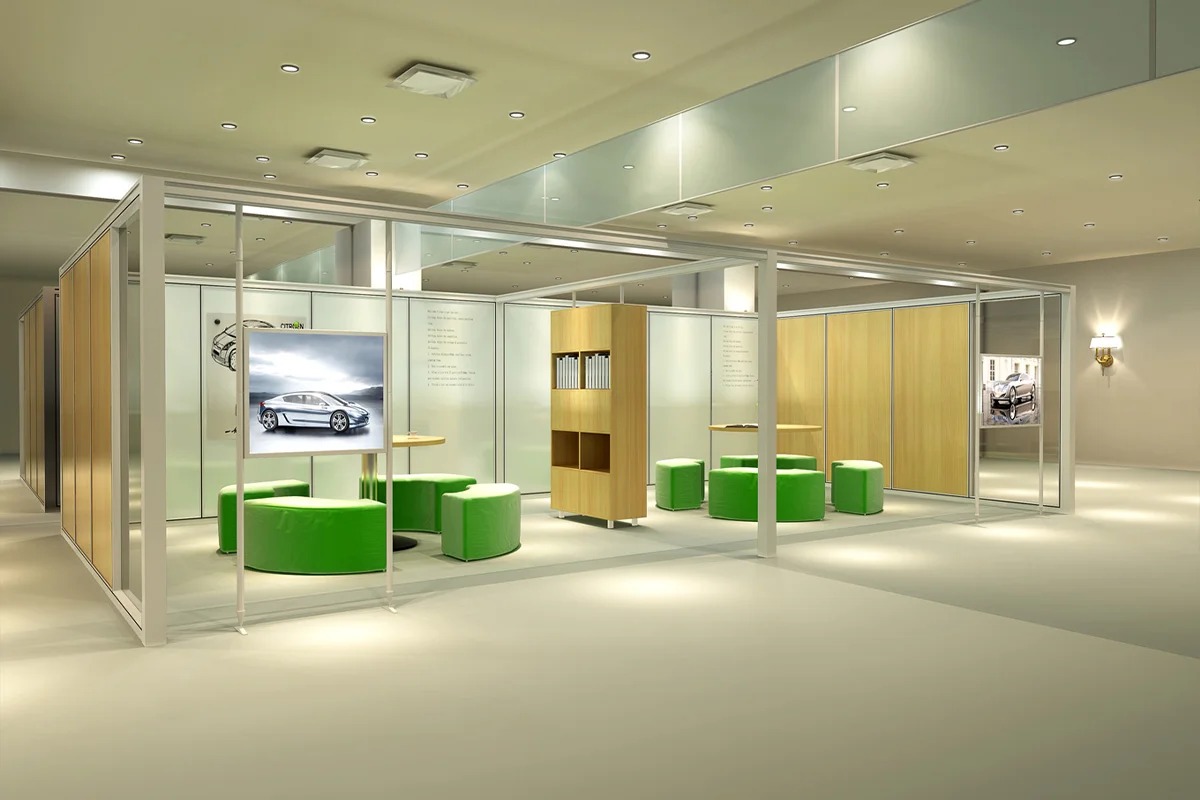
The furniture system can remain consistent in materials, finishes and structural details while the individual configurations change. M&W’s range includes Modular Cubicle, Private Cubicle, Call Center Workstation and Desk Screen solutions specifically developed for these different environments. More details appear in our modular office partition systems.
Partition Height Helps Define Hybrid Work Zones
Hybrid offices need a careful balance between openness and concentration. Lower partitions maintain visual connection and make the floor feel more spacious. Higher partitions create a stronger personal boundary and reduce visual distraction. M&W’s workstation systems offer multiple height configurations so that different privacy levels can be achieved within the same product family. This flexibility is practical when several departments share one floor and each has its own concentration requirements.
Choosing the Right Height for Each Zone
Selecting partition height is not a one-size decision. Collaborative areas often work better with lower screens, while finance, legal or focused work zones benefit from greater height. Because the same modular system supports both, the office can respond to different needs without introducing mismatched furniture.
Cable Management Should Be Part of the Original Plan
A flexible office still needs reliable infrastructure. Power and data connections must move with the workstation configuration rather than fight against it. When cable management is treated as an afterthought, the finished office quickly becomes cluttered and difficult to maintain. M&W’s modular workstation systems incorporate cable channels that allow power and data to be planned from the beginning. In larger installations this is especially important, because a small cable-management weakness repeated across dozens or hundreds of stations becomes a significant ongoing problem.
Modular Furniture Makes Growth and Change Easier to Manage
Employee numbers rarely remain fixed. A company may grow from forty staff to seventy. A department may be relocated. A new team may be introduced. With a modular system, additional workstations can be added around an existing configuration using the same components and finishes. The business does not need to replace the entire furniture inventory simply because headcount or team structure has shifted. This reduces both cost and disruption compared with starting over each time the organization evolves.
Shared Storage Can Support Hybrid Work
Hybrid work also changes how storage is used. Employees who spend part of the week outside the office often need less dedicated personal storage at their desks. Shared storage units can become more practical in certain zones, while other departments continue to require lockable individual cabinets. M&W’s modular solutions allow storage to be integrated into the overall workstation layout so that storage capacity is planned alongside seating and privacy rather than added later as an afterthought.
When Modular Office Furniture Makes Sense
Not every office needs a fully modular system. For a small, stable team that rarely changes layout or headcount, a simpler fixed arrangement can still work well. The value of modularity becomes clearer when the workplace is expected to evolve.
Hybrid schedules, growing teams, departmental moves and shifting privacy needs all place pressure on furniture that cannot adapt. In these situations a modular approach reduces disruption and long-term cost by allowing the same components to be reconfigured rather than replaced.
|
Office Requirement |
Why Modularity Helps |
|
Hybrid working |
Supports changing workstation use |
|
Business growth |
Makes additional workstations easier to plan |
|
Team reorganization |
Allows different configurations |
|
Relocation |
Furniture can be planned around a new layout |
|
Different privacy needs |
Supports multiple partition heights |
|
Large projects |
Repeatable workstation modules simplify planning |
Modular furniture is not automatically necessary for every office. Its value becomes clearer when the workplace is expected to change over time or when different teams need different levels of privacy and density within the same floor plate.
Build a Flexible Office Without Losing Consistency
One common concern is that a flexible office may look inconsistent. A modular furniture system addresses this by allowing different configurations to share the same materials, finishes, workstation components, partition system and storage style. The office can evolve without appearing as a collection of unrelated furniture projects. Visual coherence is preserved even as functional layouts shift.
How M&W Supports Modular Office Projects
For large office projects, the challenge is keeping different departments coordinated while allowing the workspace to evolve. M&W helps businesses plan modular workstation systems around their floor plans, team structures, and operational needs. Compatible configurations can help maintain consistency in partition finishes, dimensions, storage, and cable management across departments.
As teams grow or office layouts change, modular components can be reconfigured or extended, depending on the selected system. Planning these requirements from the beginning can reduce the need for extensive furniture replacement and help control future adjustment costs.
Explore completed installations in the M&W case studies, or contact M&W to discuss a workstation layout tailored to your project requirements.
Conclusion
A hybrid workspace does not need to predict exactly what the office will look like five years from now. It needs enough flexibility to respond when attendance patterns, team structures and privacy requirements change. Modular office furniture supports different workstyles, privacy levels and future expansion while keeping the overall system consistent. M&W provides modular workstation and cubicle solutions for commercial office projects. Share your employee count, floor plan and expected workspace changes to discuss a practical modular configuration. Contact the M&W project team
FAQs
Q1: How can modular office furniture support hybrid work and changing team structures?
A: Modular office furniture allows businesses to adjust workstation layouts as teams grow, shrink, or adopt different working arrangements. Companies can reorganize desks, partitions, and shared areas without replacing the entire furniture system, making it easier to accommodate hybrid work and changing space requirements.
Q2: How do I choose the right modular workstation for my office?
A: Start by assessing available floor space, employee headcount, daily work activities, and privacy requirements. Open layouts may suit collaborative teams, while higher partitions can provide more visual separation for focused tasks. Consider cable management, storage, and future expansion before selecting a system.
Q3: Can modular office furniture provide privacy without making the office feel closed off?
A: Yes. Combining different partition heights and materials helps balance privacy with communication and visibility. Glass panels can maintain an open atmosphere, while fabric or solid panels offer greater visual separation. The right configuration depends on the level of concentration, confidentiality, and collaboration each work area requires.
Q4: Can modular workstations be expanded or reconfigured as a company grows?
A: Many modular workstation systems use compatible components that can be rearranged, extended, or combined into new configurations. Before purchasing, confirm whether the selected system supports additional desks, partition changes, and integrated storage. Planning for future growth can help reduce the cost and disruption of office renovations.
Q5: Does M&W provide modular office furniture solutions for large commercial projects?
A: Yes. M&W supplies modular workstation and office cubicle systems for commercial projects of various scales. Solutions can be configured around project requirements, including workstation layouts, partition options, storage, and cable management. Contact M&W to discuss your floor plan, workforce needs, and project specifications for a suitable office furniture solution.