
Modern Office Workstation Design Using Modular Cubicle Systems
Offices never stay static. Demands shift constantly. Permanent setups struggle. Modern office workstation design offers a better path. A modular office cubicle system enables real progress. Modern cubicles provide clarity and freedom together.
The Shift Toward Modular Solutions
Flexibility has become the ultimate corporate currency. Companies frequently shift team sizes, expand departments, and transition to hybrid models, making permanent, fixed furniture a logistical roadblock.
- Modular Configurations: Rearrangeable desks and movable screens let businesses alter their layouts effortlessly.
- Zoned Floor Plans: Open areas are increasingly divided into specific hubs for collaborative brainstorming, quiet solo work, and casual alignment.
- Scalable Infrastructure: Investing in modular pieces protects long-term capital by avoiding costly structural renovations.
What Strong Modern Office Workstation Design Delivers
Solid modern office workstation design creates measurable gains:
- Individual territories that feel secure
- Smooth transitions between quiet work and group exchange
- Fuller use of available daylight
- Straightforward later growth
A dependable modular office cubicle system secures these outcomes. Modern cubicles establish order yet leave enough openness for natural interaction.
Practical Configuration Options
Cluster Style for Team Work
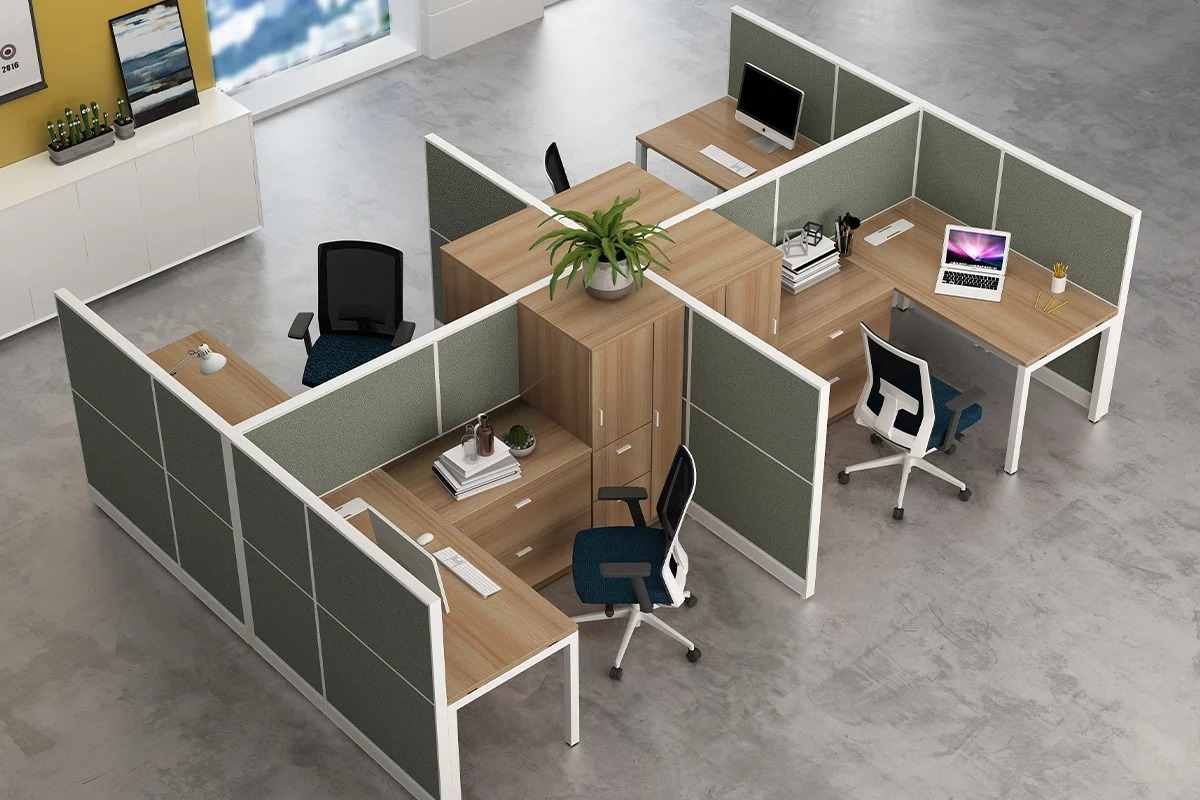
Arrange small groups of four to six desks. Apply low or mid-level dividers from a modular office cubicle system. Dialogue flows freely. Each user retains a dedicated surface. Project-driven groups benefit most. Modern cubicles in this form feel lively and linked.
Linear Runs for Focus
Set desks in straight or gently angled lines. Elevate dividers facing busy corridors. Leave the inner side lower. Attention sharpens. Entry stays convenient. Steady modern office workstation design results.
Hybrid Zones
Blend panel heights inside one modular office cubicle system. Certain sections promote quiet effort. Others encourage brief exchanges. The overall floor gains variety. Modern cubicles handle several work modes simultaneously.
Core Components of a Modular Office Cubicle System
Desks and work surfaces
Pick stable tops with precise edges. Concealed cable paths eliminate tangle. Height variation suits different users. These items ground modern office workstation design.
Panel framework
A capable modular office cubicle system supplies assorted heights and surfaces. Textile coverings dampen noise. Partial glazing or slim frames admit brightness. Modern cubicles gain separation plus illumination.
Storage units
Mobile pedestals and upper cabinets hold belongings neatly. Shared units serve neighboring users. Uniform finishes maintain cohesion throughout the modular office cubicle system.
Supporting pieces
Supportive chairs protect posture across long periods. Monitor arms free valuable surface area. Localized lighting sharpens visibility. Minor additions reinforce complete modern office workstation design.
Materials That Support Modern Cubicles
Modern cubicles perform strongest with matching materials.
Subtle wood shades introduce warmth. Soft neutral textiles settle the mood. Slim metal structures supply firmness. When surfaces align across the modular office cubicle system, the environment appears deliberate.
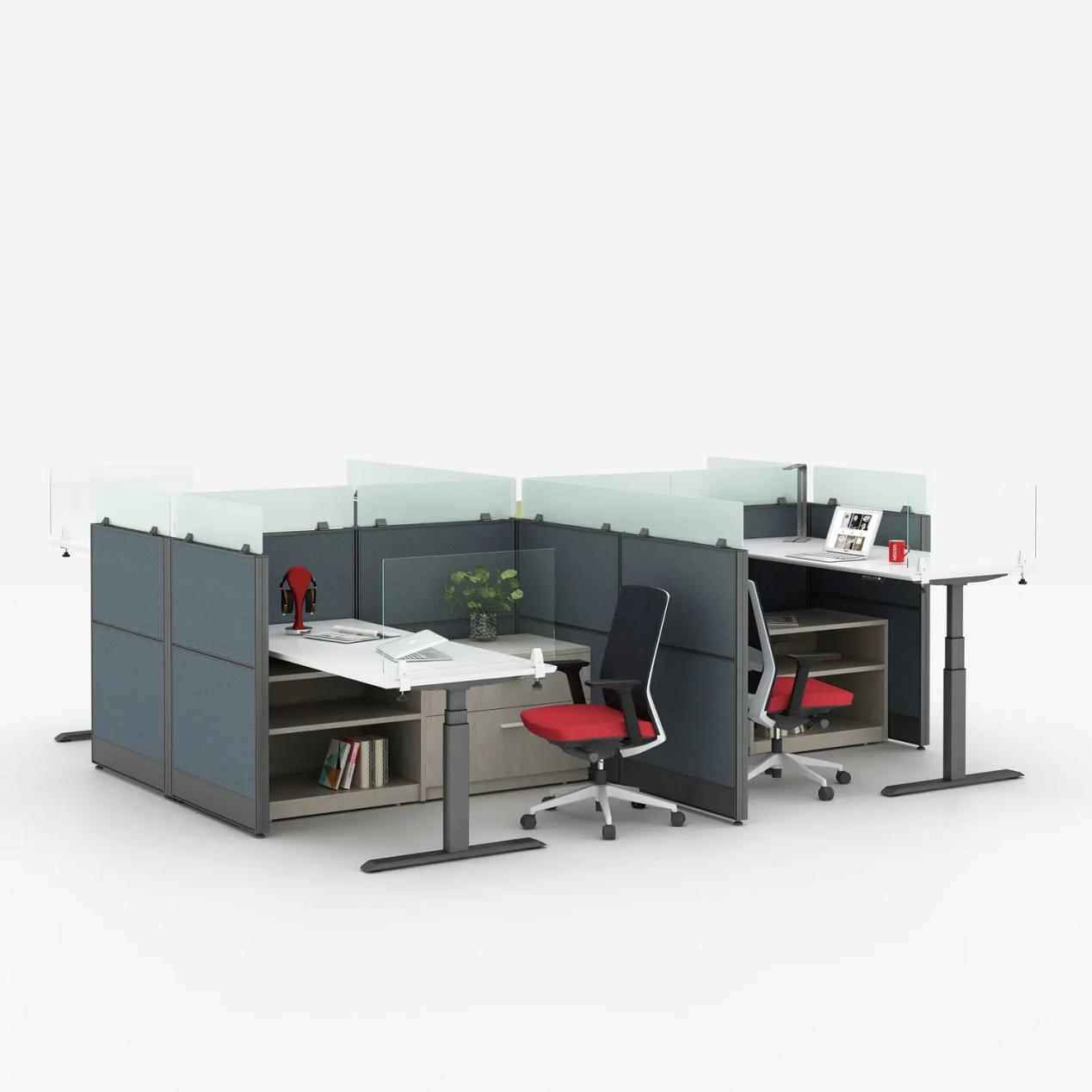
Lighting finishes the picture. Localized desk illumination aids precise tasks. Gentle overall light avoids sharp contrast. The combination lifts modern office workstation design.
Managing Sound and Visual Distraction
Open floors produce constant sound. A modular office cubicle system lessens its effect.
- Textile panels capture noise
- Differing heights limit visual interruption
- Cushioned flooring reduces footfall sound
Total quiet seldom occurs. Managed conditions prove sufficient. Modern cubicles form practical concentration pockets. People work with greater attention. Exchange remains feasible.
Side-by-Side Comparison of Approaches
|
Configuration |
Privacy Level |
Flexibility |
Ideal Use Case |
|
Low-panel clusters |
Light |
Very High |
Highly collaborative teams |
|
Medium-panel linear runs |
Moderate |
High |
Everyday mixed work |
|
Higher-panel focus areas |
Stronger |
Medium |
Detail-oriented roles |
|
Mixed-height combination |
Adjustable |
Very High |
Varied or changing needs |
The table presents distinct paths. Select the modular office cubicle system pattern that fits actual daily routines. Modern cubicles then produce stronger outcomes. Modern office workstation design stays matched to real activity.
Implementation Sequence
1. Study existing movement and noise patterns.
2. Determine the proper mix of concentration and exchange.
3. Select the foundation modular office cubicle system.
4. Establish desk sizes and divider heights.
5. Incorporate sufficient storage.
6. Harmonize all surface finishes.
7. Complete installation and collect user comments.
8. Apply minor improvements.
These actions generate reliable modern office workstation design. Modular elements keep the sequence uncomplicated. Modern cubicles form efficiently.
Frequent Errors to Avoid
- Fitting only tall dividers across the entire floor
- Overlooking cable pathways
- Combining unmatched surface finishes
- Supplying inadequate storage volume
- Obstructing windows or light routes
- Crowding desks excessively
Thoughtful modern office workstation design sidesteps these issues. Careful choice of a modular office cubicle system prevents them. Modern cubicles stay both practical and appealing.
Long-Term Flexibility
Team size fluctuates. Project types alter. A modular office cubicle system absorbs growth. Dividers relocate. Desks regroup. Additional storage attaches without difficulty. The initial outlay continues serving. Modern cubicles retain value.
This capacity for change reduces long-term cost. It also holds modern office workstation design in step with actual requirements.
Everyday Operating Tips
Clear surfaces each day. Clutter lowers output. Fully utilize storage within the modular office cubicle system. Preserve matching finishes during expansion. Examine the arrangement several times a year. Small shifts frequently raise comfort.
Locate taller dividers where deep concentration occurs. Retain lower dividers near shared routes. This blended method strengthens overall modern office workstation design. Modern cubicles then assist both quiet effort and easy exchange.
Conclusion
Reliable modern office workstation design rests on adaptable tools. A properly engineered modular office cubicle system provides that adaptability. Modern cubicles establish order, aid concentration, and permit change. M&W produces matched modular systems, workstations, and related furniture for these precise demands. Parts function together to improve daily results. Construct a workplace that stays flexible and professional. Contact M&W now to shape your modular office solution.