
Trends in Modern Executive Office Design: How to Create Integrated Workspace Solutions for Managers, Directors, CEOs, and Corporate Leadership
As global work models evolve, the requirements for executive office spaces have shifted significantly. In the past, offices for managers, directors, CEOs, and business owners were viewed primarily as isolated workspaces for leadership, emphasizing privacy, authority, and status.
Today, driven by trends such as hybrid work, digitalization, and the cultivation of corporate culture, these spaces are evolving into multifunctional environments that integrate efficient work, business hosting, strategic decision-making, team communication, and brand showcasing.
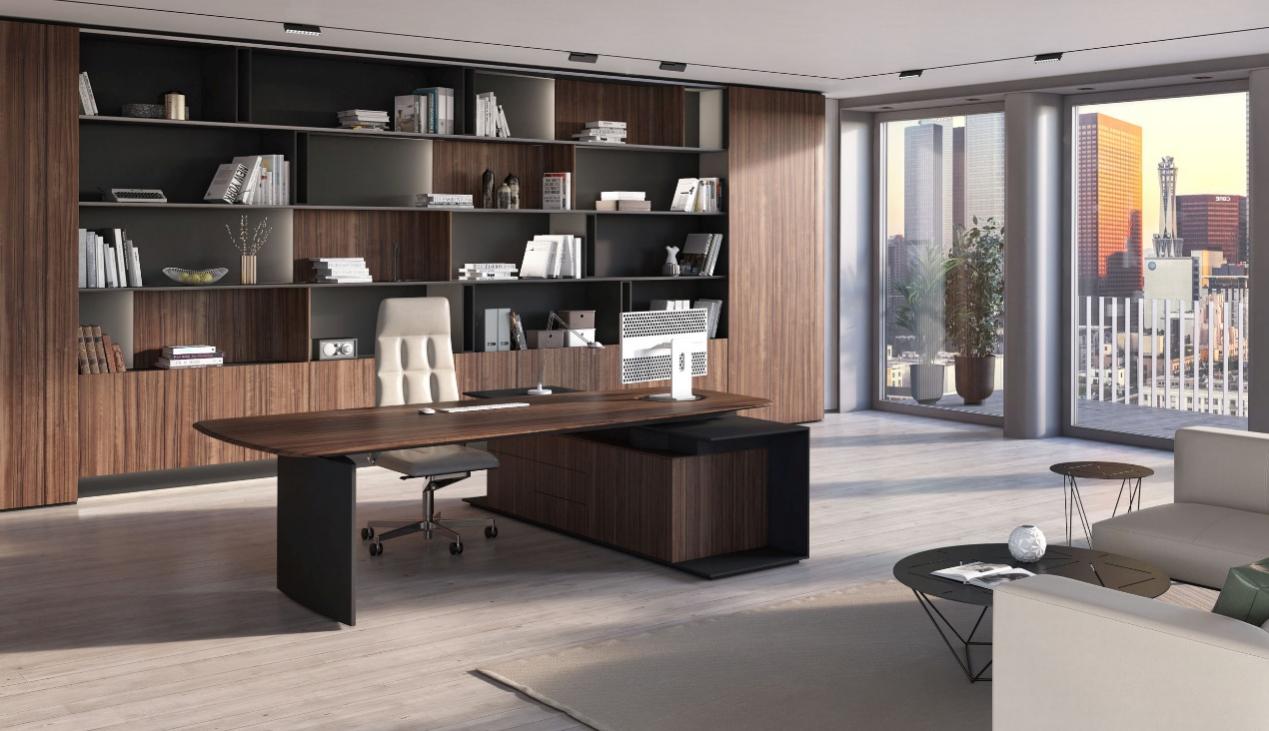
I. Core Requirements and Design Trends for Modern Executive Offices
Executive workspaces typically encompass offices for:
- Managers
- Directors
- Senior Executives
- CEOs
- Chairpersons
While these roles differ in terms of spatial footprint, furnishing standards, and design aesthetics, their core requirements share a high degree of consistency:
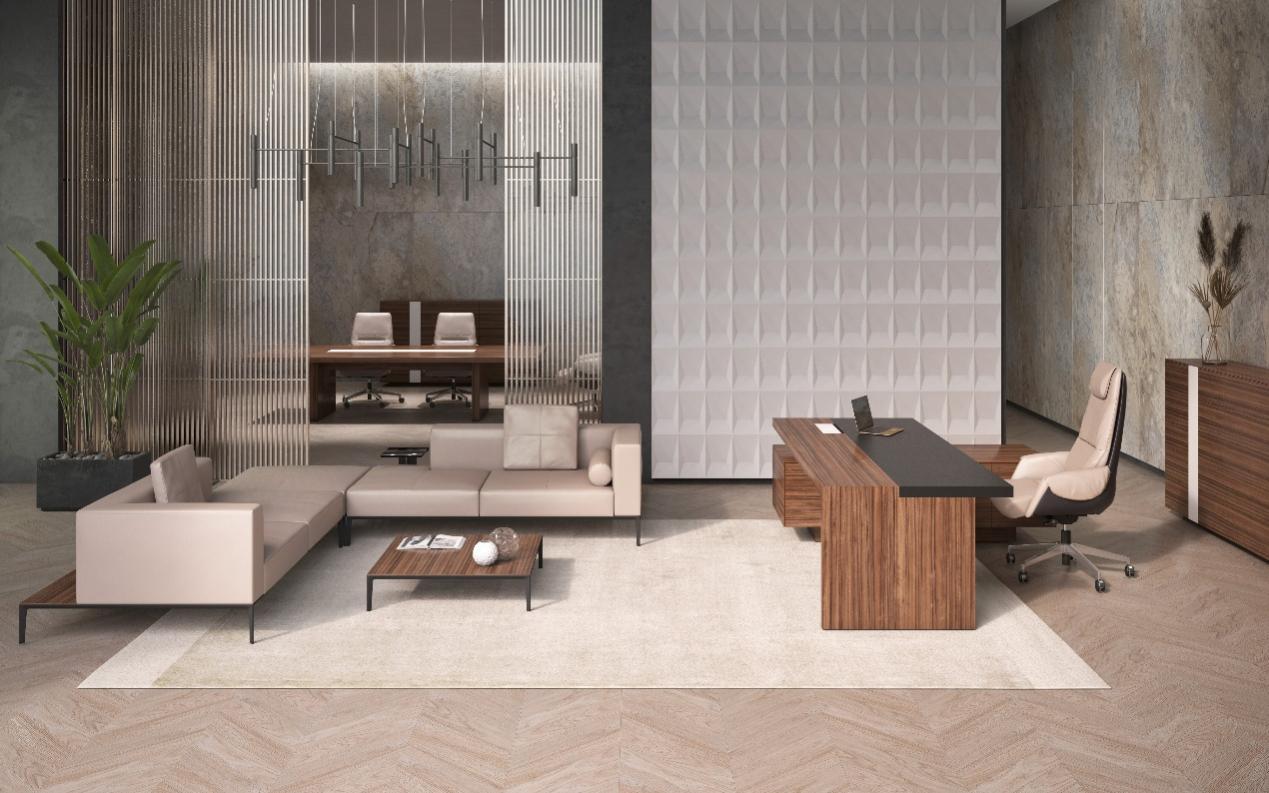
1. Requirements for Efficient Work
Executives handle a daily workload that includes:
- Corporate strategic planning;
- Project decision-making;
- Document approval;
- Team management;
- Business communication.
Consequently, the workspace requires:
- A comfortable working area;
- An efficient document management system;
- Support from smart office equipment;
- Excellent ergonomic design.
2. Requirements for Business Hosting
Executive offices often serve as key venues for external corporate interaction.
Examples include:
- Client visits;
- Business negotiations;
- Partner discussions;
- High-level internal communications.
Therefore, modern executive offices often feature a composite layout combining a workspace, a reception area, a small meeting zone, and storage/display areas.
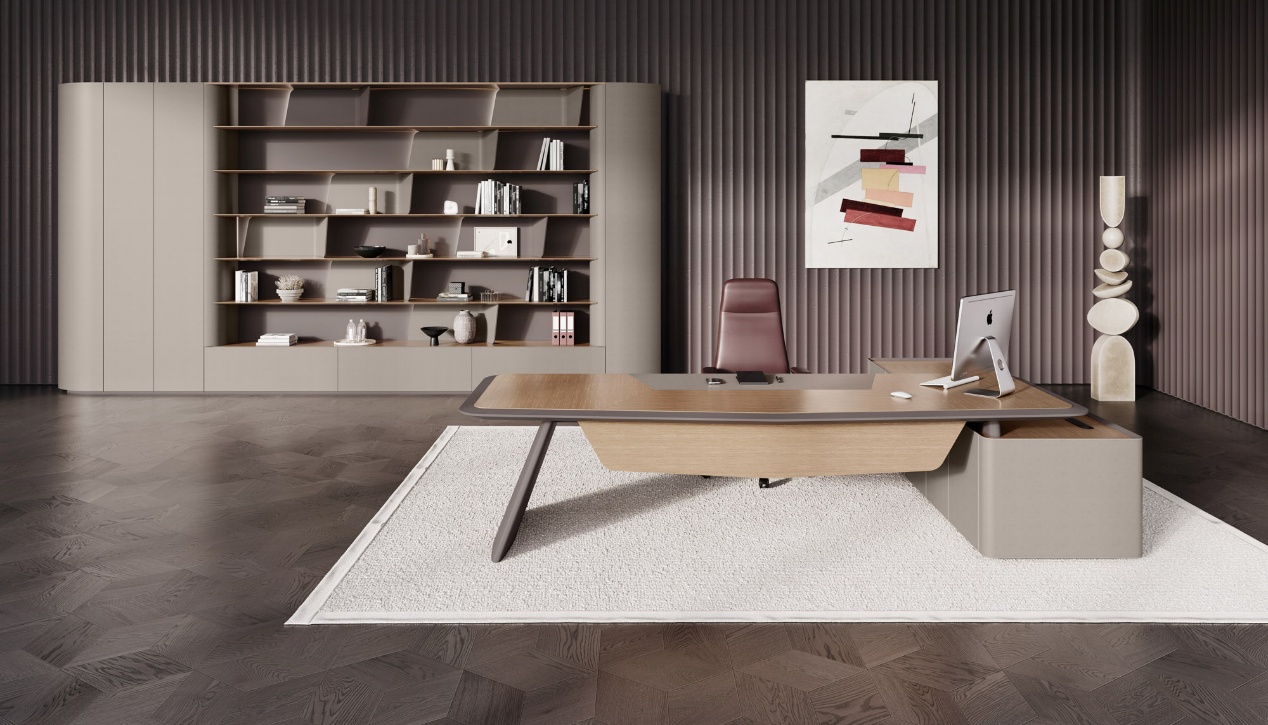
II. Integrated Design for Executive Offices: A Comprehensive Upgrade from Function to Experience
An integrated executive office is not created by placing several furniture categories in one room. Each zone should have a clear role while remaining visually connected to the others. The executive desk anchors daily work, the reception area supports informal conversations, and the meeting area allows faster decision-making without moving to a separate conference room.
Modern executive office design is moving away from stark visual distinctions based on rank, placing greater emphasis on the spatial experience and practical utility. Whether for a manager, director, or CEO, the design of executive offices typically focuses on the following areas:
1. Work Area: Embodying professionalism, efficiency, and comfort
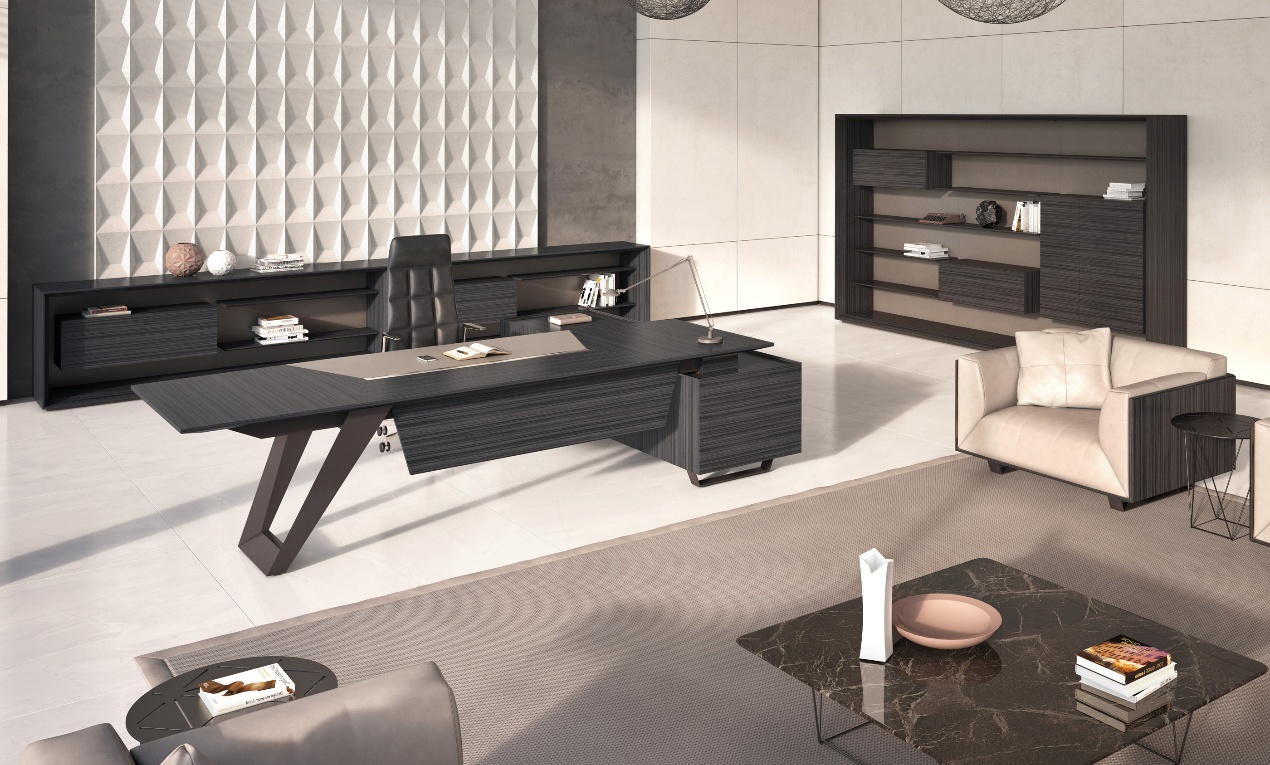
The executive desk serves as the focal point of the entire space.
Current mainstream designs include:
Features:
- Large desktop surface;
- High-quality finishes;
- A substantial, dignified aesthetic;
- Integrated storage capabilities.
These elements enhance the perceived quality of the space while reflecting the executive's professional image.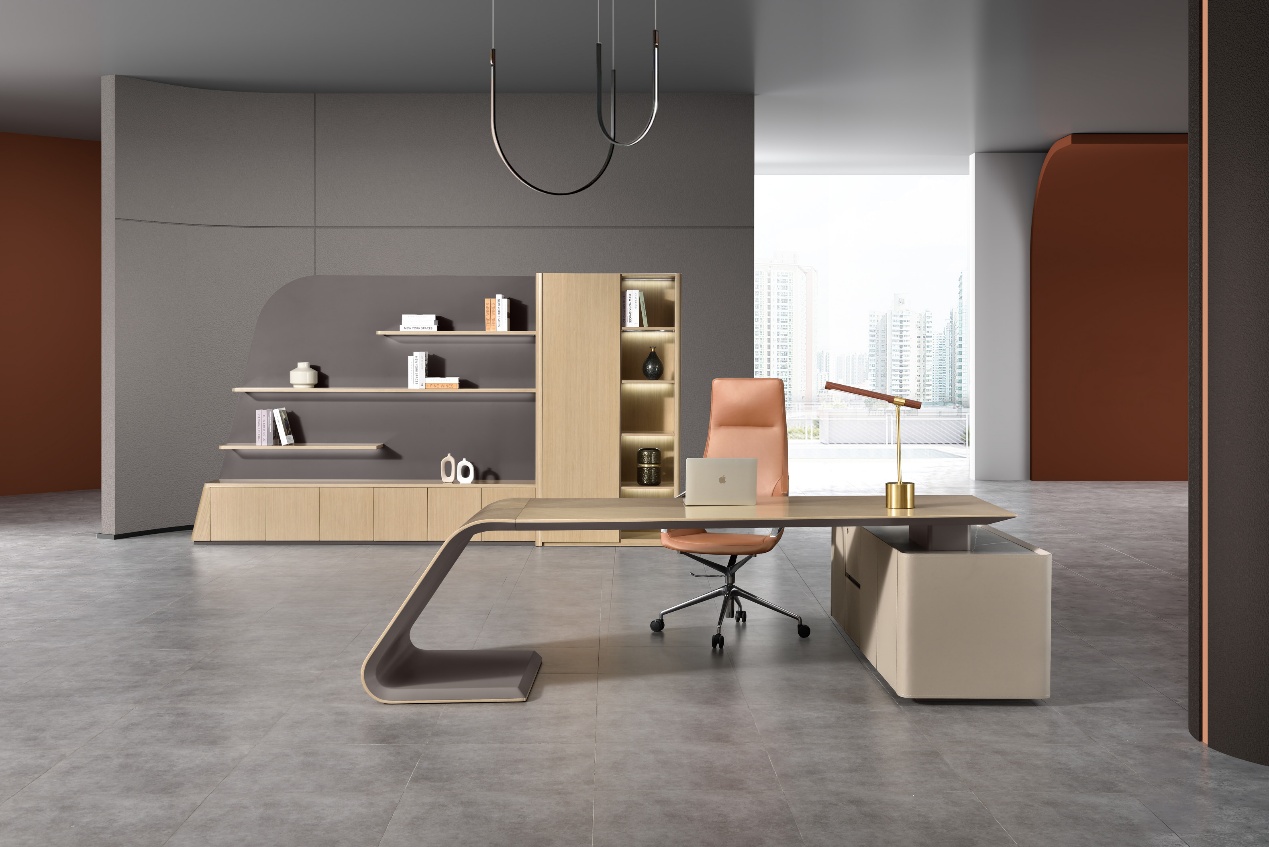
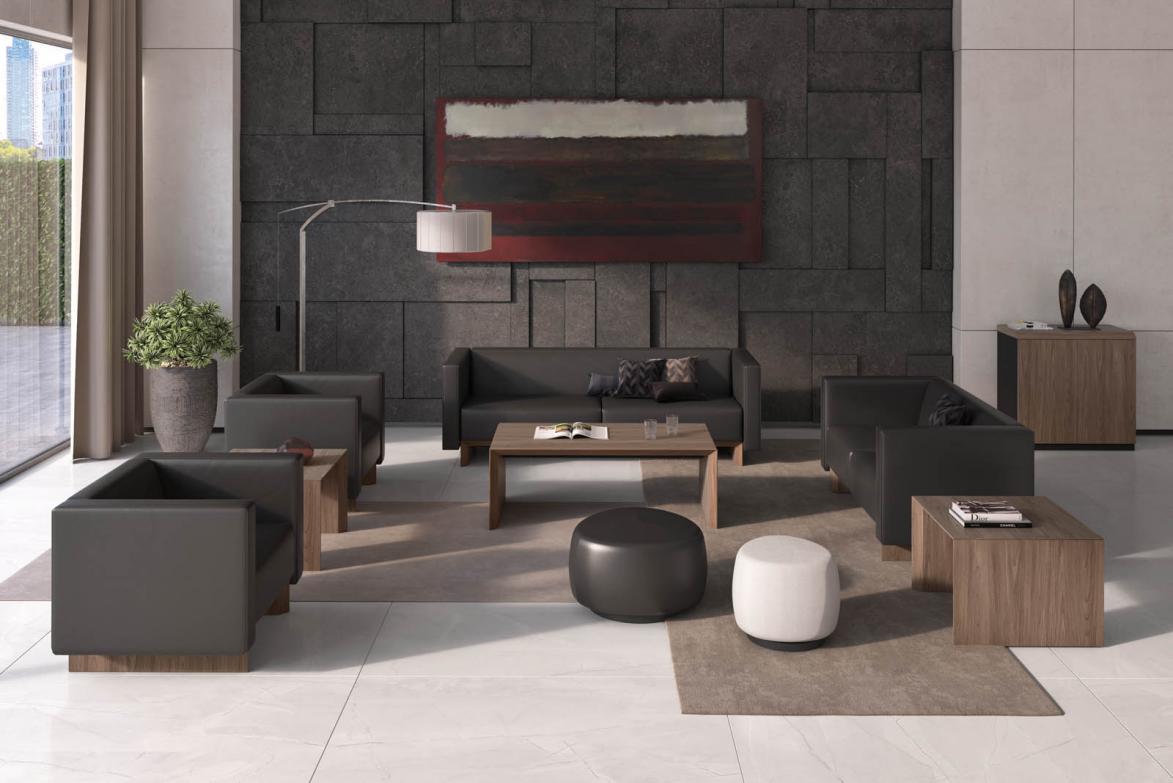
2. Reception Area: Enhancing communication and interaction
Unlike traditional offices that simply placed a couple of visitor chairs, more enterprises are now incorporating dedicated reception areas.
Common configurations:
- Business-style sofas;
- Lounge chairs;
- Small discussion tables.
This setup alleviates the formality often associated with traditional meeting spaces, creating a more open and human-centric office environment.
3. Small Meeting Area: Facilitating rapid decision-making
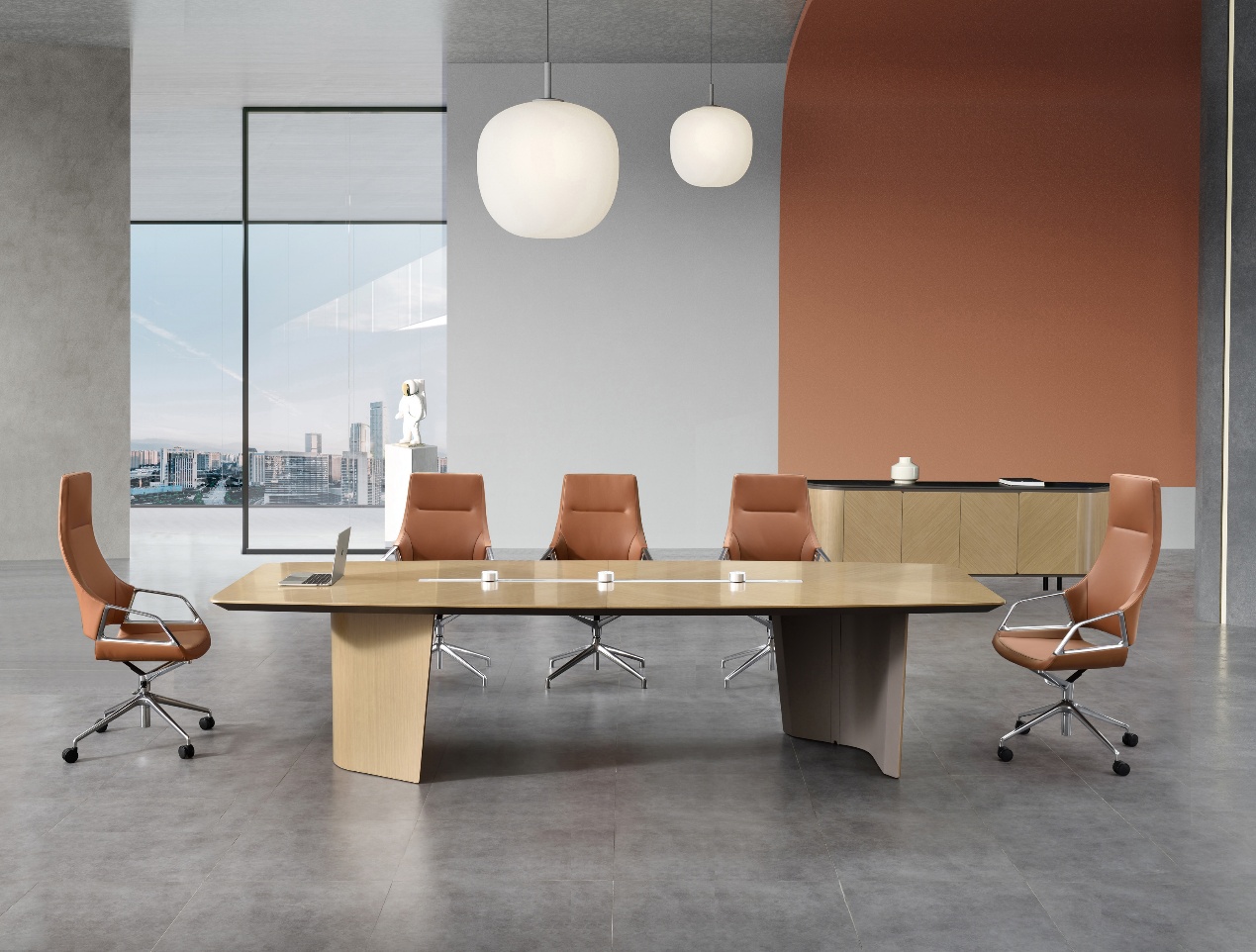
As the pace of modern corporate management accelerates, incorporating small meeting areas into executive offices has become a growing trend.
Examples include:
- Round-table meeting areas for 4–6 people;
- Video conferencing zones;
- Project discussion spaces.
Executives can quickly conduct strategic discussions, project updates, and client interactions without needing to move to a large conference room.
Ⅲ. How do office space solution providers help enterprises create high-end executive spaces?
For enterprises, creating an executive office space involves more than just purchasing a few pieces of furniture; it requires a comprehensive spatial solution.
Professional providers need to possess:
1. Space planning capabilities
Developing logical layout plans based on:
- Company size;
- Staff structure;
- Available floor area;
- Corporate culture.
2. Product system integration capabilities
A complete executive space typically includes: executive desks, manager desks, conference tables, storage cabinets, office partitions, and ergonomic chairs.
Achieving a cohesive overall space through a systematic product portfolio.
3. International Project Delivery Experience
Tailored to different markets:
North America: Emphasizes functionality, ergonomics, and modern business aesthetics.
Japan: Focuses on attention to detail, quality, and space efficiency.
Middle East: Highlights high-end appeal, luxury, and brand presentation.
Australia: Prioritizes nature, comfort, and an open-office experience.
Suppliers with multi-region project experience help clients reduce communication costs and increase project success rates.
Conclusion
A modern executive office should support more than individual work. By coordinating the executive desk, visitor seating, meeting furniture and storage as one integrated layout, M&W helps create leadership spaces that are practical for daily decisions and professional for client-facing conversations. Contact M&W today to plan an executive office solution that fits your workspace and management needs.
FAQ
1、What should companies look for in an executive office furniture supplier?
Companies should look beyond product price and assess whether the supplier can support OEM/ODM requirements, product traceability, in-house design and engineering, and project coordination for international markets. M&W combines these capabilities with experience serving major office furniture brands and overseas projects.
2、How should an executive office balance privacy and client interaction?
Separate the main work area from the visitor zone while keeping both visually coordinated. This allows private work to continue without making client conversations feel disconnected from the office.
3、When does an executive office need a small meeting table?
A small meeting table is useful when managers often review documents, discuss projects or receive a small number of visitors without booking a formal conference room.
4、What type of storage is most useful in an executive office?
A balanced combination of enclosed storage for private documents and open display space for selected books, awards or materials can keep the office organized without making it feel crowded.
5、How can executive furniture reflect a company’s brand image?
Use a consistent direction for desk finishes, storage design, meeting furniture and visitor seating. The goal is not to add decoration everywhere, but to create a space that feels intentional and aligned with the company.