
How Thick-Panel Cubicle Systems Support Hybrid and Focused Work in Corporate Settings
Hybrid schedules create a new tension in corporate offices. Some days demand absolute concentration. Other days require rapid reassignment of space. Thick-panel solutions resolve that tension. A carefully specified cubicle workstation protects deep work. A modular office cubicle system absorbs attendance swings. Customizable office cubicles let each department fine-tune the balance. The result is a workplace that performs under both conditions.
The Dual Demand of Modern Corporate Floors
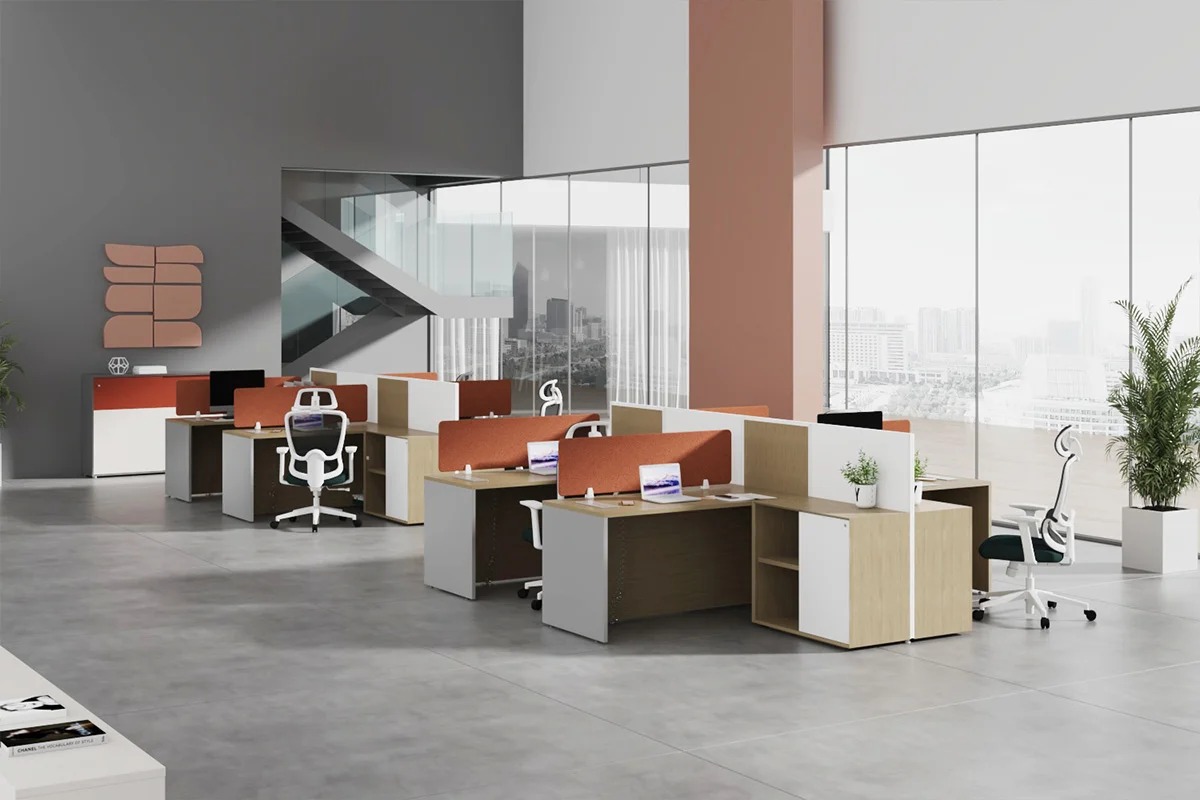
Employees arrive on different days. Some need silence for analysis or client calls. Others need only a temporary landing spot. Fixed private offices lock space into one mode. Open benches leave focus unprotected. Thick panels—typically 83 mm—create a third path. They enclose enough to shield attention yet remain movable enough to reconfigure.
Why Thickness Matters More Than Height Alone
Height blocks eyes. Thickness blocks sound and vibration. An 83 mm panel absorbs more energy than thinner alternatives. Conversations stay contained. Keyboard noise fades. The cubicle workstation becomes a reliable acoustic envelope. Workers settle into complex tasks faster and stay there longer.
The Role of Modular Construction
A modular office cubicle system uses interlocking frames and tool-free connectors. Crews install or relocate stations in hours, not days. When hybrid attendance drops mid-week, managers collapse unused rows. When a project team expands, they expand the cluster. Customizable office cubicles accept new panel heights or finishes without discarding the original investment.
Mechanisms That Protect Focused Work
Concentration collapses under visual and auditory interruptions. Thick-panel systems attack both problems at once.
Visual and Acoustic Enclosure
High walls with substantial mass close sightlines. Fabric or composite faces dampen speech frequencies. Employees report fewer involuntary glances and less overheard chatter. The enclosed cubicle workstation restores the sense of ownership that open plans remove.
Ergonomic Continuity
Focus also depends on physical ease. Height-adjustable surfaces let users shift posture without leaving the station. Task chairs with proper lumbar support reduce micro-distractions caused by discomfort. Under-desk storage keeps reference materials within reach yet out of sight. These elements turn the cubicle workstation into a sustained-performance tool rather than a temporary perch.
Mechanisms That Enable Hybrid Flexibility
Hybrid patterns punish rigid layouts. Thick-panel systems absorb the variability.
Rapid Reassignment and Hot-Desking Support
Because the frame is modular, nameplates and power modules swap quickly. A station used by a finance analyst on Monday can serve a visiting consultant on Wednesday. Personal items lock into mobile cabinets that travel with the employee or stay secured overnight. A modular office cubicle system turns empty desks into available inventory instead of wasted square footage.
Neighborhood and Zone Planning
Departments form temporary neighborhoods. High walls keep each group acoustically distinct. Shared writing boards or compact meeting tables sit just outside the cluster. Hybrid workers transition from private focus to brief collaboration without leaving the floor. Customizable office cubicles let planners vary panel height by zone—taller for concentrated roles, slightly lower for interactive teams.
Evidence from Recent Corporate Installations
Two American projects illustrate the dual benefit in practice.
Financial Institution Application
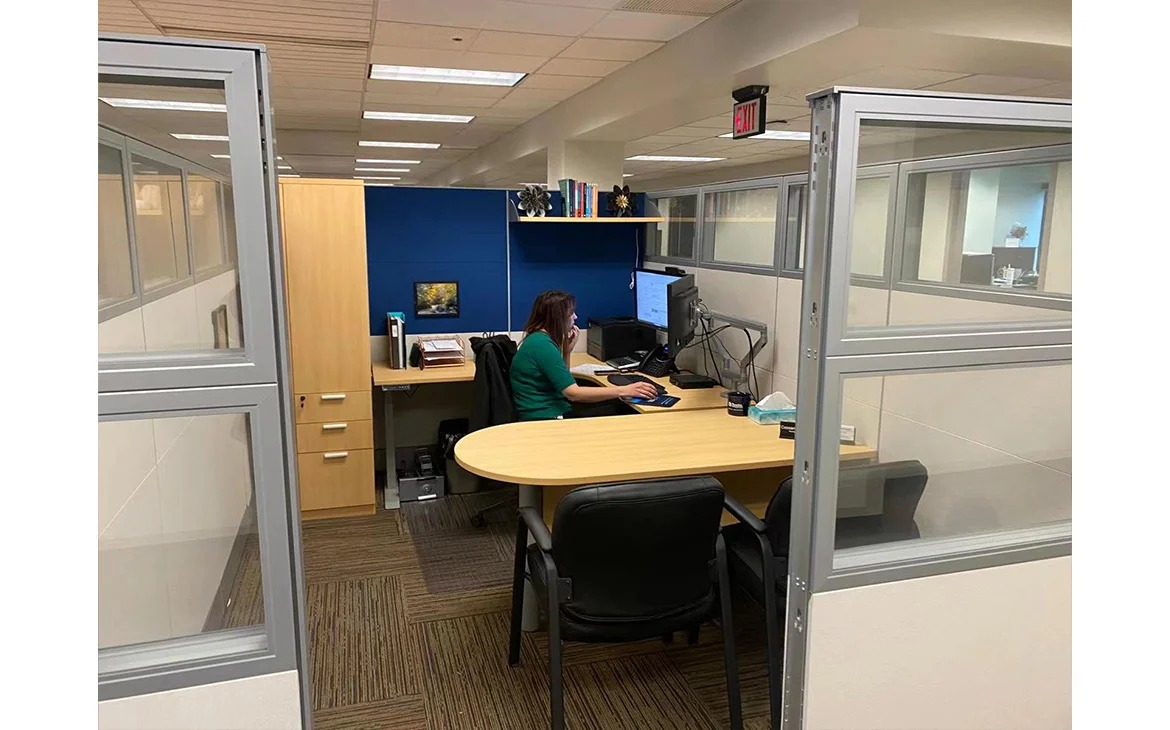
The America Bank project required both data security and daily adaptability. Designers installed 83 mm T10 panels to create fully enclosed stations. Each cubicle workstation featured an L-shaped height-adjustable desk, movable steel file cabinets, and computer brackets. A circular conference table stood nearby for scheduled discussions. Blue-and-white finishes reinforced professional standards. The modular office cubicle system allowed the bank to adjust station counts as hybrid attendance fluctuated while preserving the privacy needed for sensitive financial work.
Broader Corporate Deployment
The Las Vegas-Nevada project faced similar dual pressures. The same T10 thick-panel platform delivered strong individual privacy. Every cubicle workstation received an ergonomic desk, task chair, and filing cabinet. Mobile writing boards supported spontaneous planning. Training chairs with writing surfaces occupied adjacent zones for group sessions. Neutral tones and abundant natural light kept the environment calm. Customizable office cubicles enabled the client to mix focused rows with collaborative edges, matching the hybrid rhythm of the workforce.
Comparative Performance Overview
The following table summarizes how thick-panel systems address the two primary corporate demands.
|
Performance Area |
Impact on Focused Work |
Impact on Hybrid Work |
|
83 mm panel thickness |
Higher sound absorption, fewer interruptions |
Consistent privacy regardless of occupancy |
|
Modular frame |
Stable personal zone |
Same-day reconfiguration |
|
Height-adjustable surfaces |
Reduced physical fatigue |
Easy reset for successive users |
|
Secure under-desk storage |
Confidential materials stay protected |
Personal items travel or lock safely |
|
Integrated power and data |
Uninterrupted technology flow |
Clean reset between occupants |
|
Finish and height options |
Brand-aligned concentration environment |
Department-specific zoning |
A cubicle workstation built on these attributes outperforms both open benches and permanent offices when hybrid and focused needs coexist. A modular office cubicle system multiplies that advantage across the floor. Customizable office cubicles ensure the solution never becomes generic.
Implementation Roadmap for Corporate Teams
Successful roll-outs follow a clear sequence. First, map attendance patterns and task types by department. Second, specify panel thickness and height according to privacy priority. Third, select a modular office cubicle system that accepts future accessories. Fourth, pilot a small cluster, measure concentration metrics and space utilization, then expand. Fifth, train facilities staff on rapid reconfiguration so hybrid adjustments remain frictionless.
Measuring Return on the Investment
Track two simple indicators. Average uninterrupted work blocks should lengthen. Percentage of occupied stations on low-attendance days should rise. When both move in the right direction, the thick-panel strategy is working. Customizable office cubicles make further refinements inexpensive.
Conclusion
Thick-panel systems give corporate floors the dual capacity they now require. A well-designed cubicle workstation protects focused work. A modular office cubicle system absorbs hybrid variability. Customizable office cubicles keep every detail aligned with operational reality. M&W Workstation engineers and supplies these solutions. Reach out today for a consultation that matches your hybrid and concentration goals.