
North American Office Furniture Trends: How Office Partitions and Electric Height-Adjustable Desks Create Efficient, Flexible Workspaces
Current trends in North American office spaces show a shift from traditional "fixed workstations" toward flexible, ergonomic, modular, and multifunctional office systems. Particularly in the U.S. market, the combination of office partitions (or panel systems) and electric height-adjustable desks (sit-stand desks) is emerging as a highly noteworthy configuration for open-plan offices, corporate headquarters, coworking spaces, and hybrid work environments.
In practical application, this type of solution goes beyond simply pairing partitions with height-adjustable desks; it redefines the modern workstation by integrating features such as spatial zoning, ergonomics, privacy management, equipment integration, and workplace flexibility.
I. Why Does the U.S. Market Need Office Partitions?
There has long been a demand for open-plan office layouts in North America. While open spaces enhance space utilization and facilitate employee interaction, a completely open environment can lead to issues such as visual distractions, noise, a lack of privacy, and reduced focus.
Consequently, the demand for office partitions in the U.S. market is not driven by a simple desire to "separate employees," but rather by the need for partitions to serve more comprehensive spatial functions.
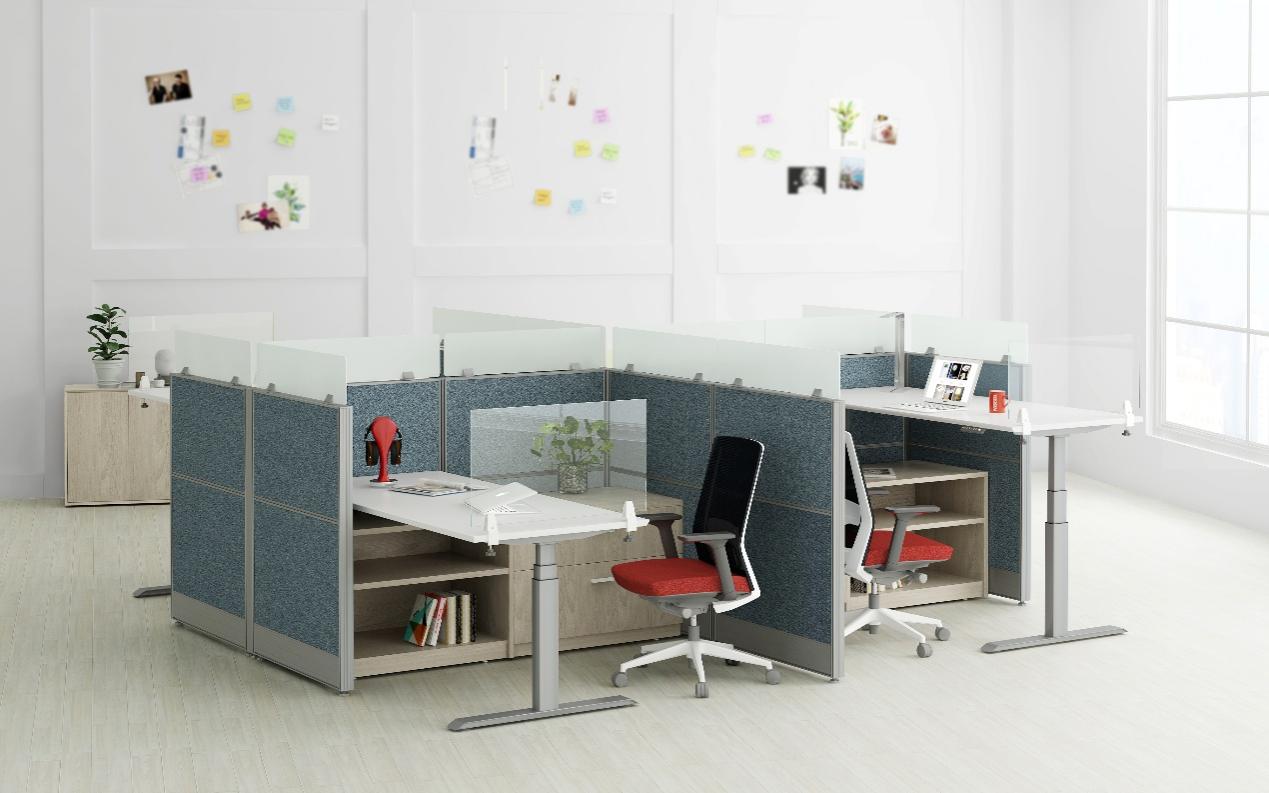
The accompanying image illustrates a typical combination of low-profile solid partitions and glass panels. Semi-height solid panels provide basic visual screening between desks, while frosted or translucent glass sections are added above; this arrangement maintains a sense of spatial openness while offering a degree of personal privacy.
This design is particularly well-suited for:
* Open-plan offices
* Corporate headquarters and executive office areas
* Tech and internet companies
* Financial, consulting, and professional service firms
* Call centers and team-based workspaces
* Coworking spaces
* Hybrid workplace environments
For the U.S. market, achieving a balance between "privacy" and "openness" has become a key design priority for office partitions: workstations should be neither completely enclosed nor leave employees feeling entirely exposed. At the same time, screen systems must possess strong modularity and reconfigurability. When a company changes its office space or adjusts team size, workstations can be quickly added, removed, or rearranged without the need for large-scale renovations.
BIFMA has established specific performance standards for panel systems, screens, and related mounting components, as well as standards for desks, height-adjustable desks, and ergonomic furniture. This underscores the high demands of the North American commercial office furniture market regarding product stability, durability, and system integration.
II. Electric Height-Adjustable Desks: A Key Component of Ergonomic Office Design
Compared to office screens, electric height-adjustable desks address a different core issue: flexibility in employee posture and work style.
Traditional fixed-height desks generally only accommodate seated work, whereas electric height-adjustable desks use motors to adjust the tabletop height, allowing employees to switch freely between sitting and standing positions.
In its ergonomic recommendations for computer workstations, the U.S. Occupational Safety and Health Administration (OSHA) emphasizes that desks should provide adequate legroom and accommodate various working postures; its procurement guidelines further note that height-adjustable workstations suit a wider range of users and encourage employees to change postures regularly.
Consequently, the U.S. market's interest in products such as electric standing desks, height-adjustable desks, and sit-stand desks goes beyond mere "lifting functionality" to focus on the complete ergonomic experience.
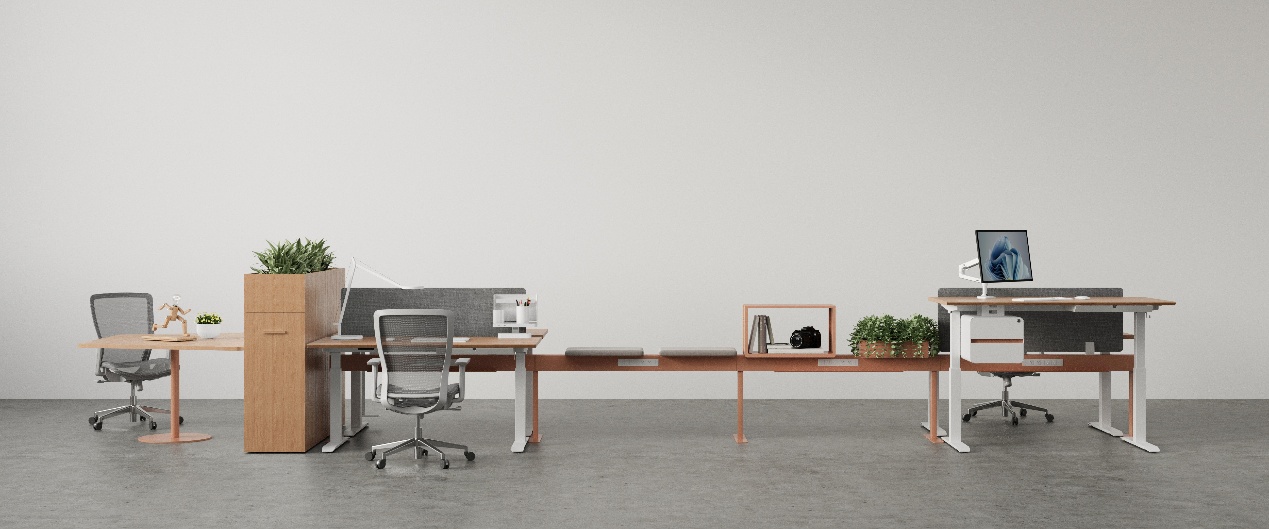
Examples include:
1. Dual-motor lifting system
Suitable for corporate office environments, requiring stable operation, low noise levels, and high load-bearing capacity.
2. Height memory function
Allows employees to save specific heights for sitting and standing, enabling one-touch adjustments.
3. Anti-pinch and anti-collision features
Automatically stops or reverses the desk's movement if an obstacle is encountered while lowering, enhancing workplace safety.
4. Large tabletop surface
U.S. office desks typically need to accommodate multiple monitors, laptops, keyboards, documents, and other equipment; therefore, surface area and load-bearing capacity are critical. 5. Power and Cable Management
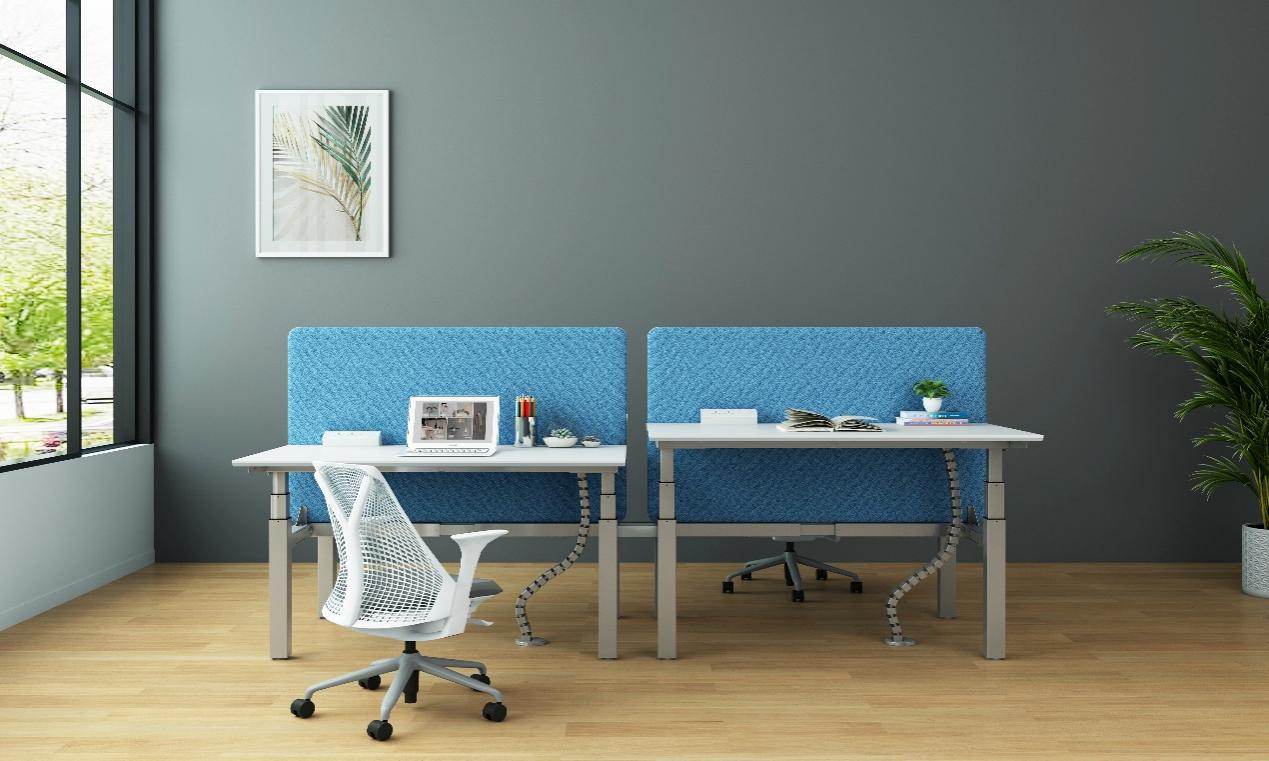
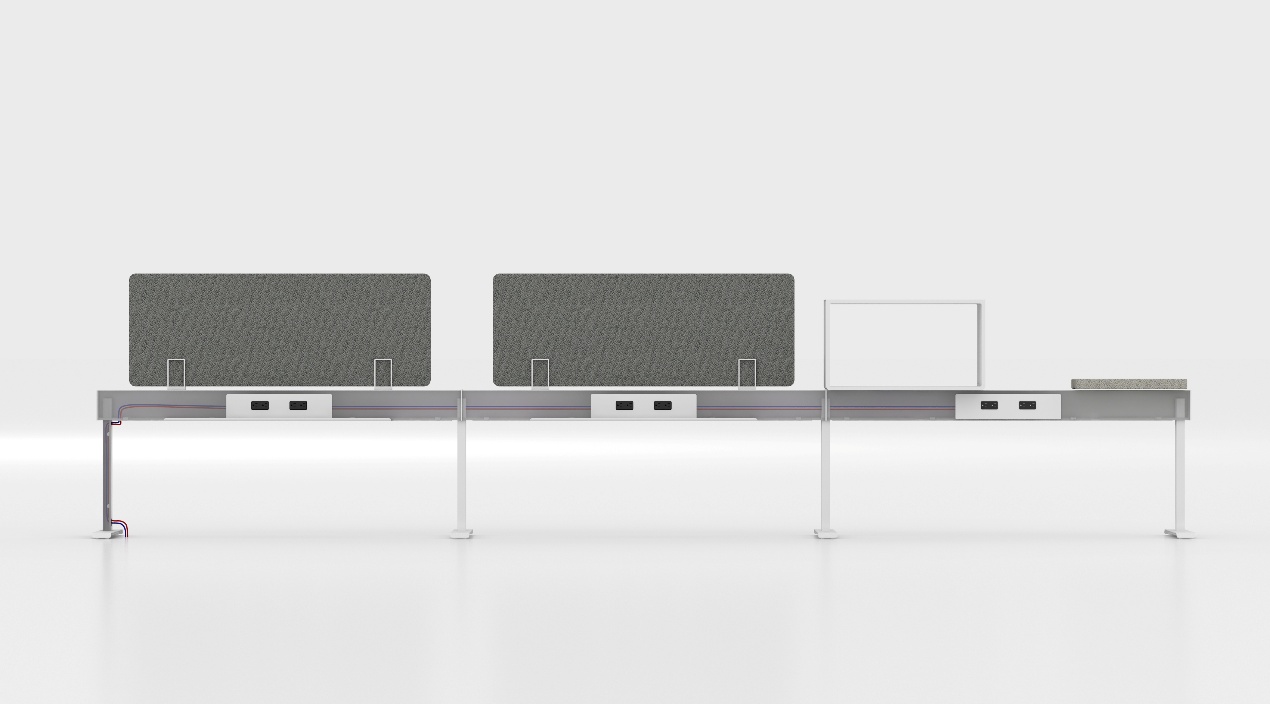
To prevent power cords and monitor cables from becoming tangled or messy when the height-adjustable desk moves up and down, it is necessary to incorporate cable channels, cable management trays, power boxes, and under-desk cable management systems.
III. Why is the "Partition + Height-Adjustable Desk" Combination More Valuable?
What truly suits the North American market is not the sale of a standalone partition or desk, but the creation of a comprehensive Ergonomic Workstation System.
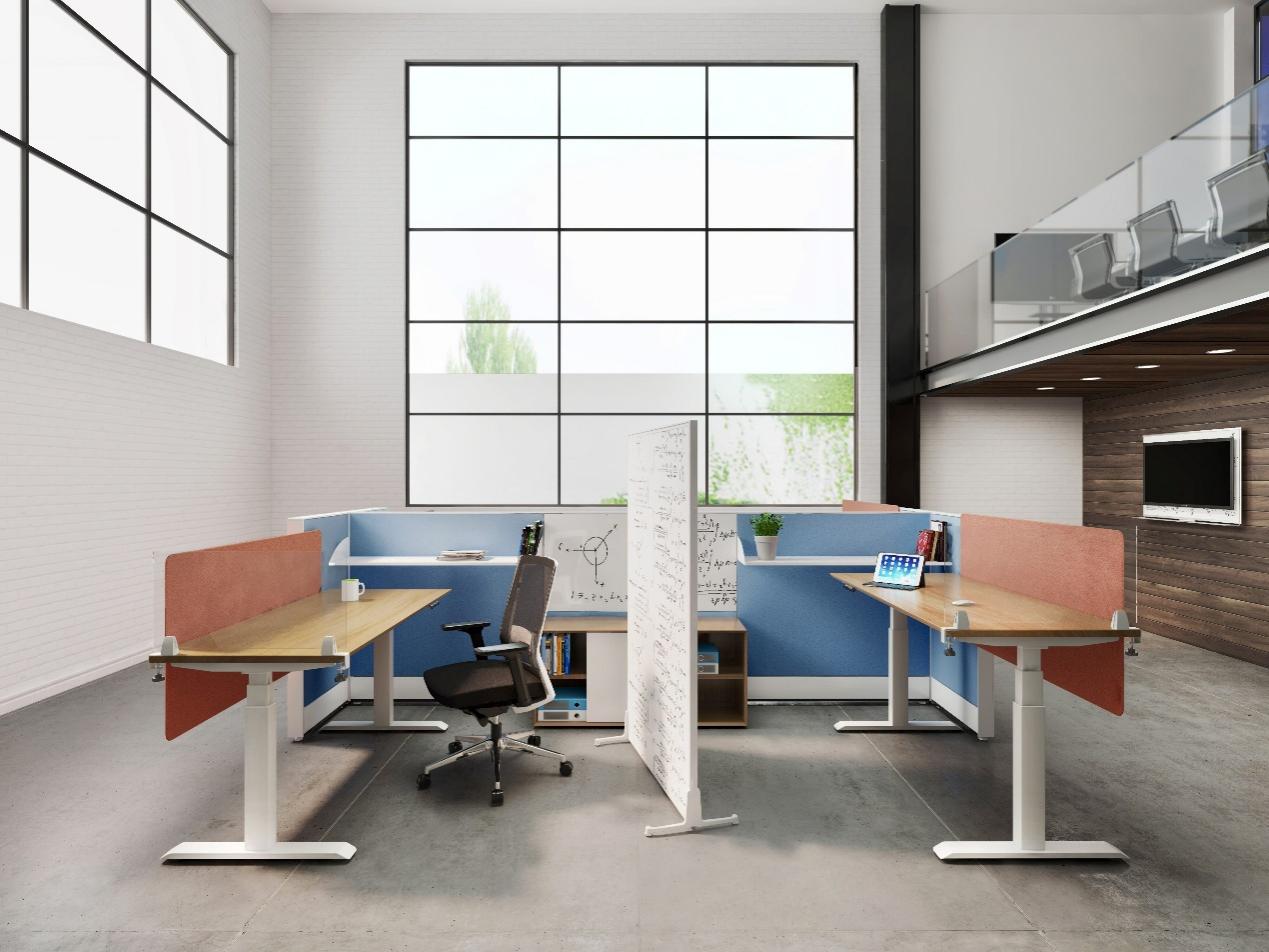
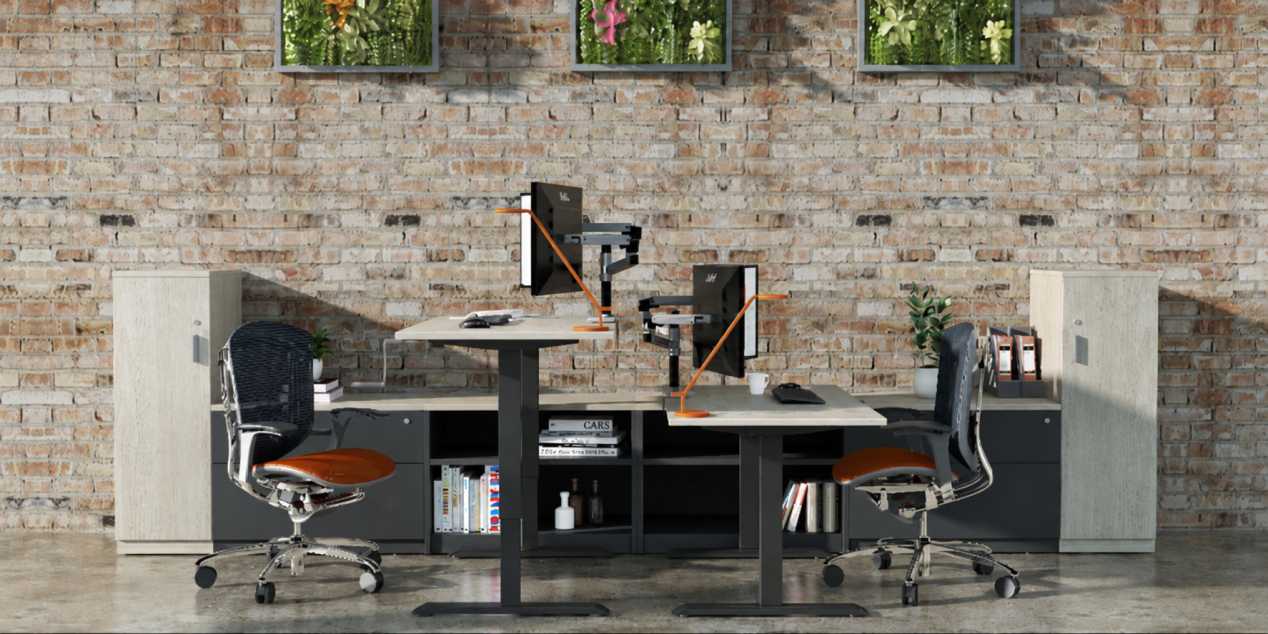
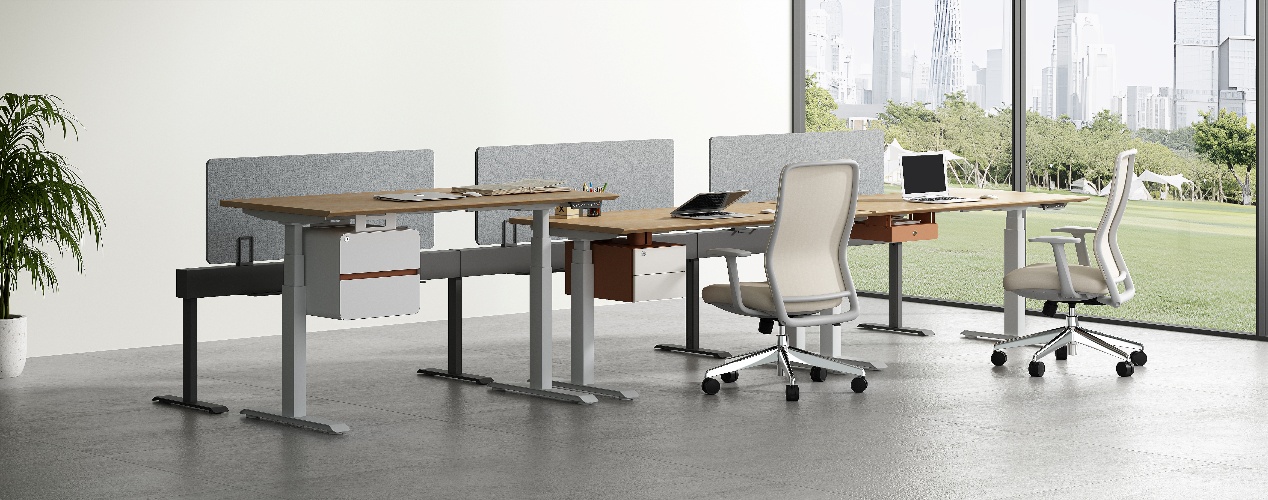
The combination shown in the image demonstrates clear systemic characteristics:
Office partitions define the space; electric height-adjustable desks address ergonomics; monitor arms support equipment; cable management ensures tidiness; and power systems provide connectivity.
Specifically, the partition serves as a mounting base for accessories such as monitor arms, power modules, and storage shelves, while the height-adjustable desk acts as the core platform for employees' daily work.
This combination can be scaled up into two-person, four-person, or six-person workstations—or even larger "bench systems"—making it ideal for bulk procurement in US corporate office environments.
IV. What Additional Features Can Be Added in the Future?
When developing such products for the North American market, simply combining a partition and a height-adjustable desk is no longer sufficient; the concept can be further expanded.
1. Monitor Management System
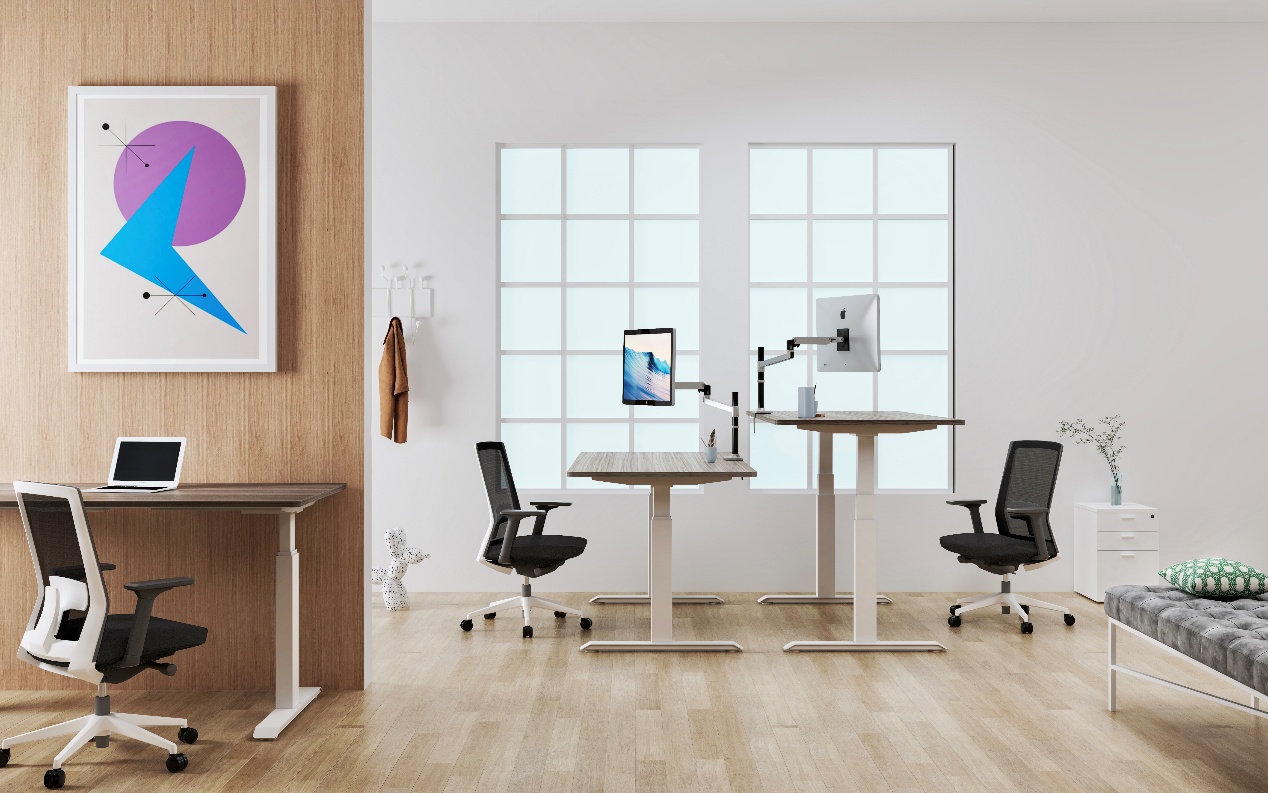
The monitor arm shown in the image represents a crucial functional extension. To accommodate the dual- or triple-monitor setups common in US offices, single-arm, dual-arm, and multi-screen mounts can be provided to optimize monitor height, angle, and viewing distance for ergonomics.
2. Power and USB Charging
Features such as power modules, USB-A and USB-C ports, and wireless charging can be integrated into the partition, desktop, or under-desk area, eliminating the need for employees to constantly search for wall outlets.
3. Privacy and Acoustic Features
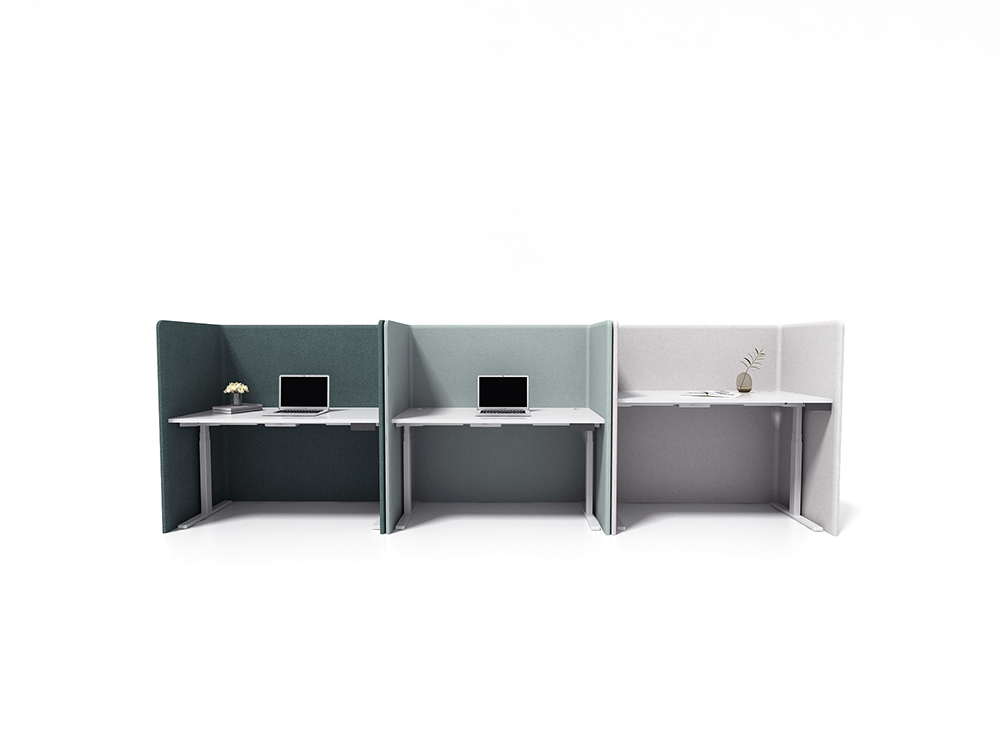
Beyond visual screening, elements such as acoustic panels (sound-absorbing partitions), PET acoustic materials, and fabric-covered panels can be added to help reduce noise interference in open-plan offices.
4. Storage Functionality
Screens can be integrated with mobile pedestals, under-desk storage, personal lockers, and overhead storage to create a comprehensive "work + storage" system.
5. Flexible Work and Hot Desking
To support hybrid work and hot desking, features such as employee lockers, desk numbering, quick power access, and desktop status management can be incorporated, allowing a single workstation to serve multiple employees.
6. Smart Features
Taking it a step further, height-adjustable desks can be integrated with office space management systems—tracking sit-stand duration, prompting posture changes, saving height presets, and even enabling desktop control via an app.
V. Evolving Core Demands in the North American Office Furniture Market
Overall, the U.S. office furniture market is shifting away from the traditional "desk + chair + screen" combination toward a model prioritizing ergonomics, privacy, flexible work, technology integration, and space efficiency.
Consequently, the value of office screens has evolved from simple partitions into space management systems, while electric height-adjustable desks have transformed from functional desks into ergonomic work platforms.
For office furniture manufacturers, future competitiveness lies not merely in offering a desk or a screen, but in providing a modular office workstation system that allows for rapid configuration, flexible combination, and continuous scalability.
In particular, nowadays the combination of office partitions, electric standing desks, monitor arms, cable management, power solutions, storage, and acoustic solutions is highly suitable for the open-plan offices, corporate environments, and hybrid/flexible workspaces prevalent in North America.
Conclusion
North American office projects increasingly need workstations that can balance openness with privacy and fixed layouts with changing work patterns. By planning office partitions and electric height-adjustable desks as one modular system, M&W helps create workspaces that support daily focus, equipment needs and future flexibility. Contact M&W today to discuss a workstation solution for your next office project.