
How can modern minimalist office furniture be integrated into the workspace? An analysis of applications ranging from open-plan areas to executive offices.
As modern corporate work styles evolve, office furniture has transcended its basic functional role; it has become an integral part of workspace planning, corporate identity, and the employee experience. In today’s office environments, furniture often adopts a modern minimalist aesthetic—characterized by clean geometric lines and a neutral color palette (such as white, light wood tones, and black). By combining open-plan workstations, standalone executive desks, storage units, and casual meeting furniture, a cohesive and layered office environment is created.
This style of furniture is not limited to a specific type of company; rather, it adapts seamlessly to modern workspaces of varying sizes and functional requirements.
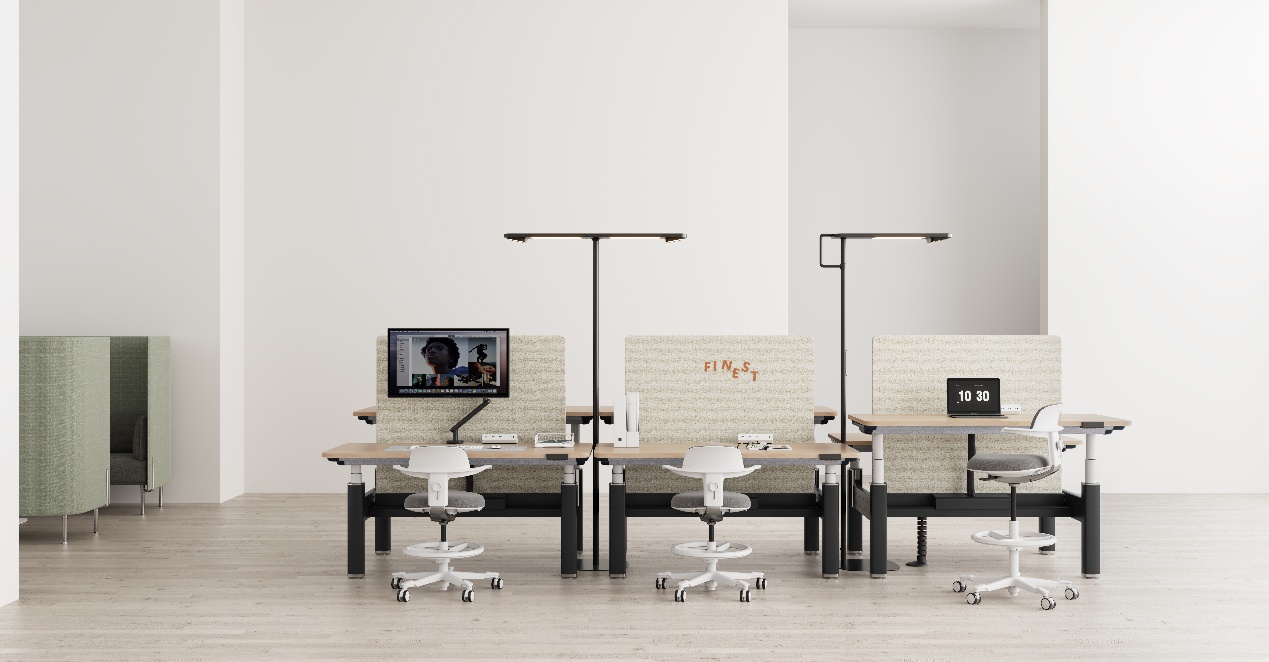
I. Key Design Features of Modern Minimalist Office Furniture
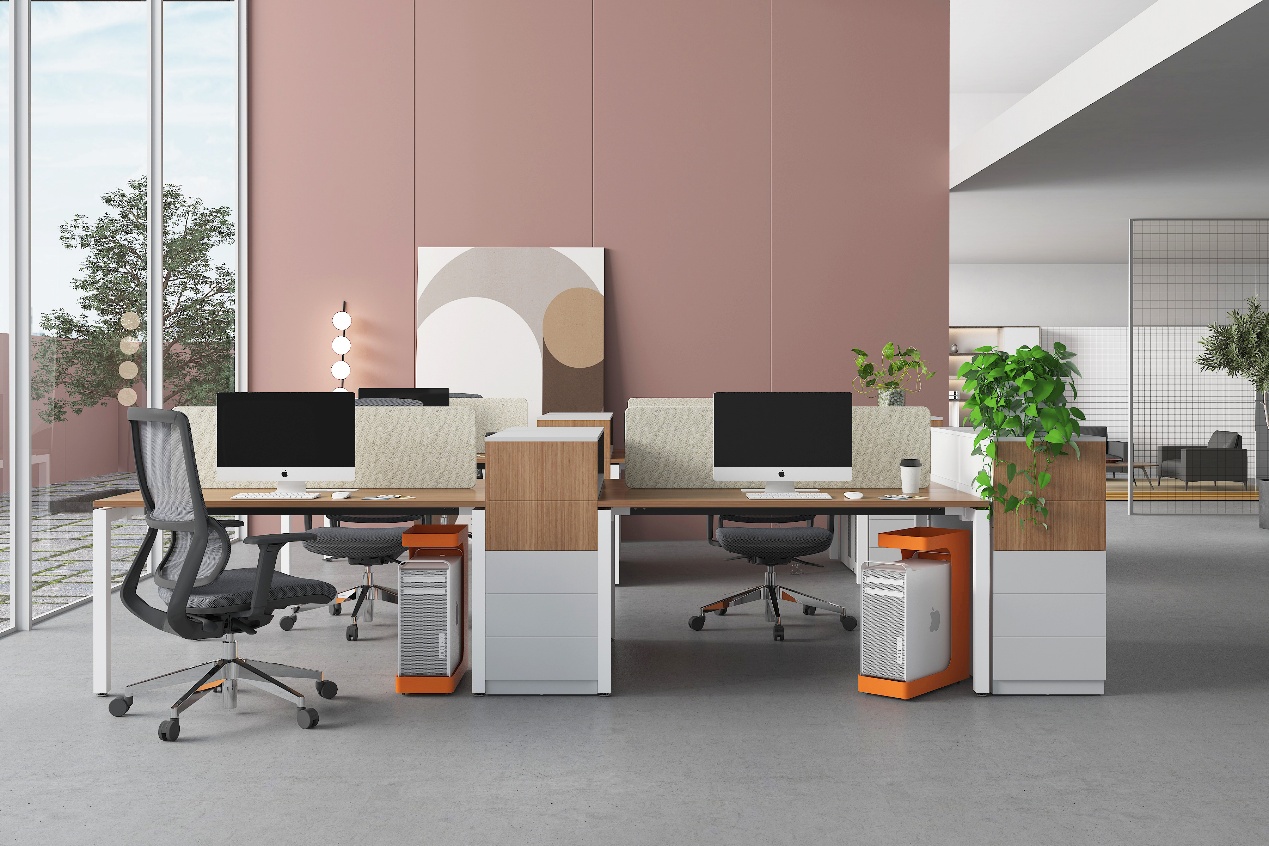
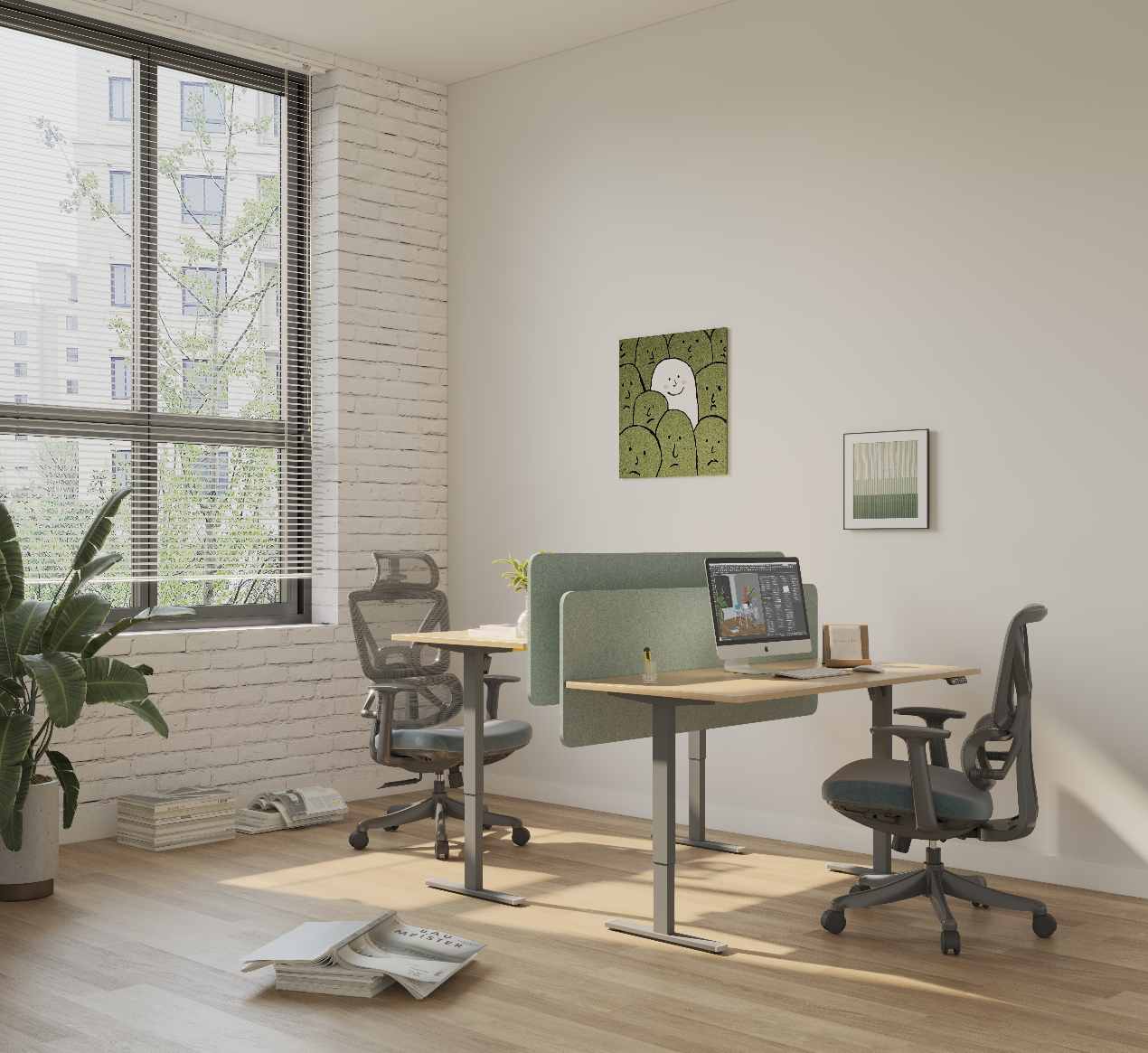
The general office area typically employs a multi-person workstation layout. Desks are arranged in continuous rows, with low partitions or desktop partitions creating relatively distinct work zones. Each station is equipped with an office chair, a mobile filing cabinet, and computer equipment, ensuring employees have personal workspace while maintaining the office's overall openness.
Compared to traditional layouts featuring high partitions, this arrangement emphasizes visual connectivity across the space. It allows employees to maintain professional boundaries without the sense of fragmentation caused by solid walls.
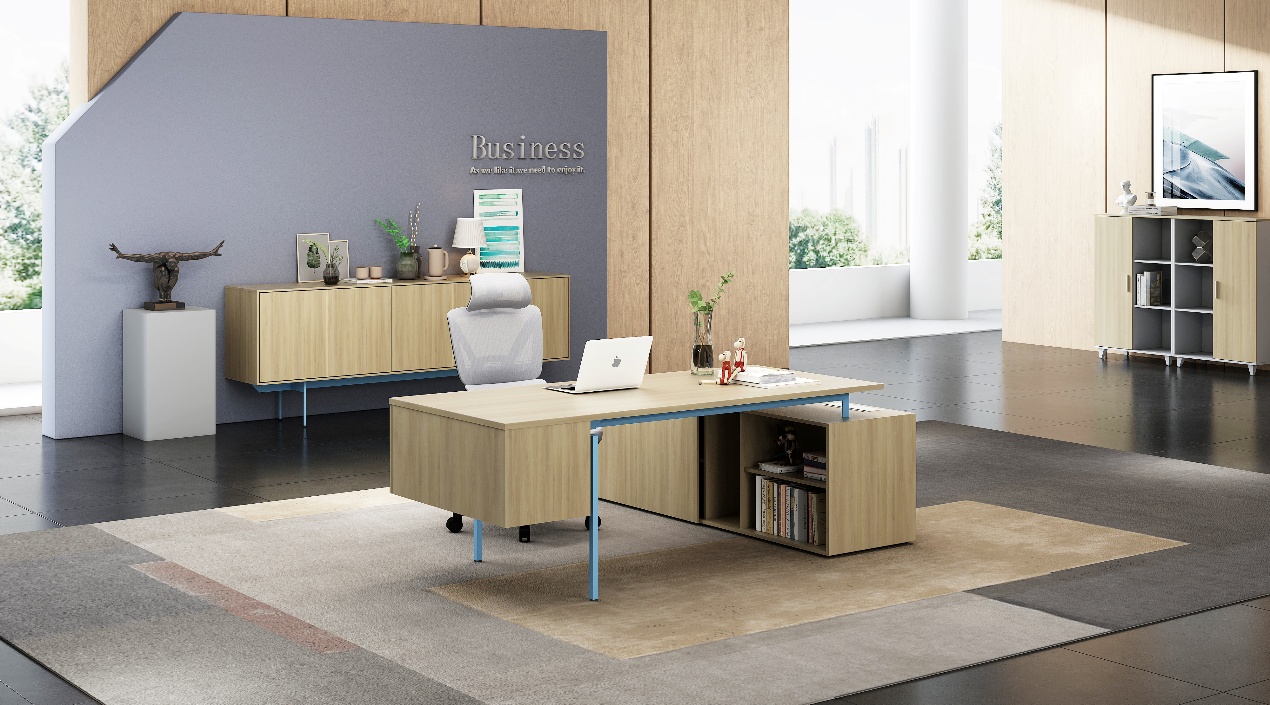
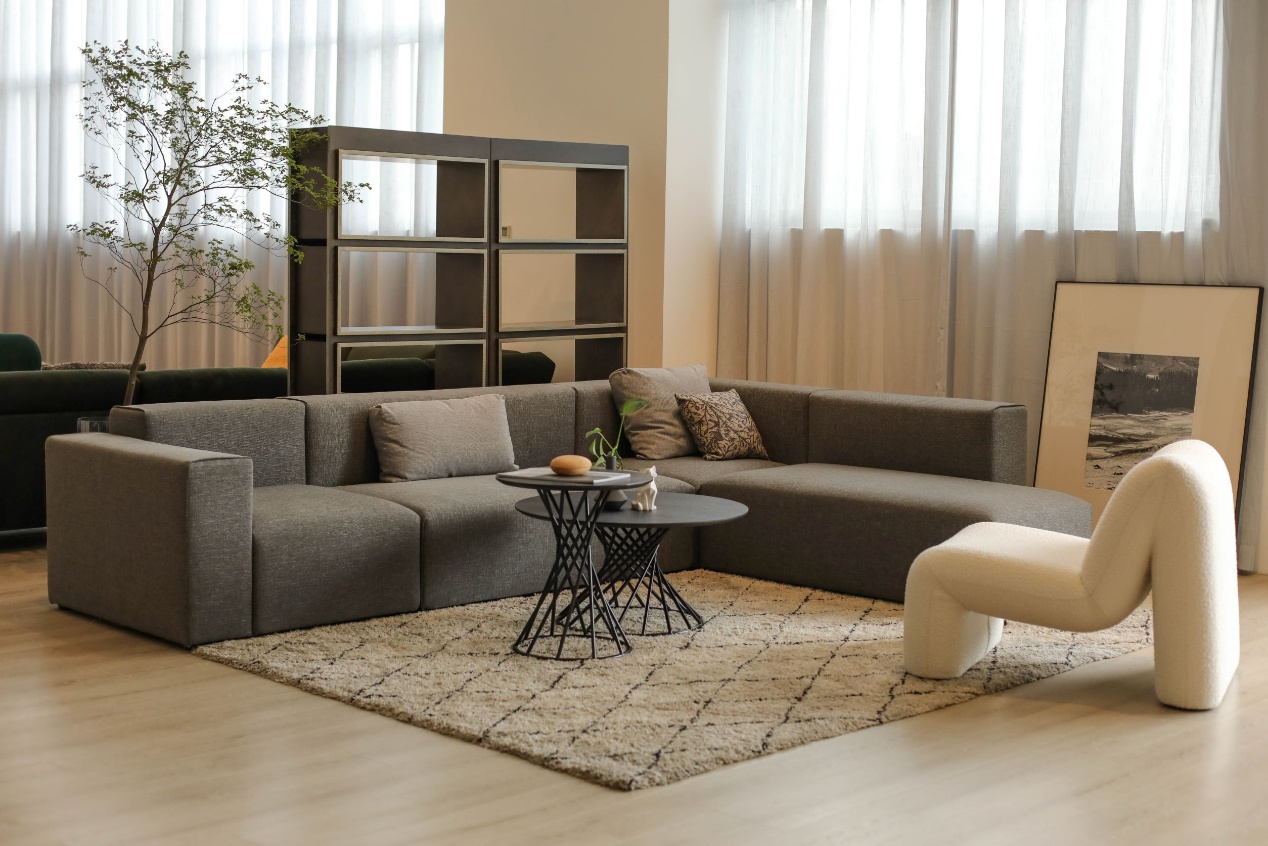
Executive desks, meanwhile, adopt a different design approach. A wooden tabletop paired with a white frame and a substantial modesty panel creates a clean, streamlined look. Complemented by rear storage units, display shelves, and a sofa area, the setup forms a standalone office that accommodates work, client reception, communication, and storage needs.
Thus, these two furniture configurations represent two core scenarios common in modern workspaces: the open-plan staff area and the private executive office.
II. Suitability for Open-Plan Workspaces
Minimalist office furniture is ideally suited for open-plan offices, multi-person work zones, team collaboration areas, and shared corporate workspaces.
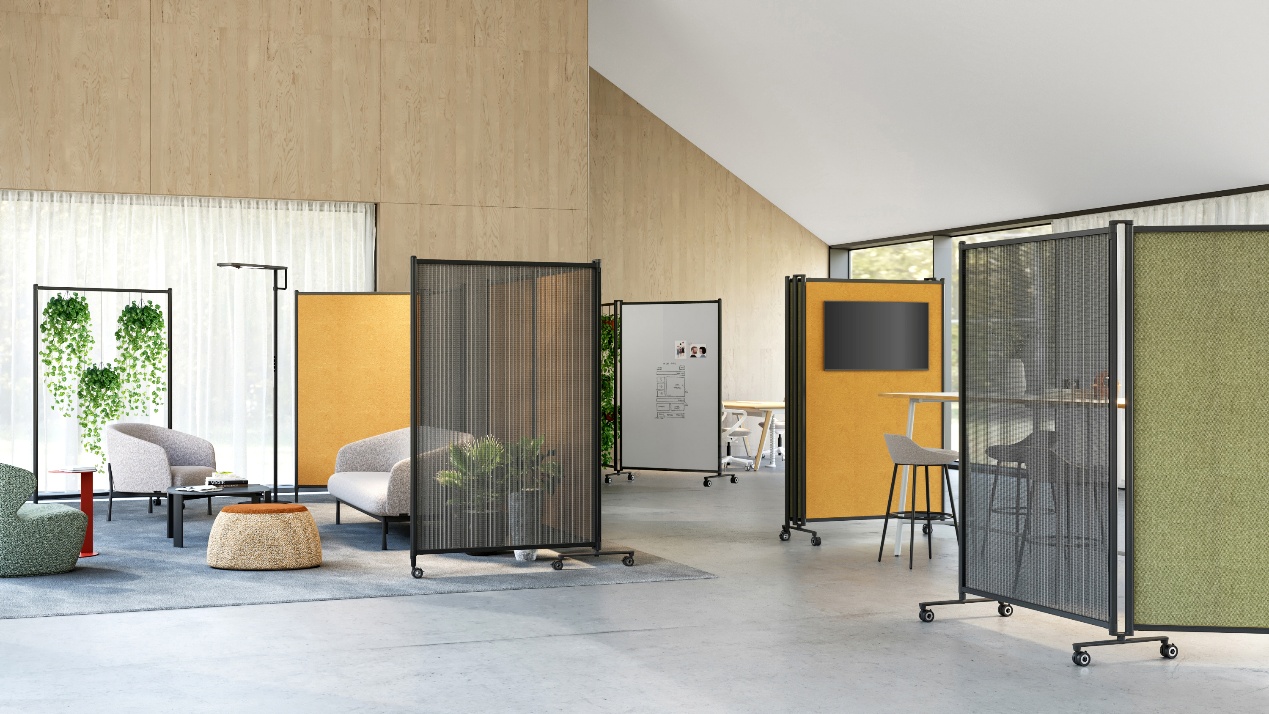
In recent years, workspace design has increasingly emphasized zoning based on work activities rather than simply arranging rows of fixed desks. Research by CBRE regarding the workplace of 2026 indicates that companies are increasingly adopting shared seating and hybrid work models, while the traditional "one person, one desk" fixed arrangement is becoming less common. Consequently, this combination of modular desks, low partitions, and mobile storage units offers excellent adaptability—a particularly important feature for growing enterprises.
III. Suitable for Team-Based Work Areas in Modern Enterprises
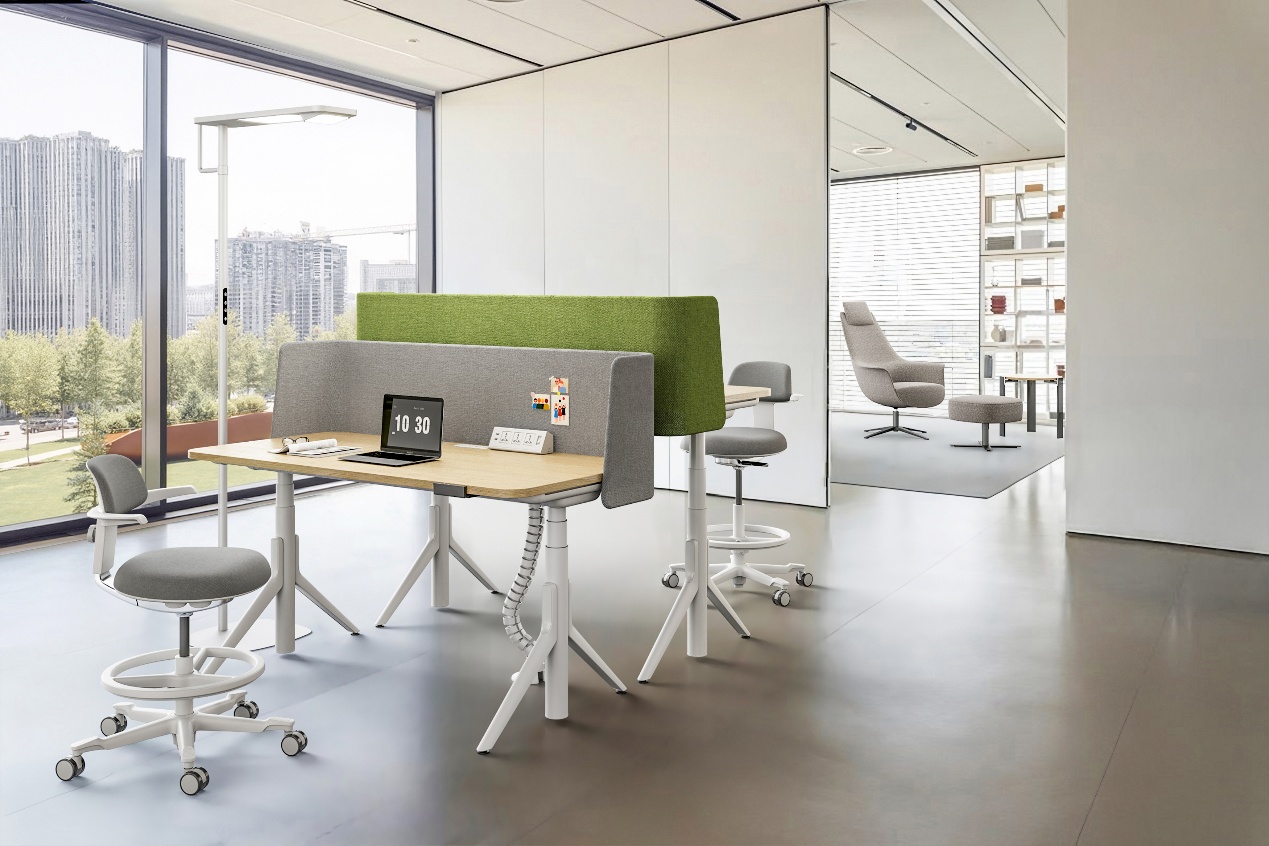
This type of office furniture is also ideally suited for team-oriented workspaces.
Teams such as sales, marketing, design, and R&D can utilize multi-person workstation layouts. Grouping multiple desks together creates a cohesive "team workspace unit."
Designs can be tailored to the specific workflows of different departments:
* Sales teams can use high-density workstations to maximize space efficiency;
* Design teams can opt for larger desk surfaces to accommodate blueprints, samples, and computer equipment;
* R&D teams can integrate meeting tables and whiteboard areas;
* Marketing and creative teams can incorporate casual discussion zones;
* Hybrid teams can include shared desks and flexible seating options.
Thus, modern office furniture is not merely about selecting a single desk; it involves creating a comprehensive office system through the combination of desks, chairs, screens, storage units, meeting tables, and lounge furniture.
IV. Suitable for Managerial Offices and Mid-Level Management Spaces
Compared to standard employee workstations, managerial desks often need to serve multiple functions. Beyond daily tasks, they must accommodate staff communication, client reception, small meetings, and document storage.
Therefore, managerial offices typically feature a combination of elements—such as a desk, storage units, and a reception sofa or discussion chairs—rather than just a standalone desk.
V. Suitable for "Open + Private" Hybrid Work Models
Taken together, these elements form a complete modern hybrid workspace.
For example:
Public areas → Open employee workstations → Departmental meeting zones → Managerial offices → Small discussion areas
This spatial arrangement allows for a natural flow between different work scenarios.
Open work areas facilitate daily tasks and team collaboration; meeting spaces are used for formal communication; managerial offices provide a relatively private environment for management and client reception; and sofas or lounge tables support informal interactions. Trends for 2026 office spaces place greater emphasis on "selecting the right space for the task"—catering to scenarios such as focused work, team collaboration, meetings, socializing, and relaxation—rather than confining all work to a single type of desk.
This reflects a shift in modern office furniture from standalone products toward comprehensive spatial solutions.
VI. Ideal for Enterprises Emphasizing a Clean, Professional Image
Visually, this style of furniture is well-suited for office spaces that aim to project a minimalist, professional, and modern corporate image.
Office furniture has become an integral part of a company's visual identity, particularly in areas like corporate lobbies and client reception zones. A tidy, cohesive environment allows the furniture's color, materials, and layout to reflect the company's brand positioning.
Consequently, this type of modern, minimalist furniture is highly suitable for **corporate headquarters, brand showrooms, coworking spaces, business offices, and startup hubs**.
VII. Future Office Furniture: Prioritizing Flexibility and Functionality
Current trends in office design show a shift in focus from mere "visual simplicity" toward flexibility, comfort, and multifunctionality.
Modular desks, height-adjustable tables, mobile storage units, low partitions, ergonomic chairs, and reconfigurable meeting furniture enable companies to quickly adapt their spaces to changing personnel and business needs. 2026 design trends continue to highlight modularity, reconfigurability, and the ability to seamlessly transition between different work scenarios.
The goal is to combine minimalist design with high office efficiency, optimal space utilization, a strong corporate image, and future scalability.
Conclusion
In summary, the furniture style shown here can be characterized as modern minimalist, function-oriented, modular, and a blend of business and casual aesthetics. Multi-person workstations suit open-plan areas and team settings; minimalist executive desks are ideal for private management offices; and storage units, consultation furniture, and relaxation zones further round out the workspace's functionality.