
From filing cabinets to space systems: storage cabinet design and application trends in modern office spaces
In contemporary office space design, Storage Cabinet, File Cabinet, Office Locker, and Office Storage are no longer just basic office furniture used to "place files." With the development of open office, flexible office, shared workspace and hybrid office models, the demand for office storage is gradually extending from single file storage to personal item storage, office supplies management, equipment storage, space partitioning, display and corporate image building.
Judging from the current office furniture design, filing cabinets and storage cabinets are becoming important furniture elements that connect "function" and "space design".
1. Office lockers: from file storage to multi-functional storage
Traditional File Cabinets mainly serve the classified storage of paper documents, archives and information, while the use scope of modern Office Storage Cabinets has significantly expanded.
In addition to files, folders and files, lockers can be used to store office supplies, printing equipment, samples, books, employee personal belongings, backpacks, clothing and even coffee equipment. Modern office spaces usually combine open shelves, closed cabinets, drawers, storage compartments and personal lockers based on the frequency of use of items to form a more complete office storage system.
This change also means that storage furniture begins to transform from a single "storage tool" into a comprehensive functional module in the office space.
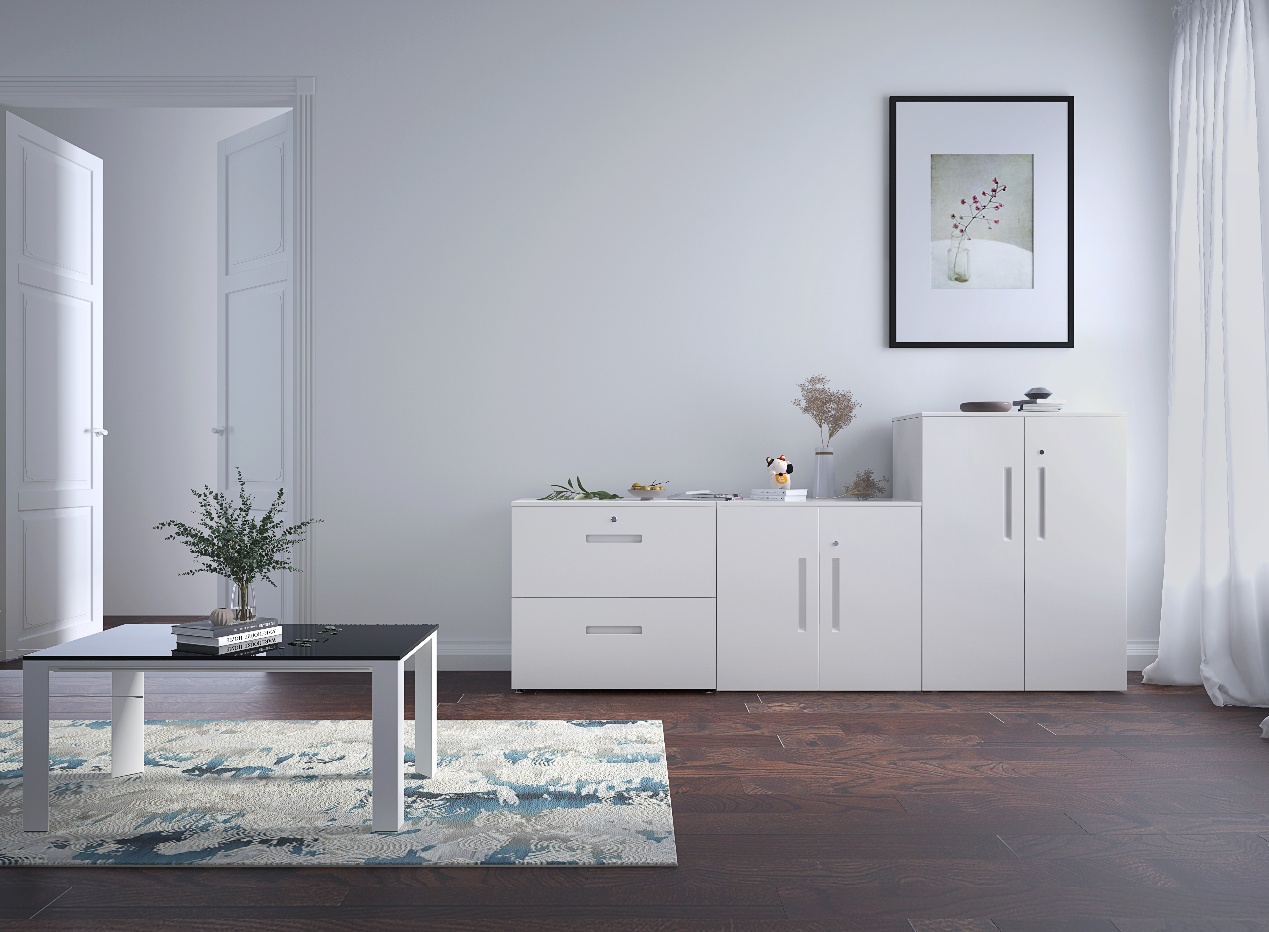
2. Material selection: combination of metal, wood and soft packaging
Modern office filing cabinets and storage cabinets present a richer combination of materials.
Metal Storage Cabinets continue to be a common choice in office furniture. Steel filing cabinets have the characteristics of stable structure, durability, and easy maintenance, and are suitable for large file storage, employee lockers, archives, and public storage areas. Metal materials are also easy to achieve different colors through spraying, so they can extend from traditional white and gray to modern office colors such as black, dark blue, and green.
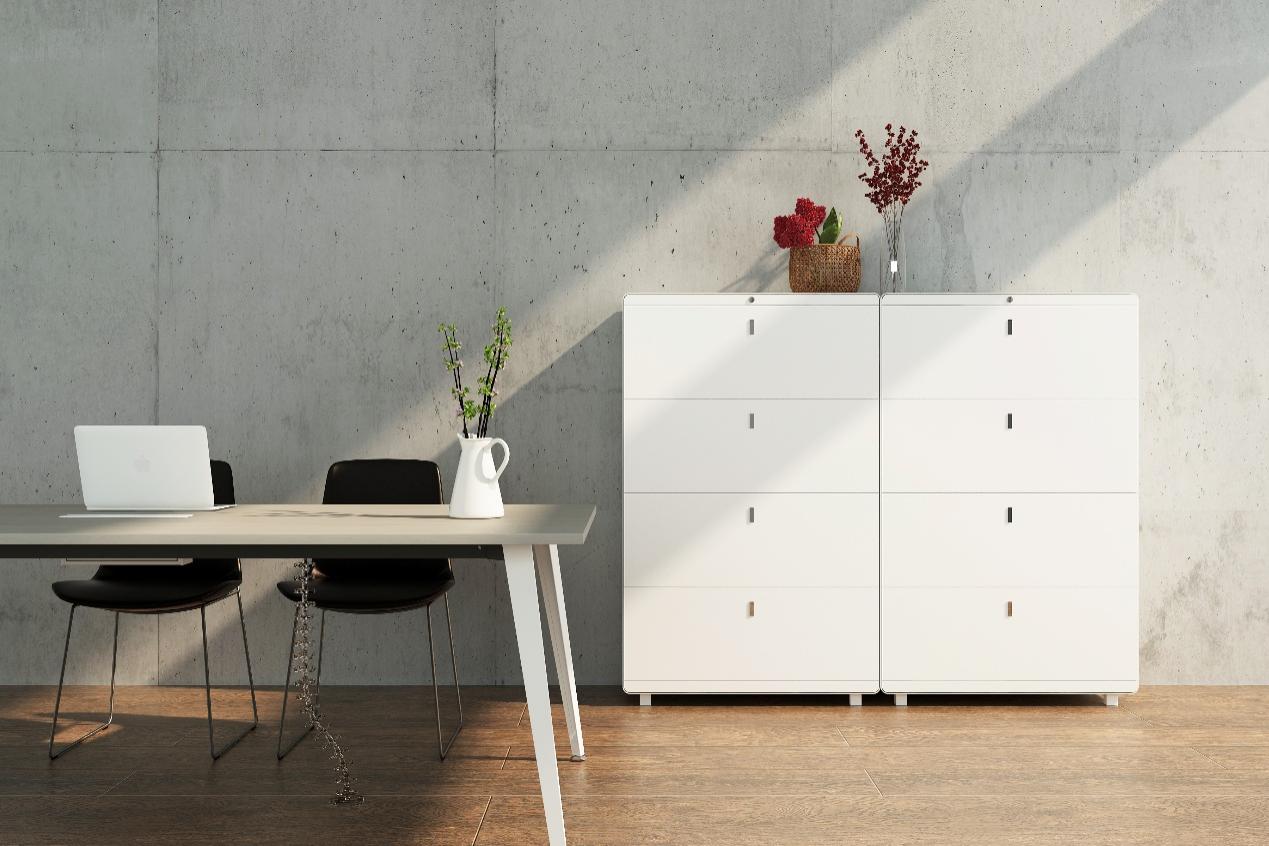
At the same time, Wooden Storage Cabinets, wood grain veneers and panel cabinets are increasingly being used in manager offices, conference rooms, reception areas and open office areas. Wooden texture can reduce the coldness and hardness of metal furniture, making storage furniture closer to the overall interior design.
In addition, like the design in the picture, you can also combine metal cabinets, wooden panels, fabric soft bags and open grids, so that the lockers have both storage and space decoration functions.
3. Modular design makes the lockers become part of the space
Modern office spaces are paying more and more attention to Modular Office Furniture. Storage cabinets have also gradually developed from independent furniture to modules that can be freely combined.
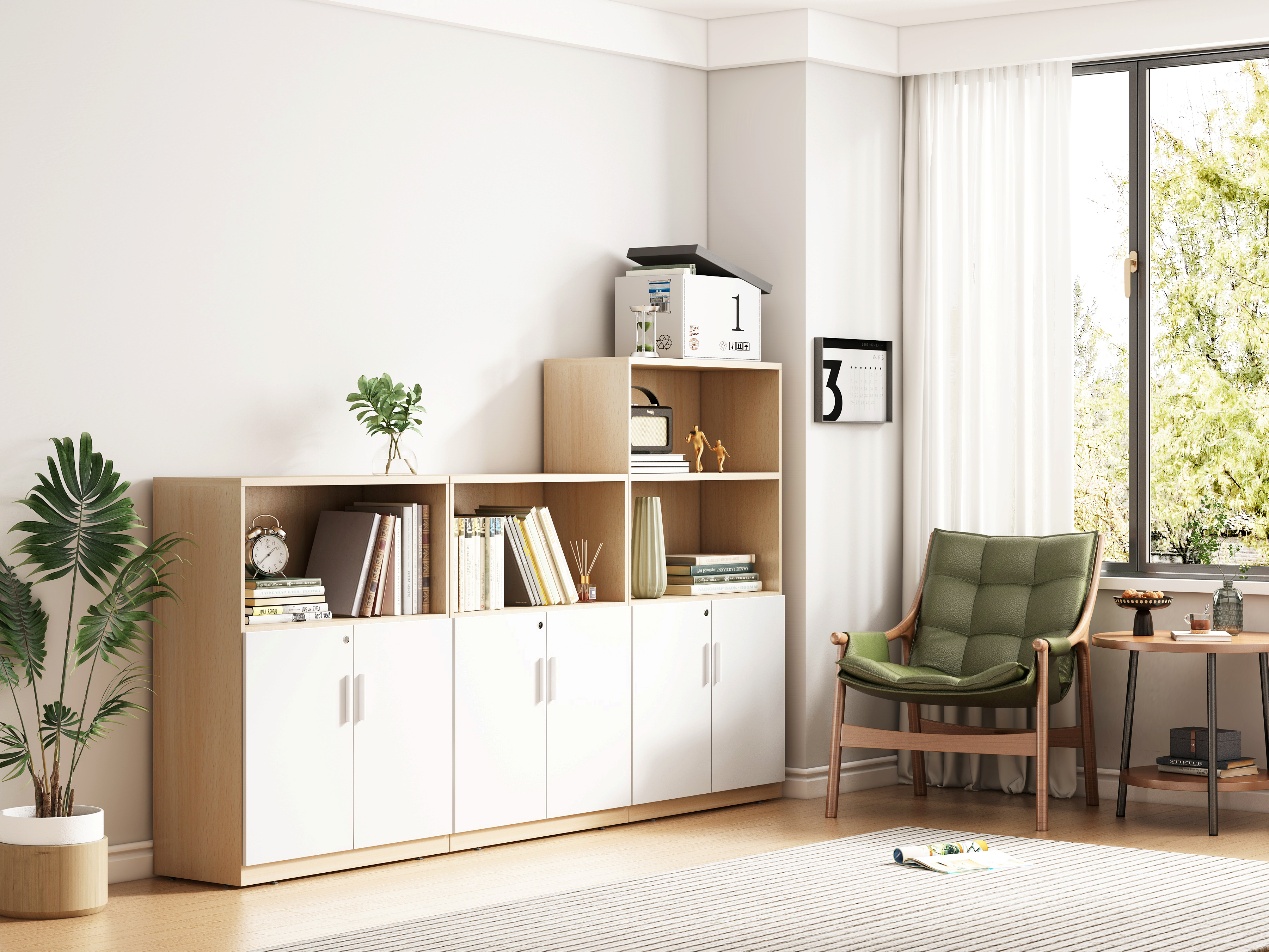
For example, storage compartments, open bookshelves, closed cabinet doors and drawers of different sizes can be combined horizontally or vertically to form an entire Office Storage Wall.
The modular cabinet in the picture is a typical idea: open compartments and closed storage units of different sizes form a staggered layout, which can not only store documents, but also display books, decorations, office supplies and personal items.
This design is particularly suitable for open offices, team offices, project spaces, and coworking spaces. Modular storage systems can also serve as visual boundaries between spaces, completing zone divisions without completely enclosing the space. In recent years, office storage systems have been increasingly used for space partitioning, equipment storage, and flexible organization of project spaces.
4. Open + closed: meet the storage needs of different items
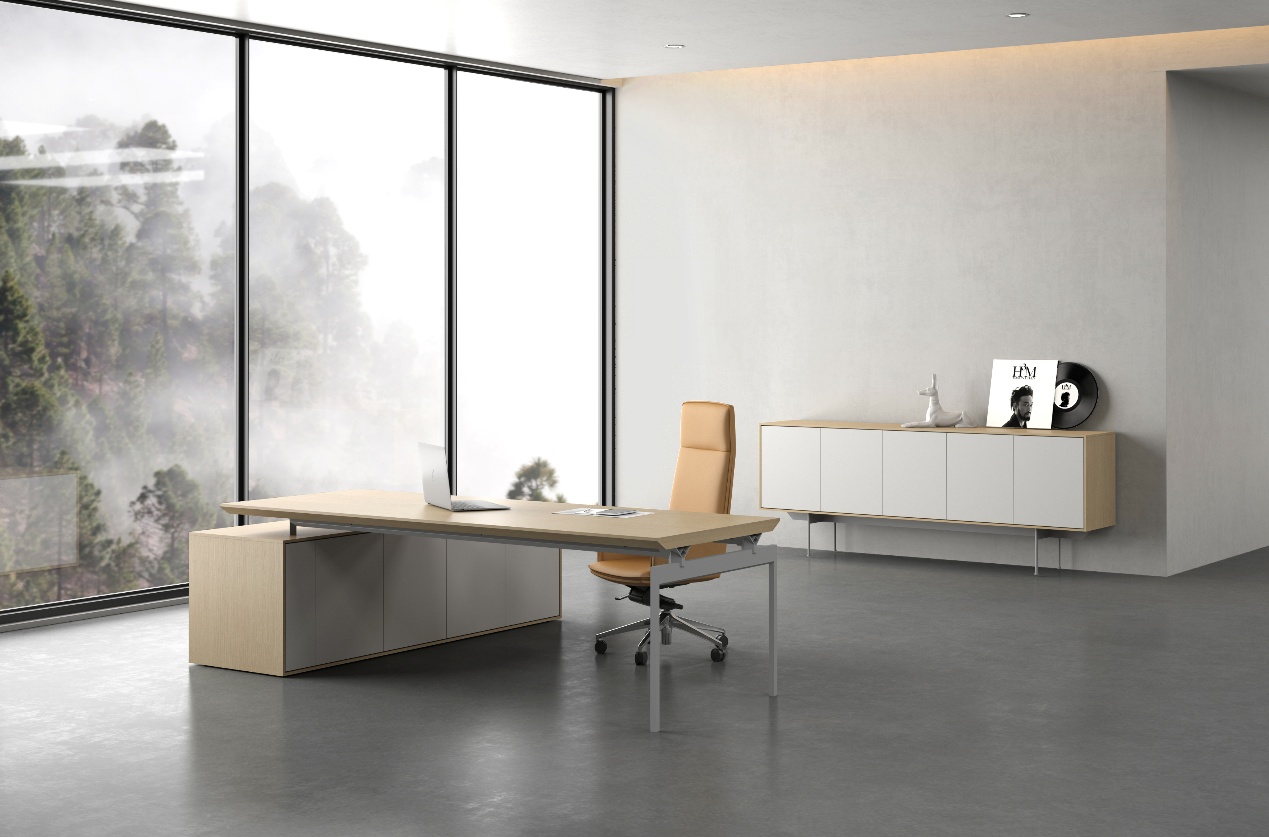
An obvious trend in modern office storage cabinet design is Open Storage + Closed Storage (a combination of open and closed storage).
Open compartments are suitable for storing books, folders, samples, decorations and items with high daily use, allowing employees to quickly access them; cabinets with doors are suitable for storing documents, equipment and sundries that do not want to be exposed to public view.
For files with privacy requirements such as finance, personnel, and customer information, Locking File Cabinets can be used to control access rights through key locks, password locks, or electronic locks.
This "open + closed" design not only improves storage efficiency, but also allows the office space to avoid the sense of oppression caused by large-area closed cabinets.
5. Locker: From employee storage to flexible office equipment
With the development of Hybrid Work, Hot Desking and flexible office models, the traditional "one employee corresponds to a fixed filing cabinet" approach is changing.
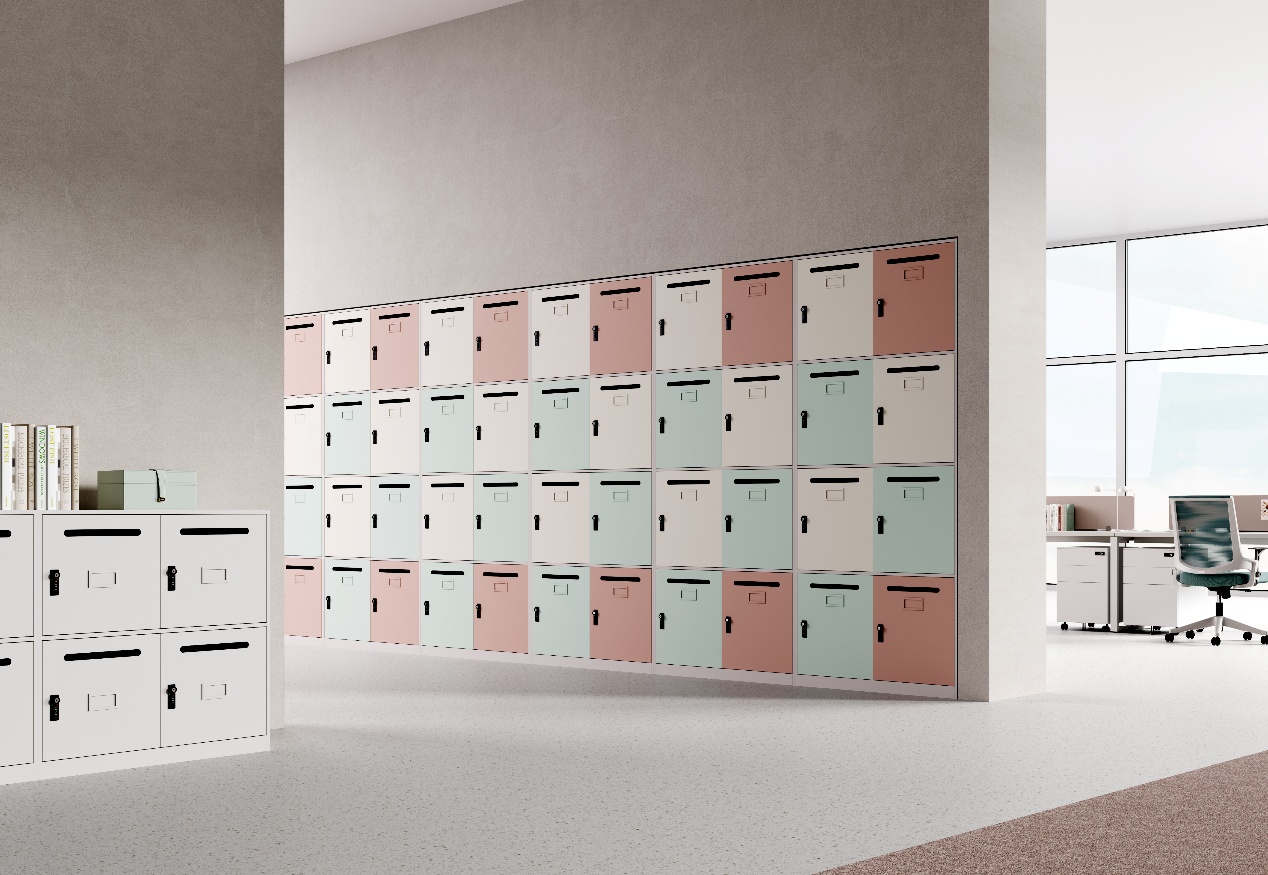
Modern Office Lockers can provide employees with independent personal storage space for storing computer bags, clothing, documents and personal items. Especially in shared workstations and flexible office environments, employees no longer occupy fixed desks for long periods of time, so personal Lockers have become a very important office accessory. Through multiple independent small storage units, it can be shared by multiple people and use vertical space to improve storage efficiency.
6. Color matching design: from "hidden cabinet" to spatial visual element
In the past, office filing cabinets were usually dominated by white, gray and beige, emphasizing practicality.
Today, Office Storage Cabinet Color has become part of office space design.
For example:
White + light wood color: suitable for simple, natural and modern offices;
Black + dark wood color: suitable for management offices and high-end business spaces;
Dark blue + off-white: It is professional, stable and has the characteristics of brand recognition;
Green + wood color: suitable for office environments that emphasize nature and employee comfort;
Gray + metallic color: suitable for technology, industry and modern office spaces.
7. Matching of lockers with desks, partitions and walls
An excellent Office Storage Solution is not about choosing a cabinet alone, but considering its relationship with the entire office environment.
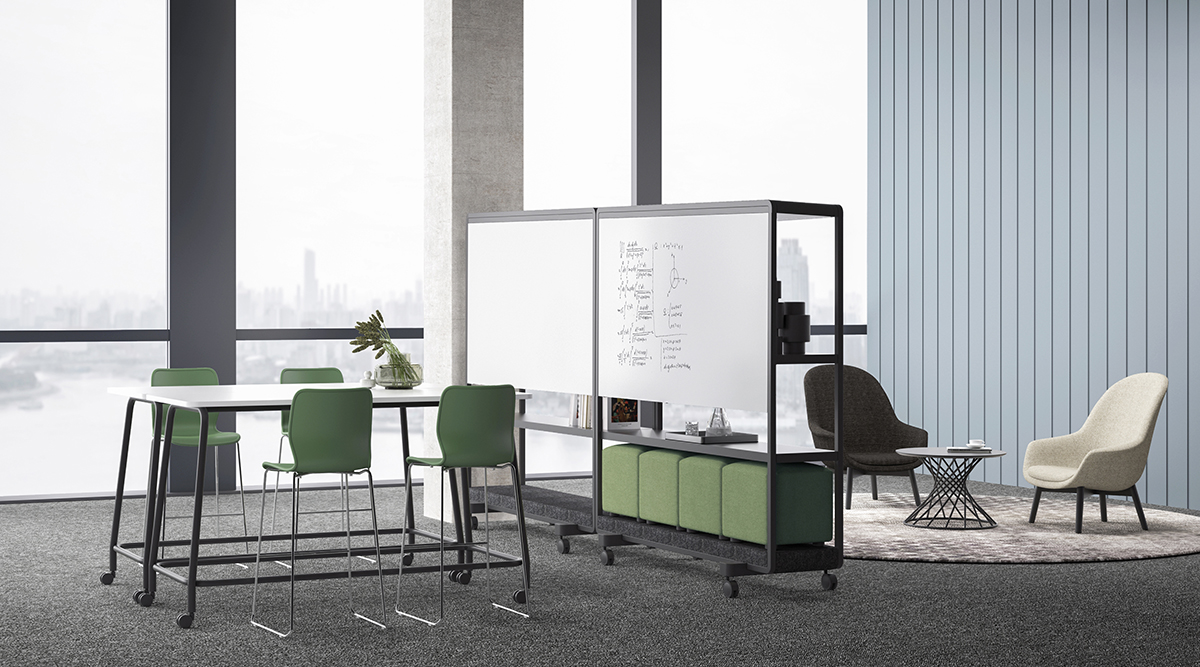
Storage cabinets can be designed in a unified manner with desks, screen workstations, office partitions, bookshelves, conference tables and wall systems. For example, placing a low cabinet behind the desk can form an Executive Credenza; placing a high cabinet at the boundary of the workspace can serve as both storage and space partitioning.
For open office spaces, you can also use the combination of "lockers + green plants + open shelves" to make the cabinets a light space partition; near the conference room, you can combine lockers with printing equipment, documents, and conference supplies to improve space usage efficiency.
8. Future office storage: from furniture products to space solutions
Judging from the current development of office furniture, the value of file cabinets no longer lies in "how many files can be stored", but in how they help companies manage space, items and employee usage behavior.
Conclusion
The future Office Storage System will pay more attention to modularity, flexibility, personal storage, security management and space integration. Therefore, whether it is a File Cabinet, Storage Cabinet, Office Locker, Credenza or Storage Wall, they can become an important part of the modern office space design. A well-designed office storage system can not only make the office tidier, but also further improve space utilization, work efficiency and the visual quality of the overall office environment.