
Lounge Chairs and Coordinated Tables for an El Salvador Project
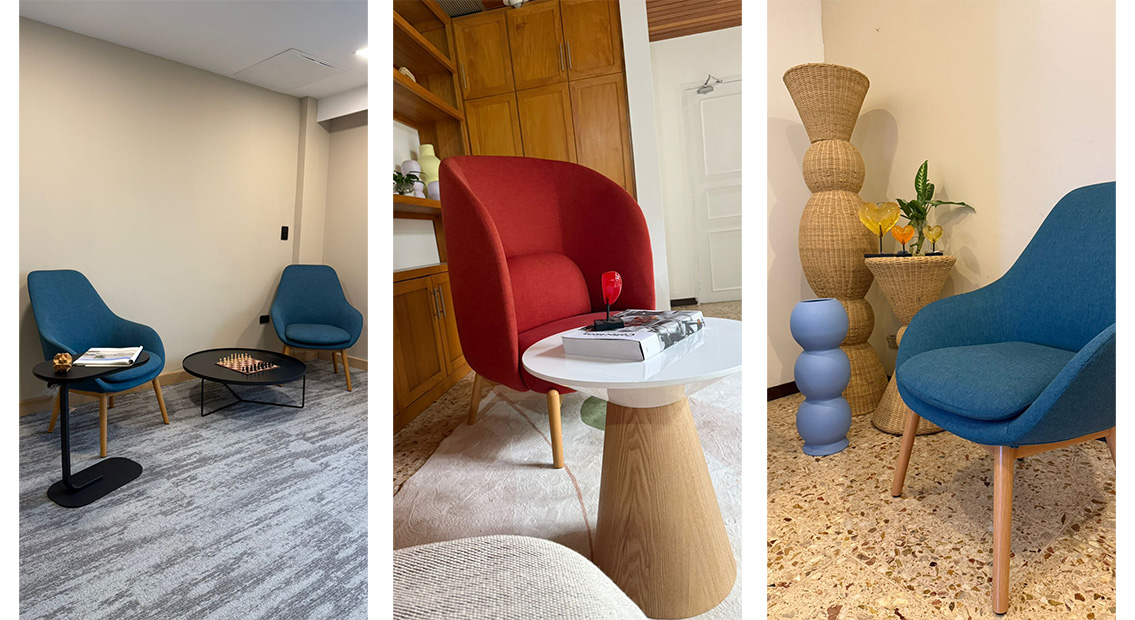
Choosing a lounge chair is only one part of furnishing a welcoming space. The chair also needs to work with nearby tables, surrounding finishes and the way people will use the setting. Several attractive individual pieces do not automatically form a practical arrangement.
For this project in El Salvador, the furniture selection centered on existing M&W lounge seating and table designs. The project team selected preferred colors from the available options, creating distinct seating combinations without requesting custom dimensions.
Blue lounge chairs, red high-back chairs and neutral upholstered armchairs brought variety to the project. Coffee tables and side tables completed the settings, providing useful surfaces for books, drinks and everyday items. The resulting arrangements show how considered product selection can give different corners a clear purpose while maintaining a coordinated appearance.
01 — Project Overview
- Location: El Salvador
- Project focus: Furniture for lounge and informal conversation settings
- Main products: Lounge chairs, high-back lounge chairs, upholstered armchairs, coffee tables and side tables
- Color direction: Blue, red and neutral upholstery, complemented by wood-tone legs and black or white table surfaces
- Selection approach: Existing M&W product designs with preferred color choices
- Customization scope: Color selection; no custom dimensions
- Project materials: On-site photographs; no CAD layout or renderings
The project followed a direct product-selection approach. Existing designs provided the starting point, with color choices and furniture combinations shaping the final appearance.
The photographs show several arrangements, from a single chair with a close-at-hand side table to paired seating around a shared table. These combinations provide the basis for discussing both visual coordination and everyday convenience.
02 — Choosing Different Seating Forms for Different Experiences
Using the same chair throughout a project can create consistency, but it may offer little variety in how people experience the space. This project combined several seating forms while retaining connections through upholstery, curved shapes and wood-tone legs.
The blue lounge chairs have an open profile, with a shaped back flowing into the arms. Their form suits individual seating as well as paired arrangements around a coffee table. They introduce a strong color accent without requiring a large furniture grouping.
The red high-back chairs create a more enclosed feeling around the seated person. Their taller backs and extended sides give them a distinct presence, making them useful as individual focal points within a lounge arrangement.
Neutral upholstered armchairs offer another option. Positioned opposite one another at a square table, they form a compact setting for face-to-face conversation.
The value of the selection lies in this range of experiences. Open seating, high-back seating and table-oriented armchairs allow different arrangements to coexist within the project, with each combination offering a recognizable place to sit.
03 — Using Color Choices to Connect Furniture with the Interior
Selecting existing products still leaves room to shape a project’s character. Here, the project team chose preferred upholstery colors, allowing familiar furniture designs to take on a particular visual role.
Blue and red chairs create the strongest accents. Against the light walls and neutral floor finishes, their upholstered forms become clear points of interest. The colors distinguish the seating settings without relying on additional furniture or partitions.
The neutral armchairs provide a quieter combination. Their upholstery sits comfortably alongside wood-tone legs and a simple black table, creating a more restrained setting.
Repeated wood tones help connect the different chair styles. They also relate visually to the timber cabinetry visible in parts of the interior. Black tables provide a consistent darker element across several arrangements, while the white-topped table introduces a lighter surface beside the red seating.
This approach shows the practical role of color selection. Custom dimensions were unnecessary for the furniture to acquire a coordinated appearance. Existing shapes, selected upholstery colors and complementary tables were enough to establish variation with visual continuity.


04 — Pairing Chairs with Tables That Support Everyday Use
A lounge arrangement becomes more useful when people have a suitable place to put the items they bring with them. Table height, position and format therefore matter alongside the appearance of the seating.
The paired blue chairs were combined with a low round coffee table. Its shared surface sits between the seats, leaving both chairs oriented toward the same central area. The photograph shows a chess set on the table, illustrating one possible use for the arrangement.
Individual side tables provide a different function. Their offset supports allow the tabletop to sit close to the chair, making a drink or reading material easier to keep nearby. This creates a useful setting around a single seat without requiring a larger central table.
The red high-back chair is shown with this type of side table, while another arrangement pairs red seating with a white-topped coffee table. These alternatives demonstrate how the same seating style can work within different furniture combinations.
The neutral chairs and square pedestal table form a more upright, table-centered arrangement. Together, the settings offer varied ways to sit, converse or pause, supported by surfaces placed where they can be used.
05 — Creating a Coordinated Result from Existing Products
This project did not involve CAD planning, renderings or changes to product dimensions. The furniture was selected directly from M&W’s existing range, with preferred colors chosen for the seating.
That distinction is important to the project’s story. Its character came from selecting and combining suitable products. Chair profiles, upholstery colors, table shapes and finishes all contributed to the final settings.
M&W supplied the selected seating and tables. The on-site photographs show them alongside rugs, woven pieces and decorative objects supplied separately. Those surrounding elements provide context for how the furniture sits within the finished interior.
The result is a series of furnished settings with different scales and degrees of enclosure. Blue chairs create open seating pairs, red high-back chairs establish more enveloping individual positions, and neutral armchairs support a compact conversation setting.
For projects working with existing product sizes, this case offers a useful example: a coordinated result can begin with a clear selection of seating forms, preferred colors and tables suited to their intended use. The furniture gains value through the way the pieces work together.
Planning a lounge or informal conversation area? Contact M&W to explore existing lounge chair designs, available colors and coordinating coffee tables and side tables for your project.