
Office Pods are becoming increasingly popular in todays offices.
Open-plan offices look open, modern, and flexible. But in daily use, noise spreads easily, privacy is limited, and finding a quiet place for a short meeting can be difficult.
Many companies start to compare two options: office pods and traditional meeting rooms. Both are widely used, and both solve different problems. The real question is not which one is better, but which one fits your office design, layout, and working style better.
Traditional Meeting Rooms: Still a Core Office Space
Traditional meeting rooms are fixed spaces built into the office layout. They usually include walls, a door, and a full set of meeting room furniture.
Typical features of traditional meeting rooms
- Larger space for group meetings
- Fixed meeting tables and meeting chairs
- Writing boards or presentation equipment
- Designed for scheduled and formal meetings
These rooms work well for team discussions, client meetings, and presentations. From a design perspective, a well-planned meeting room still plays an important role in showing professionalism.
Limitations in daily use
However, traditional meeting rooms are not very flexible.
- Once built, the size and location cannot be changed easily
- Small meetings often occupy large rooms
- Renovation or layout changes take time and cost
In fast-changing offices, this lack of flexibility can become a real issue.
Office Pods: A Flexible Solution for Modern Offices
An office pod is a soundproofed modular unit designed to create private space inside an open office. It does not replace the whole meeting room system, but it fills the gap between open work areas and closed rooms.
Designed for changing office needs
Office pods are easy to assemble, move, and extend. The modular design allows quick installation without trimming, bolting, or gluing. No waste is generated during installation, and packaging materials can be recycled. Once installed, the pod can be used immediately. Office pods are especially suitable for:
- Growing teams
- Flexible office layouts
- Offices with frequent reorganization
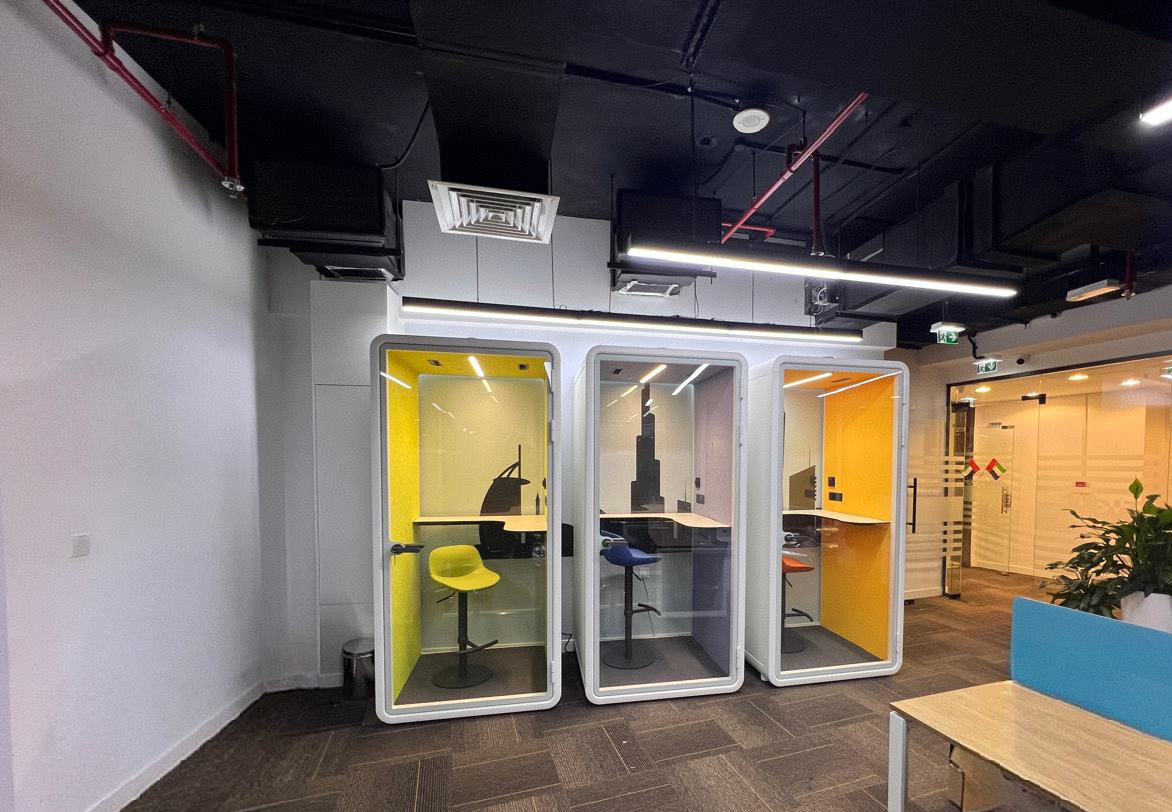
Acoustic Performance: Where Office Pods Stand Out?
Noise control is one of the main reasons companies choose office pods. M&W office pods use multiple soundproofing methods, working together as a system.
- Dual sealing straps on the door frame and glass edge reduce sound leakage
- Dampening material between the feet and the floor blocks low-frequency noise
- Multi-layer acoustic wall composition absorbs and blocks sound
- Laminated glass improves sound insulation while keeping transparency
Traditional meeting rooms can also be quiet, but the result depends heavily on construction quality. In many offices, sound leakage through ceilings or door gaps is hard to fix later.
Comfort Inside the Pod: Lighting and Ventilation Control
In a compact space, comfort matters more than size. M&W office pods are equipped with a smart dimmer controller that allows easy control of lighting and ventilation.
Key functions of the smart dimmer controller
- One-touch control with short and long press operations
- Rotary knob for precise adjustment of: ventilation intensity, light brightness, light color temperature
- Integrated control of lighting and ventilation systems
- Optional sensor management to reduce unnecessary energy use
This level of control allows users to adjust the environment based on different work scenarios, from quick calls to long focus sessions.
Office Layout and Space Planning
Office pods give designers more freedom when planning office layouts.
They can be placed exactly where privacy is needed, without changing the overall building structure. If the office layout changes, the pod can be relocated, making office pods a useful part of a mixed office system that may include:
- Open workstations
- Office pods for focus and small meetings
- Traditional meeting rooms for larger groups
Such a office setup often improves space efficiency and daily workflow.
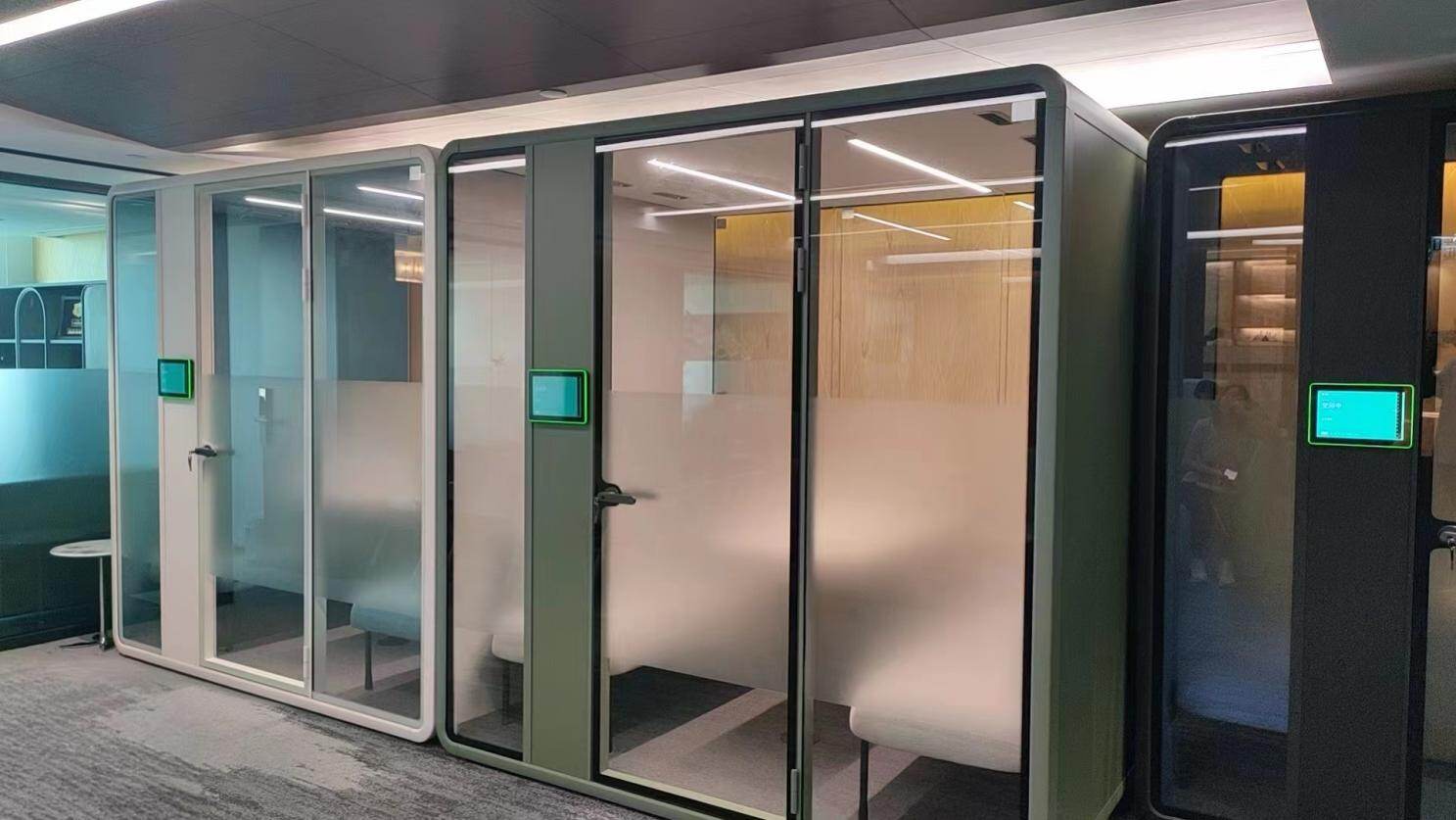
Furniture and Use Scenarios: Different Roles
Traditional meeting rooms still have clear advantages in certain situations.
Traditional meeting rooms are better for
- Large group meetings
- Formal presentations
- Client-facing discussions
They also allow more furniture options, such as large meeting tables, multiple meeting chairs, and full presentation setups.
Office pods are better for
- One-on-one meetings
- Small team discussions
- Video calls
- Individual focus work
Optional accessories like extra shelves, power outlets, and custom finishes allow office pods to support different applications, but they are not designed to replace every meeting room.
Cost, Time, and Long-Term Value
Traditional meeting rooms require construction, planning, and longer setup time. Any future changes usually mean rebuilding.
Office pods offer faster installation and less disruption. Because they are modular systems, they can move with the company and adapt to future office layouts. It makes them a practical long-term solution for many businesses.
Office Pods vs Traditional Meeting Rooms: Which One Should You Choose?
As highlighted in the M&W professional workspace analysis, office pods and traditional meeting rooms differ significantly in spatial design, practical performance and long-term usability, serving distinct office layout and work scenario needs. Office pods are modular, standalone enclosed units that can be directly placed in open office areas, featuring tool-free and glue-free quick installation for immediate use; they boast outstanding flexibility, supporting free movement, expansion and relocation as office layouts adjust, with reusable value across office upgrades and relocations. Equipped with multi-layer acoustic walls, sealed doors and laminated glass, these pods deliver stable and reliable noise control, while customized smart lighting dimmers and independent ventilation systems create a comfortable private environment. Tailored for individual focus work, private video calls and short small-group discussions, office pods come with built-in basic facilities and optional customized shelves and power outlets, perfectly fitting flexible modern office zoning design with strong long-term reuse value. In contrast, traditional meeting rooms are fixed functional spaces integrated into the original office architectural layout, requiring on-site construction and lengthy installation cycles with poor adjustability once completed. Their noise insulation effect varies greatly depending on original wall structures, ceilings and door configurations, and they mostly adopt centralized lighting and basic switch control with single adjustment modes. Designed for medium-to-large group scenarios including regular team meetings, formal presentations and client business discussions, traditional meeting rooms are equipped with complete meeting tables, chairs and writing boards to meet formal office communication needs, yet they require early overall layout planning and are difficult to reuse or modify after layout adjustments. Ultimately, as summarized by M&W workspace design experience, there is no one-size-fits-all optimal option. The most reasonable office space solution depends on an enterprise’s actual office scale, team structure and daily work habits, and a scientific combination of flexible office pods and fixed traditional meeting rooms can always form a balanced, efficient and multi-scenario adaptive office layout.
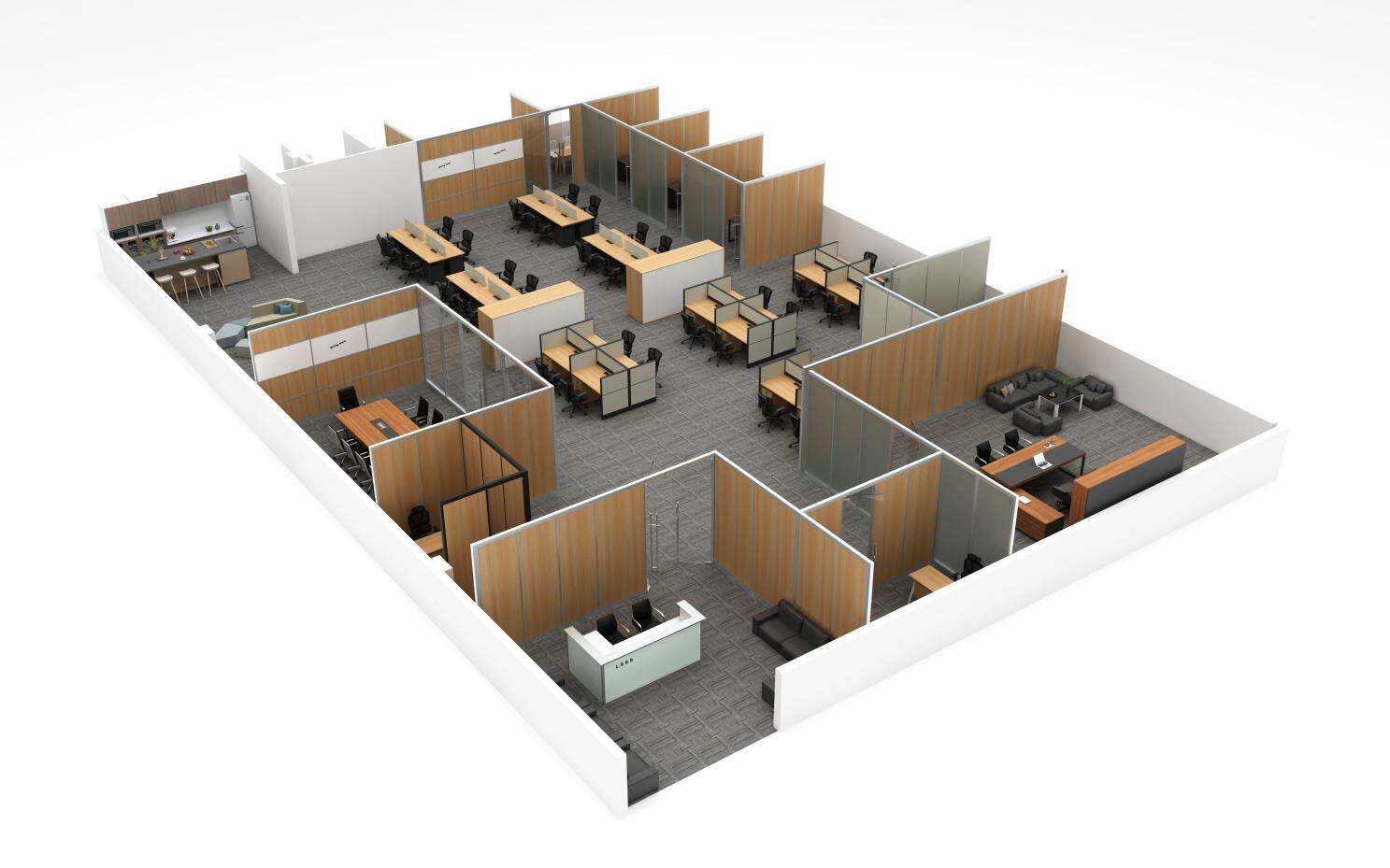
Why Choose M&W as Your Partner?
M&W provides office pods, meeting room furniture, and complete office design and layout solutions. We focus on building practical workplace systems that match real working needs, not just trends.
Whether you need flexible office pods, well-designed meeting rooms, or a complete office setup, M&W helps you create a workspace that works today and adapts tomorrow.
Conclusion
Meeting rooms support larger discussions and formal collaboration, while office pods provide flexible, quiet spaces for focus and small meetings within open layouts. With thoughtful design, smart layout planning, and the right office furniture systems, you can support both focus and collaboration.
As an office furniture manufacturer in China, M&W offers both office pods and complete meeting room furniture solutions. We plan office layouts, select the proper systems, and build workspaces that can adapt over time.
If you are planning a new office, upgrading an existing space, or looking for a more flexible setup, M&W is ready to support you. Contact us to explore office pod solutions, meeting room designs, and customized workplace systems that fit your needs.