
Hybrid Workplace Era: How Office Lounge Furniture Reshapes Modern Offices
In the past, the office furniture industry centered on workstations accommodating all employees' work. Traditional offices were densely packed with standardized office workstations, with meeting rooms dedicated to team communication, reception areas for basic greetings, and lounges relegated to a secondary function. With the rise of digitalization, the hybrid workplace model has been fully implemented, completely rewriting the standards by which companies evaluate office spaces. Today, whether it's large corporate headquarters, tech startups, financial institutions, or coworking spaces, the focus is no longer solely on the number of workstations. Modern office spaces need to balance creative inspiration, efficient collaboration, employee experience, and brand presentation. Under this trend, office lounge furniture and collaborative workspaces have become the two fastest-growing segments in office renovation and procurement, leading the global trend in commercial office space transformation.
How Hybrid Workplaces Have Evolved
Office spaces have evolved through three generations, with office needs upgrading layer by layer:
1. First Generation: Independent, Enclosed Offices: Primarily private offices with clear hierarchical divisions, but inefficient communication and low space utilization;
2. Second Generation: Open Offices: Open office layouts reduced renovation costs and facilitated team communication, becoming the global mainstream, but also led to pain points such as noise pollution, insufficient privacy, and decreased focus. Leesman research shows that over 60% of professionals reported that noise from open offices severely hampered efficiency, and the supply of quiet, focused workstations was severely insufficient;
3. Third Generation: Hybrid Workplaces: Office design moves towards functional balance, rejecting purely open or closed layouts, and dividing into diverse scenarios based on work needs: Deep thinking requires a quiet Focus Workspace; team discussions are suited to Collaborative Workspaces; remote meetings require semi-enclosed acoustic spaces; business receptions are suited to Reception Lounge; and daily relaxation and light work rely on Office Lounge. The evolution of office spaces from single work areas to multi-scenario integrated ecosystems has driven the upgrading of office furniture from individual items to complete space solutions.
Collaborative Workspace: Informal Collaboration Underpins Modern Office Efficiency
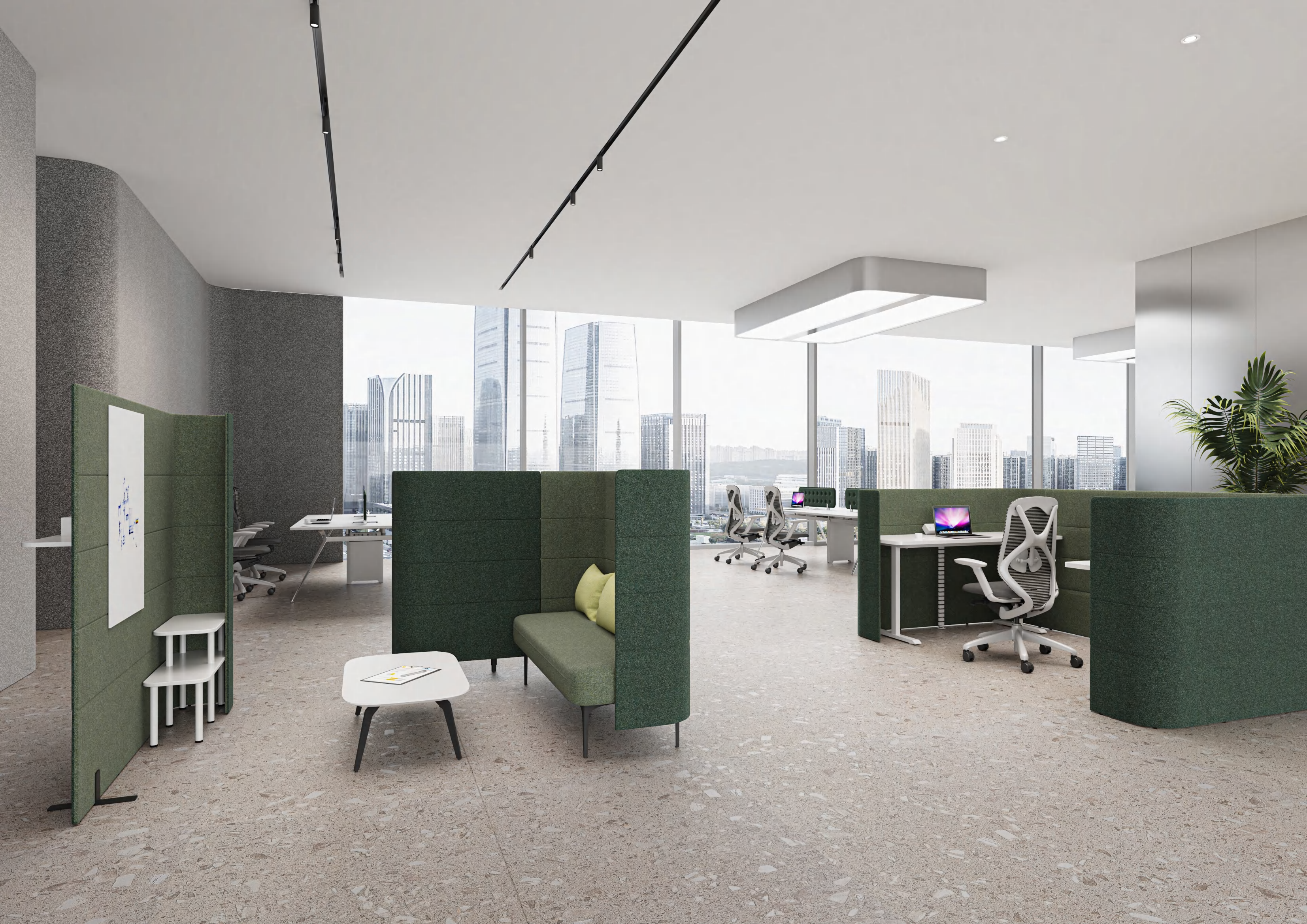
In the past, companies assumed that team collaboration could only take place at the conference table.However, Gensler's *Global Workplace Survey* shows that employees need to collaborate and communicate for half of their daily workday, and traditional meeting rooms cannot cover all communication needs. A large amount of brainstorming, cross-departmental coordination, and ad-hoc project communication takes place in public areas, making flexible, appointment-free, and unconstrained communication areas a necessity.
Currently, mainstream office projects commonly include spaces such as Office Lounge Areas, Breakout lounges, modular sofa areas, and Acoustic Discussion rooms. These Collaborative Workspaces are well-suited for impromptu communication, significantly improving team responsiveness. The M&W Cubic Collaboration Sofa modular collaborative sofa meets this need, allowing for flexible configuration to suit different spaces. It can be used to create a standalone public discussion area or combined with Office Workstations to create an open yet clearly defined work environment, suitable for various uses such as ad-hoc meetings, training, and relaxation, maximizing spatial flexibility.
Office Lounge Furniture Supports More Than Relaxation
Many buyers have misconceptions about office lounge furniture, equating it with simply sofas in the break room. Within the Hybrid Workplace system, Office Lounge Furniture is key hardware for seamlessly switching between work modes. Employees can focus on their workstations during the day, then move to the lounge area in the afternoon to work on projects, easily meet with clients using the Reception Lounge, and ensure privacy for online meetings in acoustically partitioned booths.
Modern office design focuses on people's work habits, not just the number of desks. M&W's office sofa such as Roma, Rhine, Roma Plus, and Obera furniture series embody this philosophy, utilizing high-enclosure structures, sound-absorbing fabrics, and modular combinations to address the three needs of focused work, team collaboration, and relaxation. This makes furniture a core carrier for implementing corporate culture and enhancing employee experience, not just a decorative element.
One-Stop Office Furniture Solutions for Modern Offices
As office spaces become increasingly multifunctional, the traditional multi-supplier, category-specific procurement model has become increasingly problematic: fragmented styles across different furniture categories, increased communication costs due to multiple intermediaries, unpredictable installation schedules, and cumbersome after-sales maintenance. Today, architectural firms, interior design companies, multinational corporations, and commercial park developers are all opting for one-stop office furniture solutions.
High-quality office furniture suppliers have moved beyond simple manufacturing, deeply involved in the entire process of space layout planning, functional zoning, and overall visual consistency. From office workstations and collaborative workspaces to reception areas, acoustic booths, and office lounges, all furniture categories share a unified design language, materials, and color schemes, ensuring visual continuity throughout the office and enhancing the overall brand image.
M&W's entire product line features modular interoperability. The Roma, Rhine, Obera, and Cubic series share a unified design logic, allowing for flexible configuration based on office space and staff size. This provides a one-stop solution for individual work, team collaboration, and public leisure layouts, adaptable to various global commercial office customization projects.
Five Essential Zones in a Hybrid Workplace
In a hybrid workspace model, a mature workspace comprises five functional modules, each fulfilling its specific role to build a complete office ecosystem.
1. Focus Workspace: Ensuring Deep Work Efficiency
Collaboration is important, but deep thinking remains the foundation of innovation. Open-plan offices are visually cluttered and noisy, making enclosed acoustic workstations standard. The M&W Roma and Rhine series, utilizing raised partitions and sound-absorbing screens, create independent, quiet workstations within large open spaces, isolating distractions while maintaining team communication, balancing focus and collaboration.
2. Collaborative Workspace: Fostering Fragmented Innovation
Most creative ideas originate from informal communication. Flexible collaboration areas, such as modular sofas, movable partitions, and portable discussion tables, can be easily adjusted to accommodate casual conversations between two people or group discussions. This adaptability is the core advantage of the Hybrid Workplace.
3. Reception & Waiting Area: Creating a Strong First Impression
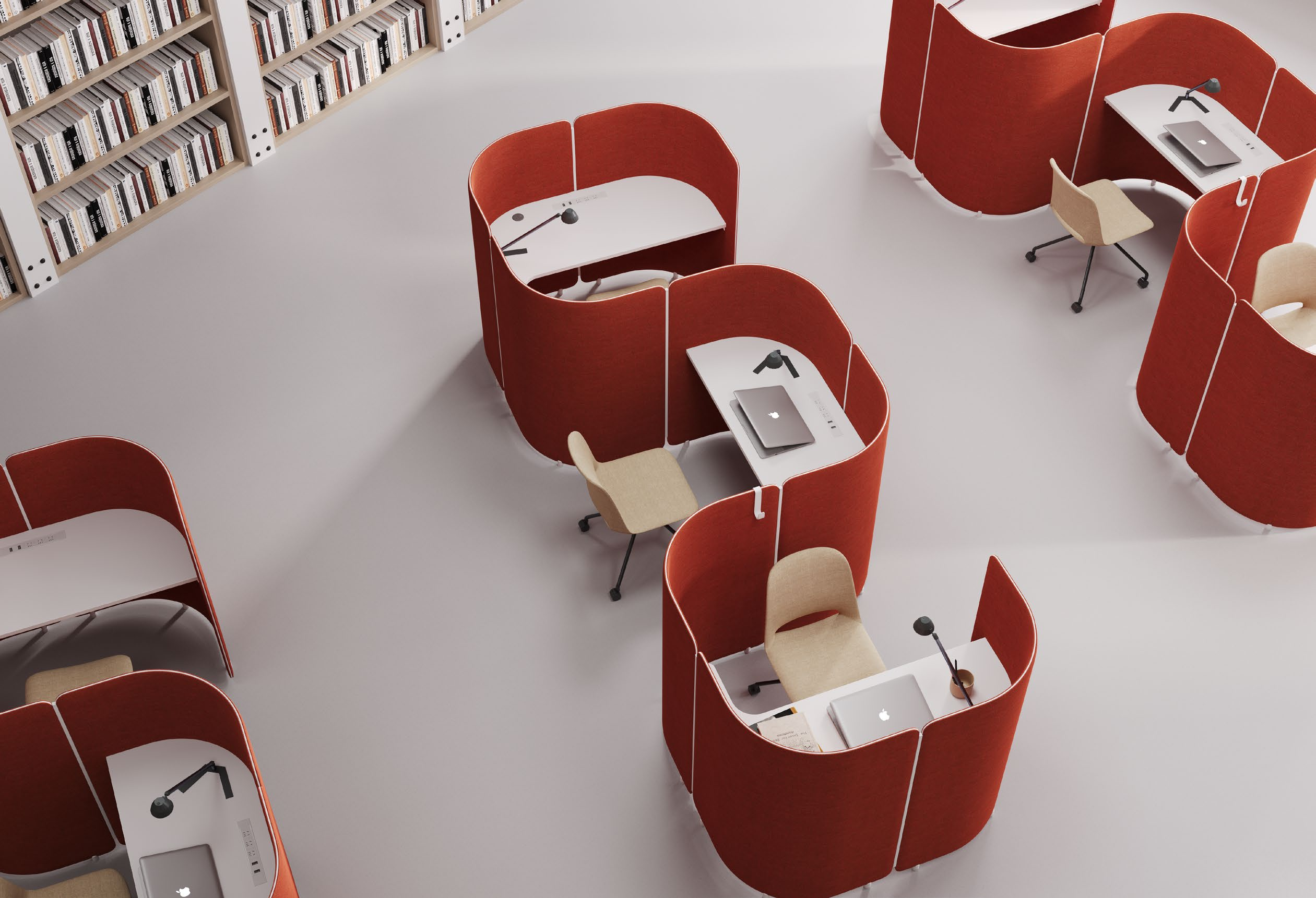
In overseas business settings, the reception area is not only a waiting area but also a window for the brand to showcase itself. A high-quality Reception Lounge combines comfortable waiting, light business meetings, brand display, and private conversations. High-backed casual furniture paired with soft color schemes enhances the sense of luxury, optimizes the customer experience, and extends effective communication time.
4. Office Lounge: Enables Working Anytime, Anywhere
Multiple workplace studies have shown that prolonged sitting at a fixed workstation continuously reduces efficiency; employees need to be able to switch work environments frequently. Office Lounge Furniture combines leisure and office functions, allowing employees to work remotely with their laptops, hold online meetings, and participate in short group meetings, truly achieving "Work Anywhere" and maximizing space utilization. The M&W Cubic series features a high-back, sound-insulating modular structure, making one set of furniture suitable for leisure, meetings, team building, and training, significantly saving on office space.
- Acoustic Workspaces Reduce Office Noise
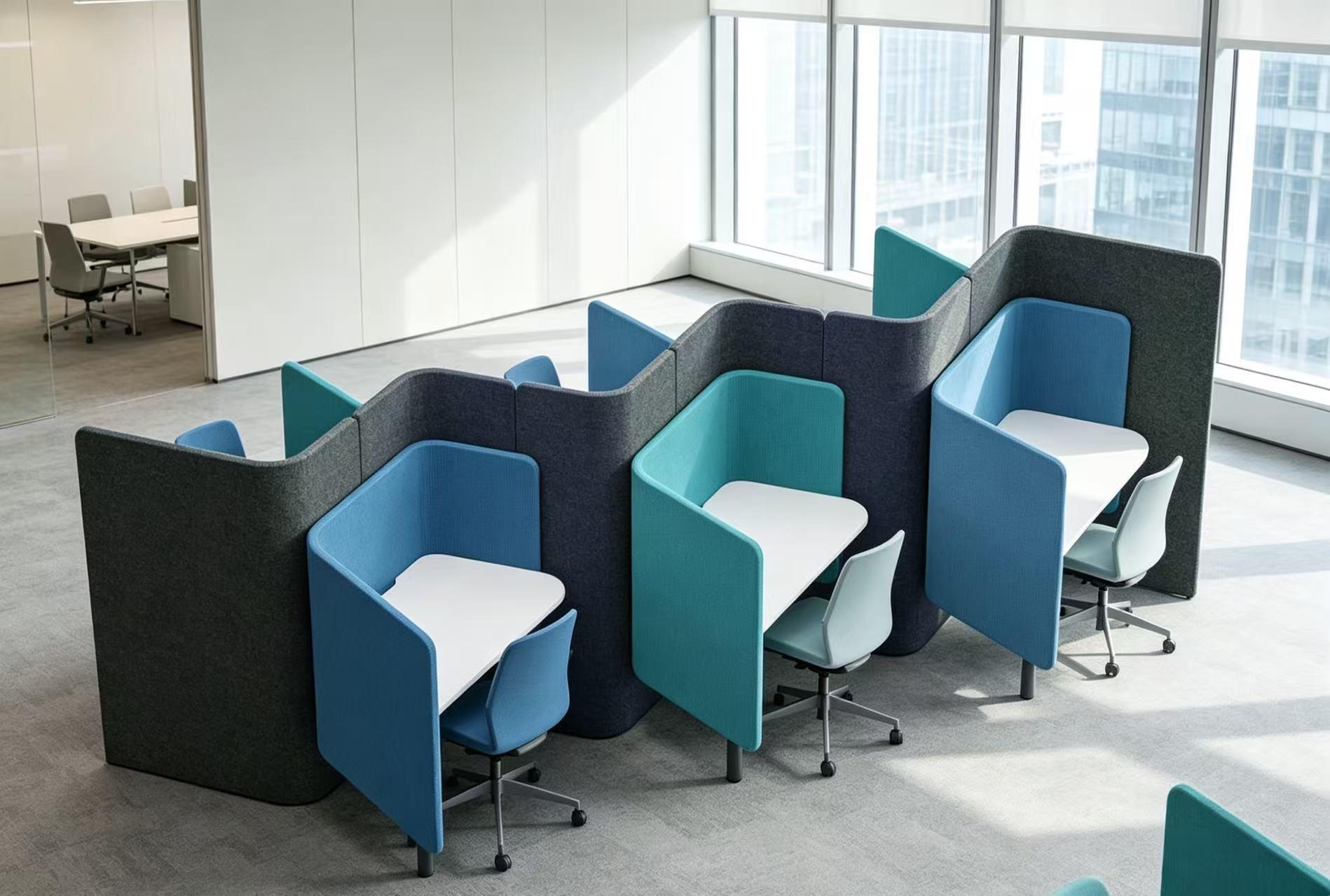
Solving the Pain Point of Office Noise The biggest drawback of open-plan offices is noise pollution, making acoustic office design a necessity. In addition to regular meeting rooms, acoustic booths, focus booths, and semi-enclosed soundproof workstations are rapidly becoming widespread. Soundproof spaces fill the gaps in hybrid workplace scenarios, providing employees with a quiet environment at all times. M&W's entire line of acoustic furniture uses high-density sound-absorbing fabrics, environmentally friendly fillings, and soundproof screens, finding a balance between openness and tranquility to meet global office noise reduction needs.
Conclusion: Office Space Is a Long-Term Business Asset
Hybrid Workplace reconstructs the relationship between people and office space. The competition in modern offices is no longer the number of workstations, but the flexibility of the scene and the humanized experience. Office Lounge Furniture connects the entire office, reception, and leisure scenes, and Collaborative Workspace ensures the implementation of team creativity. Purchasing high-quality office furniture is essentially an investment in employee efficiency, brand image, and long-term office flexibility.
Choosing an Office Furniture Manufacturer with full-category R&D, space planning, and one-stop delivery capabilities can adapt to long-term changes in hybrid office and continue to consolidate corporate office competitiveness. M&W adheres to modular original design and one-stop office furniture solutions to create efficient, comfortable, creative and modern commercial office spaces for global enterprises and design institutions.
M&W supports global office projects with space planning, modular furniture, customization, production, and delivery. Contact us to plan a flexible hybrid workplace.