
Office Pods for Modern Workplaces: What You Need to Know?
Video calls, quick meetings, deep focus work, and private conversations often happen at the same time. Noise and lack of privacy quickly become daily problems in open offices. Office pods are created to deal with exactly these situations.
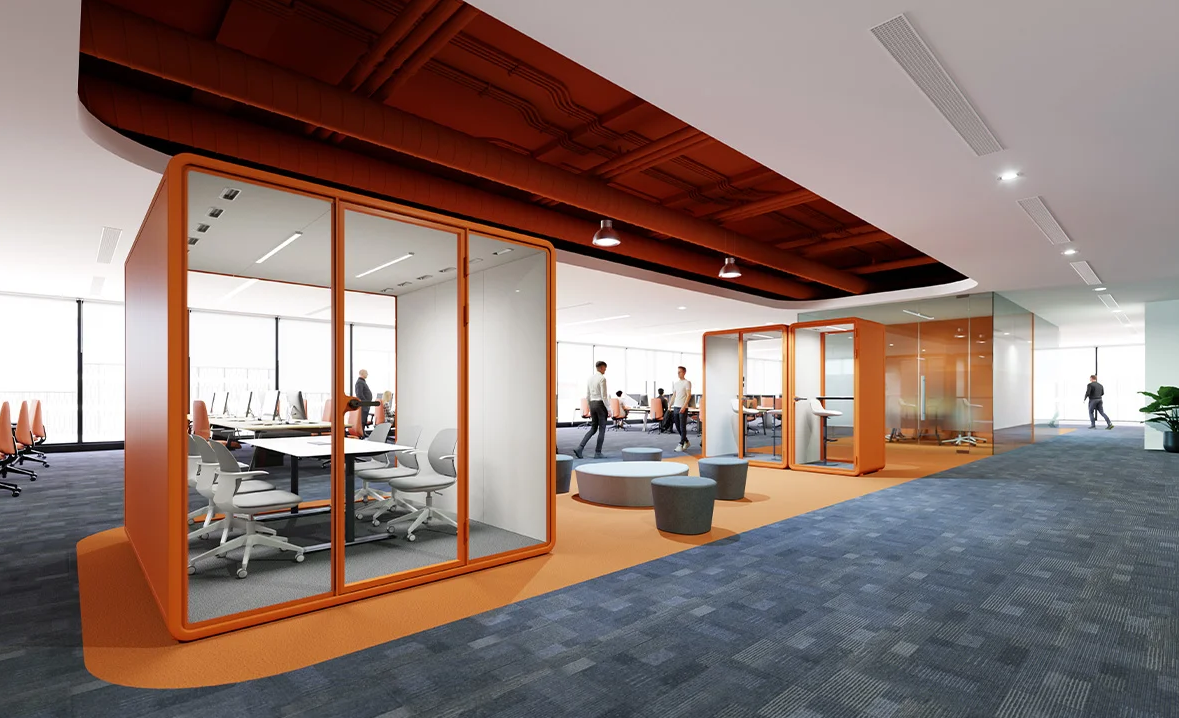
An office pod is a soundproofed modular unit designed to provide a quiet, private space within an open office. Instead of changing the entire office layout or building fixed rooms, companies can use office pods as a flexible workplace solution that adapts as needs change.
Why Office Pods are Important in Modern Workplaces?
Modern workplaces are constantly evolving. Teams expand, departments shift, and work styles change faster than traditional office construction can keep up with. Fixed meeting rooms often become underused or poorly located over time.
Office pods answer this challenge by offering:
- Flexible placement within open-plan offices
- Dedicated spaces for focus work or small meetings
- Minimal disruption during installation
Why Office Pods are Popular in Modern Workplaces?
From a workplace design perspective, pods act as functional zones rather than permanent structures. They support productivity while keeping the openness many companies still want.
1. Modular Design Built for Change
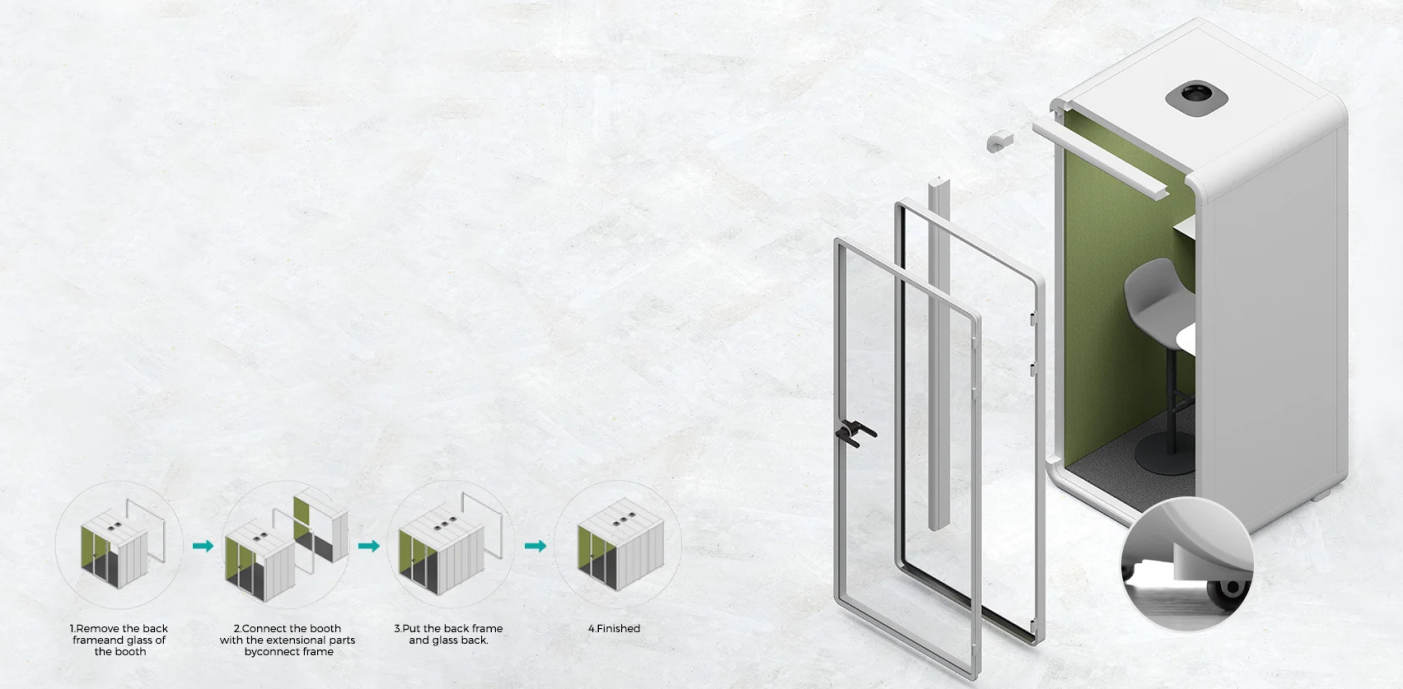
Office pods are born for changing office needs. Their modular design allows fast installation without complex construction work. Key installation features include:
- No trimming, bolting, or gluing during setup
- Reduced installation waste compared with conventional construction
- Fully recyclable packaging materials
- Ready for use after assembly and system checks
Modular pods can be moved or extended when office layouts change, making them suitable for growing companies, shared workspaces, and organizations that prefer adaptable office solutions over fixed layouts.
2. Effective Noise Reduction in Busy Offices
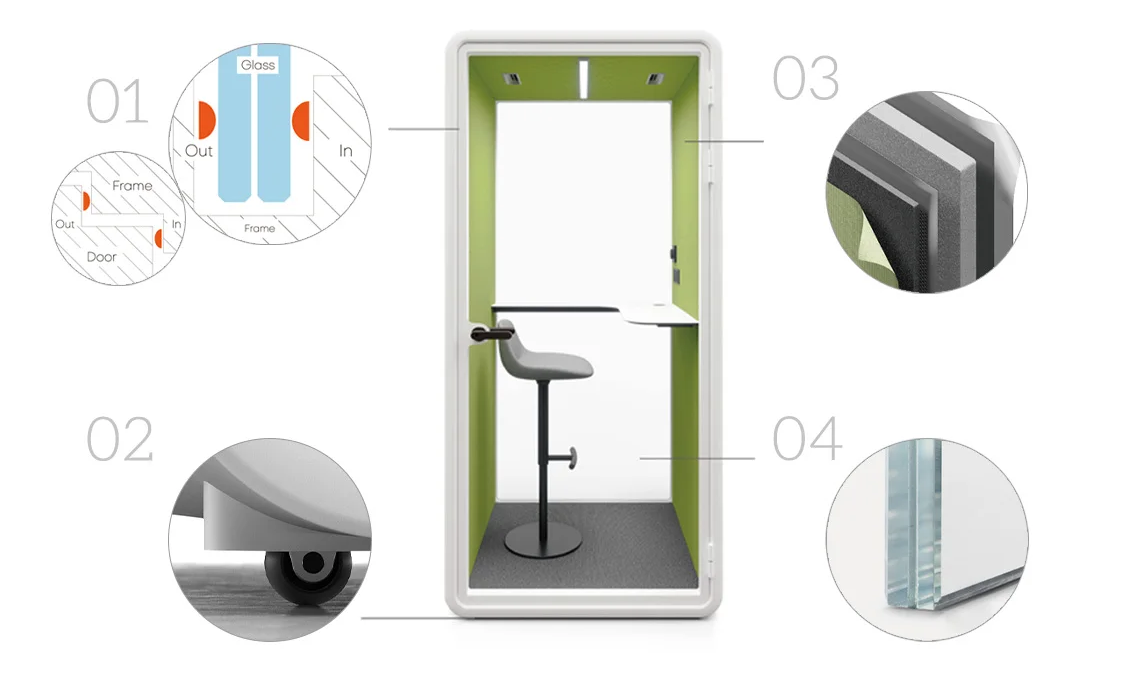
Noise control is one of the core functions of an office pod. The design focuses on reducing sound transmission from multiple angles rather than relying on a single material. Noise reduction is achieved through:
- Dual sealing straps that firmly seal doors and joints
- Thick insulation materials inside the structure
- Sealed connections that minimize sound leakage
Low-frequency noise is also addressed. Dampening material is installed between the pod feet and the floor to reduce structure-borne vibration. It is especially useful in offices where footsteps and movement travel easily across open areas.
3. Wall Structure and Acoustic Performance
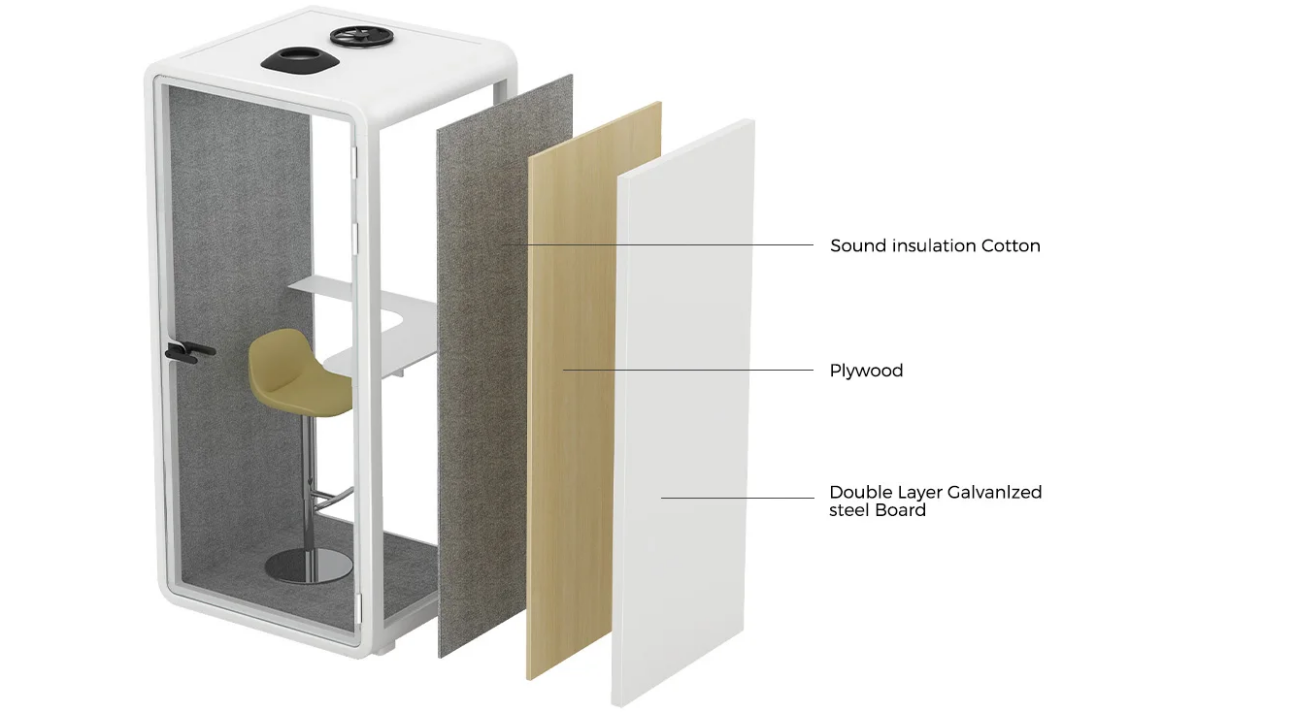
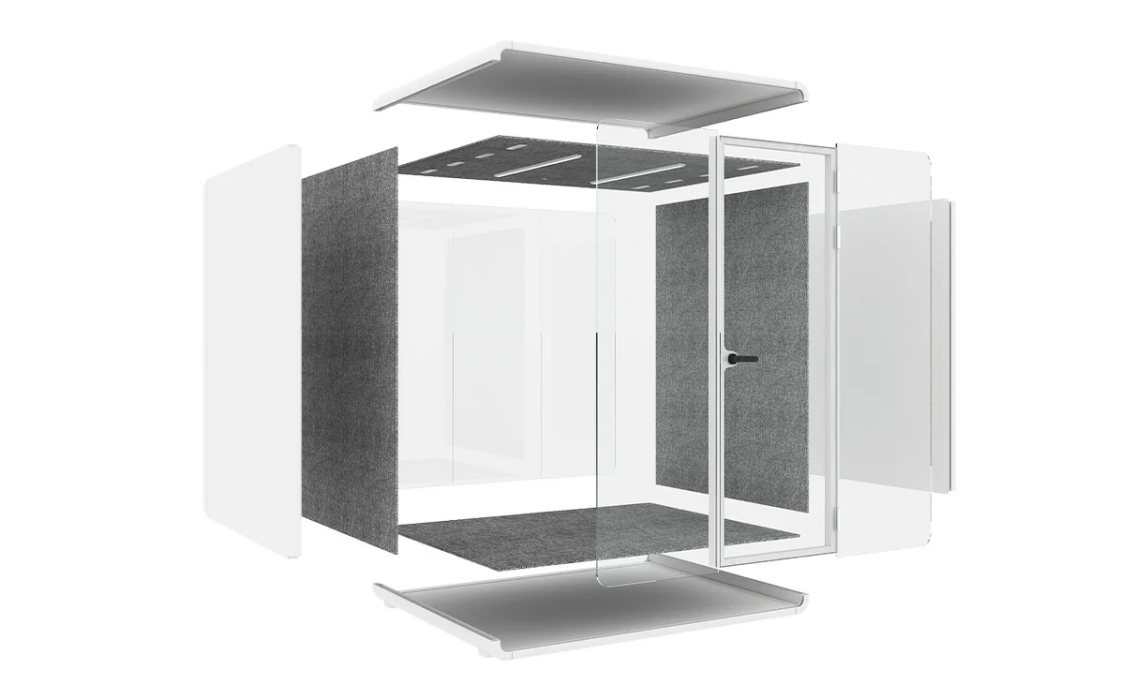
The wall system plays a major role in soundproofing. The side walls consist of multiple layers of acoustic material designed to block and absorb sound at the same time. Material composition includes:
- High-density foam layers
- Gray sound-absorbing cloth
- Laminated glass panels for improved sound insulation
Laminated glass allows the pod to maintain transparency while improving acoustic performance, keeping the office visually open while still providing a quiet interior environment.
4. Materials That Balance Strength and Visibility
Office pods are constructed with metal-framed glass walls combined with sound-absorbing interior panels. This structure provides both durability and openness. The benefits of this material combination include:
- Strong and stable structure
- Clear visibility for safety and comfort
- Reduced visual isolation in open offices
Natural light can pass through the glass panels, helping the pod feel like part of the overall office layout rather than a closed box.
5. Interior Layout Designed for Daily Use
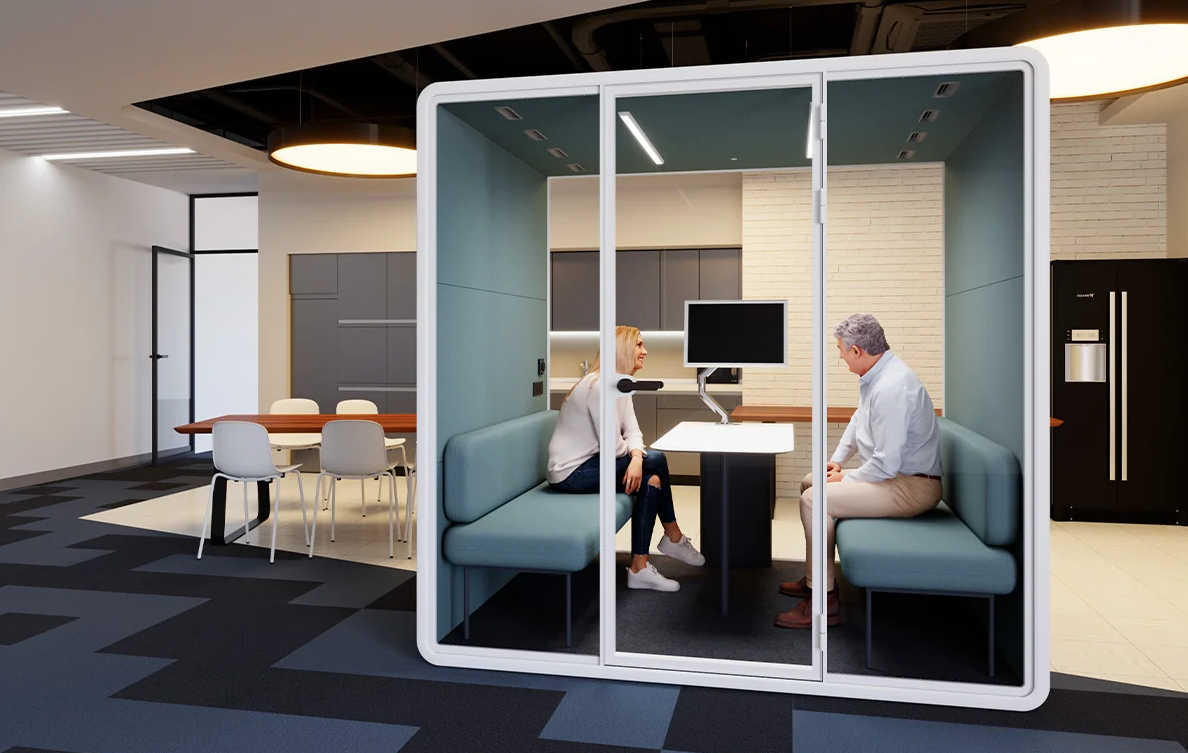
The interior of an office pod is designed around real working habits, not just appearance. Standard interior setups:
- A built-in bench or sofa with muted upholstery colors such as purple or gray
- A central table for meetings or laptop use
- Integrated ceiling lighting
Depending on the model, an office pod can accommodate 1 to 6 people. This range makes pods suitable for:
- Individual focus work
- One-on-one discussions
- Small group meetings
For office space planning, this flexibility allows pods to serve multiple roles across the workplace.
6. Integrated Technology for Modern Work
Office pods support daily work through built-in technology features that reduce clutter and improve usability. Technology integration includes:
- USB ports and power outlets
- Adjustable lighting control
- Adjustable ventilation control
Ventilation becomes especially important during longer calls or meetings. The bottom ventilation grille helps maintain airflow while supporting the pod’s acoustic performance, and adjustable ventilation allows users to control airflow based on how long the pod is being used. When comparing office pods, buyers should consider airflow, ventilation control, fan noise, and comfort during extended use.
7. Smart Dimmer Controller for User Control
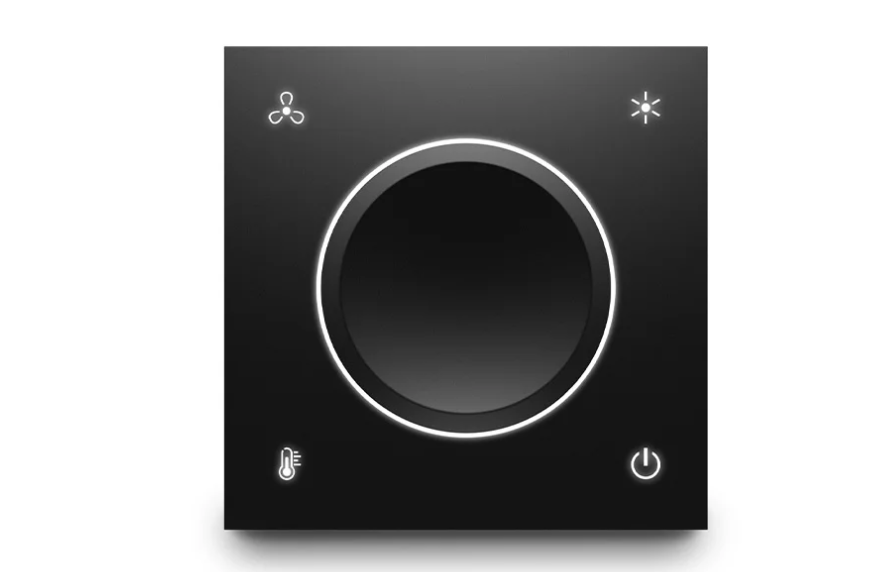
The smart dimmer controller is designed to keep operation simple while offering flexibility. Its main functions are:
- One-touch control through short-press and long-press actions
- Rotary knob adjustment for ventilation intensity
- Fine control of light brightness and color temperature
Lighting and ventilation can be controlled together, reducing the number of steps needed to adjust the environment. It improves efficiency during meetings and work sessions.
The controller also supports smart sensor management. The IR sensor can be temporarily or manually disabled to prevent unnecessary activation, helping reduce energy consumption.
The clean interface and clear status indicators fit naturally into modern workplace design. Different operating modes allow the pod to adapt to:
- Short meetings
- Long work sessions
- Maintenance or setup needs
8. Privacy Without Cutting Off the Office
Office pods are designed to provide both visual and acoustic privacy without isolating users completely. Privacy features are:
- Thick acoustic panels
- Soundproof walls and sealed doors
- Glass panels that allow light while maintaining visibility control
The door swings both inward and outward, allowing flexible access even in tight office layouts. It makes pods easy to use in shared spaces and high-traffic areas.
Because of this balanced design, office pods work well in:
- Open office spaces
- Shared work environments
- Libraries or quiet zones near common areas
9. Customization for Office Design Solutions
Office pods can be customized to fit different office design ideas and functional needs. Customization options include:
- Fabric panel color choices
- Frame color customization
- Optional accessories such as shelves or additional power outlets
It allows pods to align with brand identity and existing office decor. For companies working with an office furniture manufacturer and solution provider, office pods become part of a complete workplace system rather than a standalone product.
How to Choose the Right Office Pod
The right office pod depends on how it will actually be used. A pod for short phone calls has different requirements from one used for longer meetings or team discussions.
When comparing options, consider:
|
Buying Factor |
What to Check |
|
Capacity |
|
|
Use Case |
Calls, focused work, one-on-one discussions, or meetings |
|
Acoustic Performance |
The level of sound reduction and speech privacy required |
|
Ventilation |
Airflow, adjustment, fan noise, and comfort during longer use |
|
Power & Technology |
Outlets, USB charging, lighting, and video-call equipment |
|
Footprint |
Pod size, door clearance, and surrounding circulation |
|
Flexibility |
Whether the pod may need to be relocated as the office changes |
|
Customization |
Interior furniture, finishes, colors, shelves, and power options |
The best choice is not necessarily the largest or most feature-rich pod. It should match the number of users, the type of work, and the conditions of the space where it will be installed.
Where Should Office Pods Be Placed?
Pod placement affects both convenience and the overall office layout. A pod should be close enough to the people who use it regularly, but it should not block main walkways or create congestion around busy work areas.
Before deciding on a location, check door clearance, nearby power access, surrounding furniture, and the amount of traffic around the pod.
Single-person call or focus pods can be placed near open workstations for quick access. Larger meeting pods are usually better positioned near collaboration or meeting areas, where group movement is already expected.
The goal is to make the pod easy to use without interrupting the way people move through the office.
Conclusion
For companies planning their next office setup or looking to improve existing spaces, office pods offer a balanced solution between openness and privacy. Through modular design, reliable noise reduction, integrated technology, and flexible customization, they help companies solve real office challenges without renovation.
As an office furniture manufacturer and workplace solution provider, M&W designs office pod systems that fit real workflows, space conditions, and long-term layout plans. If you are exploring ideas for a more efficient and flexible workplace, contact M&W to build a workspace that truly works.