
How to Plan an Office Layout That Actually Works?
You’ve invested in quality furniture, hired a designer, and moved into your new office. Yet within weeks, the complaints start: “I can’t focus with people walking behind me.” “We have no place for quick team huddles.” “Every call feels like a public performance.”
The problem isn’t your budget or your taste—it’s your planning logic. Most offices are designed furniture-first: choose desks, pick partitions, fill the floor. But high-performing workplaces are designed workflow-first: understand how people actually work, then build space around those behaviors.
This shift—from aesthetics to activity—is what separates functional offices from frustrating ones. And it’s especially critical for global teams operating across time zones, cultures, and hybrid models. Here’s how smart companies get it right.
Start With Work Modes, Not Square Meters
Before you sketch a single desk, ask: What do your people actually do all day? Research shows modern knowledge workers cycle through four core modes:
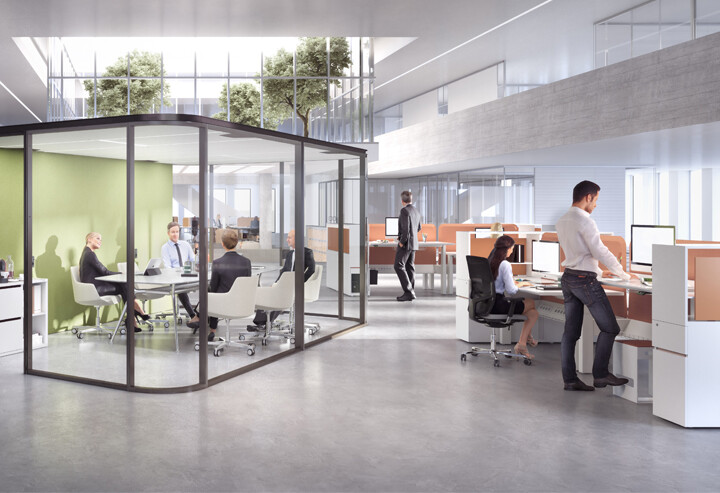
● Deep Focus: Uninterrupted concentration (e.g., coding, writing, analysis)
● Collaboration: Real-time teamwork (pair programming, design sprints, client prep)
● Private Communication: Sensitive calls or 1:1s requiring visual/acoustic privacy
● Social Connection: Informal chats that build trust and spark ideas
Map these activities across your team. You might discover your marketing squad spends 70% of their time in dynamic collaboration, while your finance team needs near-total quiet. This insight—not available square footage—should dictate your space allocation.
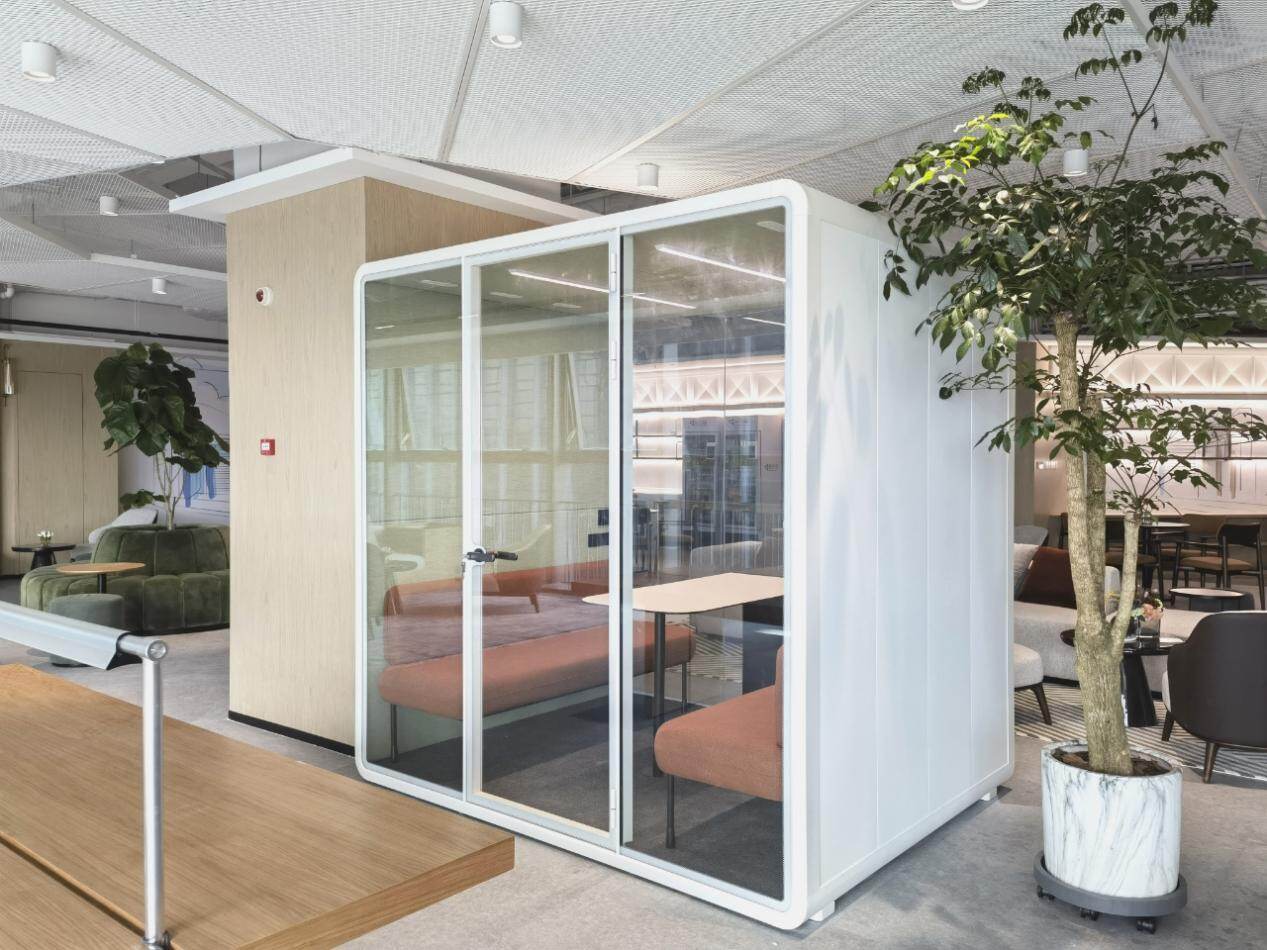
For example, a Berlin fintech firm initially planned uniform workstations. After surveying staff, they realized 40% of roles required confidential calls. They carved out phone pods with high acoustic , reducing noise complaints by 65% without expanding their footprint.
Zone Smartly—Don’t Just Fill Space
Once you know your work modes, group them into intentional zones. Avoid the classic mistake of scattering identical workstations like chess pieces. Instead, create neighborhoods:
● Create quiet work zones by placing them away from busy spots like entrances, pantries, and printers. Use tall dividers (at least 120 cm) filled with sound-absorbing material to reduce noise from nearby conversations. These zones are perfect for teams that need deep focus—such as R&D, legal, or remote workers.
● Design a Team Hub for Better Collaboration
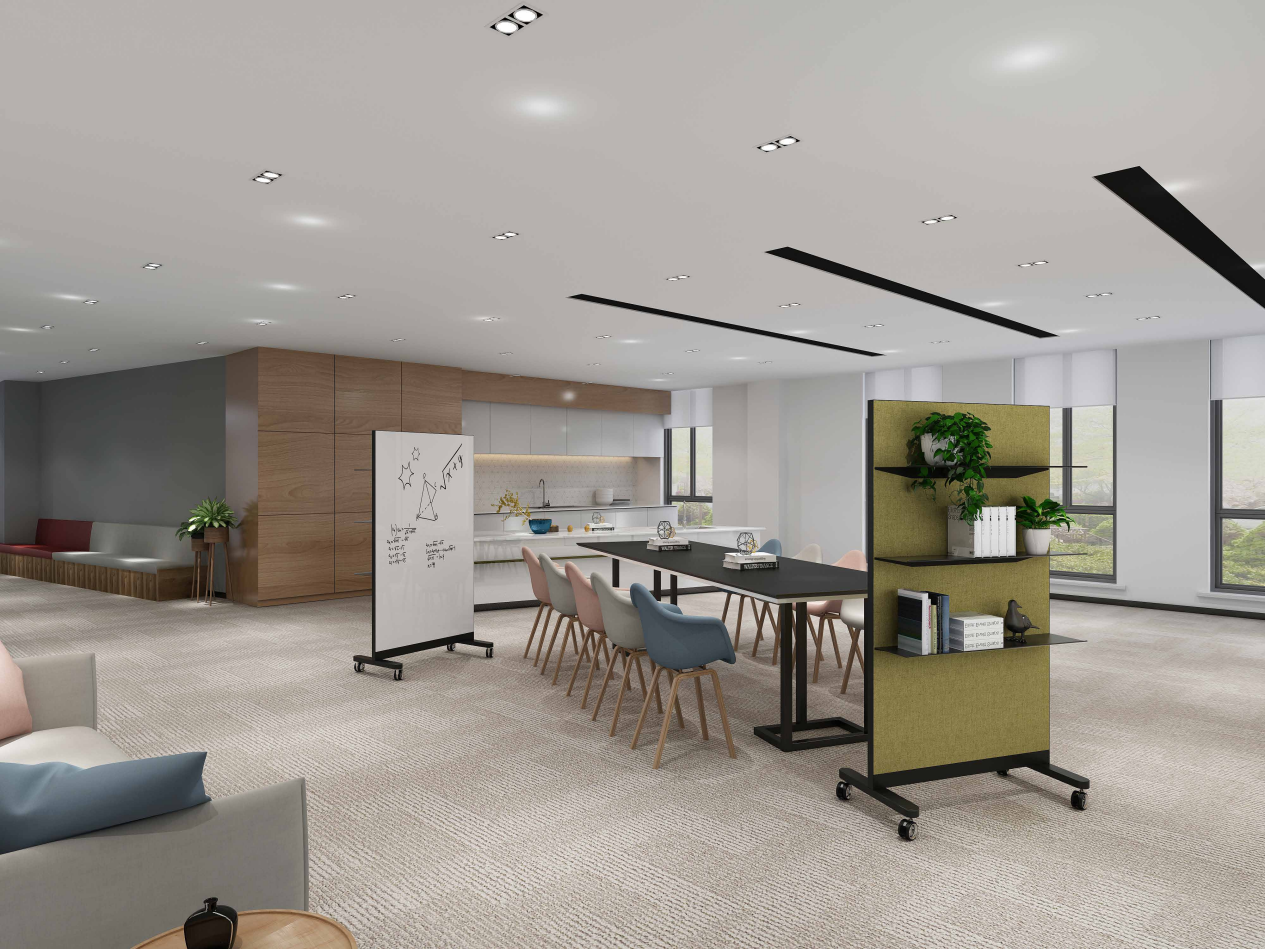
Arrange 4–8 workstations around a writing board. Keep the space visually open to encourage spontaneous chats to gently mark your team’s zone. This setup is ideal for agile teams that need to brainstorm, iterate, and stay connected throughout the day.
● Flex Areas: Reserve 10–15% of space for project teams, visitors, or future growth. Equip with lightweight, mobile furniture that can be reconfigured weekly.
Design for Movement, Not Just Seating
People aren’t static. They walk to print, grab coffee, join impromptu chats, or step out for air. If your layout forces them to cut through focus zones, every journey becomes a disruption.
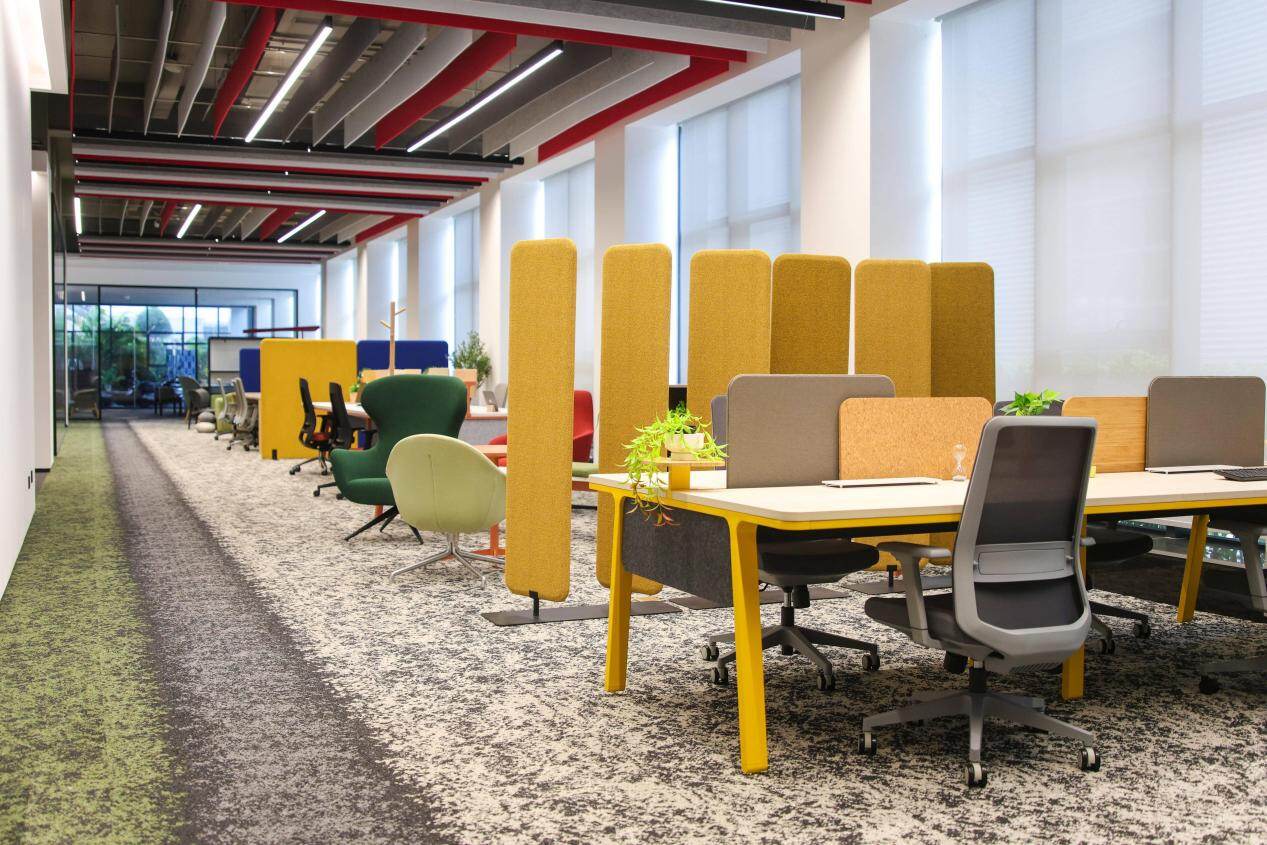
Follow three circulation principles:
● Main aisles ≥120cm wide (required by most international safety codes)
● Keep “destination zones” (kitchen, printer, restrooms) on the perimeter
● Use buffer elements—like storage units or planters—to absorb foot traffic near quiet areas
Gensler’s Workplace Survey found that employees in offices with thoughtful circulation report 22% fewer interruptions and higher satisfaction with “personal control over my environment.” Movement isn’t noise—it’s life. Your job is to channel it.
Build in Flexibility From Day One
Your team will grow. Hybrid ratios will shift. New tech will emerge. Yet most offices are built like monuments—beautiful but rigid. The smarter approach: design for change.
Start with a modular foundation:
● Choose systems with standardized grid spacing and tool-free connectors so layouts can evolve in hours, not weeks
● Embed power and data channels within desks and partitions—never rely on surface-level extension cords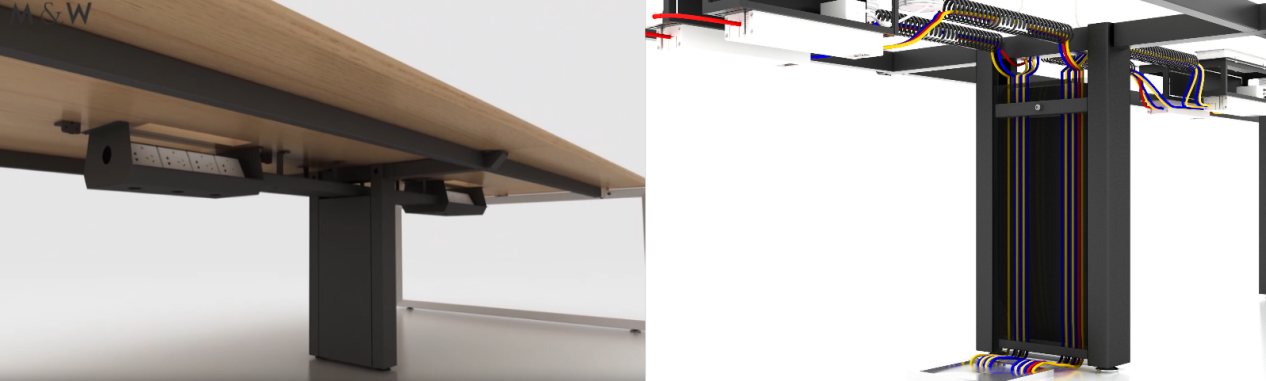
● Leave “blank canvas” areas (even just 1–2 desks’ worth) to test new configurations without full renovation
This agility pays off globally. When a Dubai logistics company needed to onboard 30 new staff mid-year, their modular setup allowed reconfiguration over a weekend—with zero downtime. In contrast, competitors using fixed furniture faced 3-week delays and costly retrofitting. We also have additional layout suggestions available for your reference.
Your Layout Should Evolve Like Your Business
An effective office isn’t judged by its Instagrammability, but by how effortlessly it supports daily work. It should feel intuitive: where to focus, where to collaborate, where to recharge—all without signage or instruction.
That level of seamlessness doesn’t come from guesswork. It comes from starting with human behavior, not furniture catalogs.
At M&W Workstation, we’ve helped teams from America to Mexico translate workflow insights into high-performing spaces. Our global space planning service includes:
● Complimentary 2D floor plans and 3D renderings tailored to your team size and regional requirements
● Zoning recommendations based on actual work patterns—not generic templates
● Guidance on integrating acoustics, power, and flexibility from day one
See your future office before you commit to a single purchase.
✅ [Get Your Free Custom Layout Proposal]
✅ [Explore Global Case Studies]
Because the best office layout isn’t the one that looks perfect on paper—it’s the one that works perfectly for your people.